
Fentanyl in Spain: Warning since 2023, rapid spread
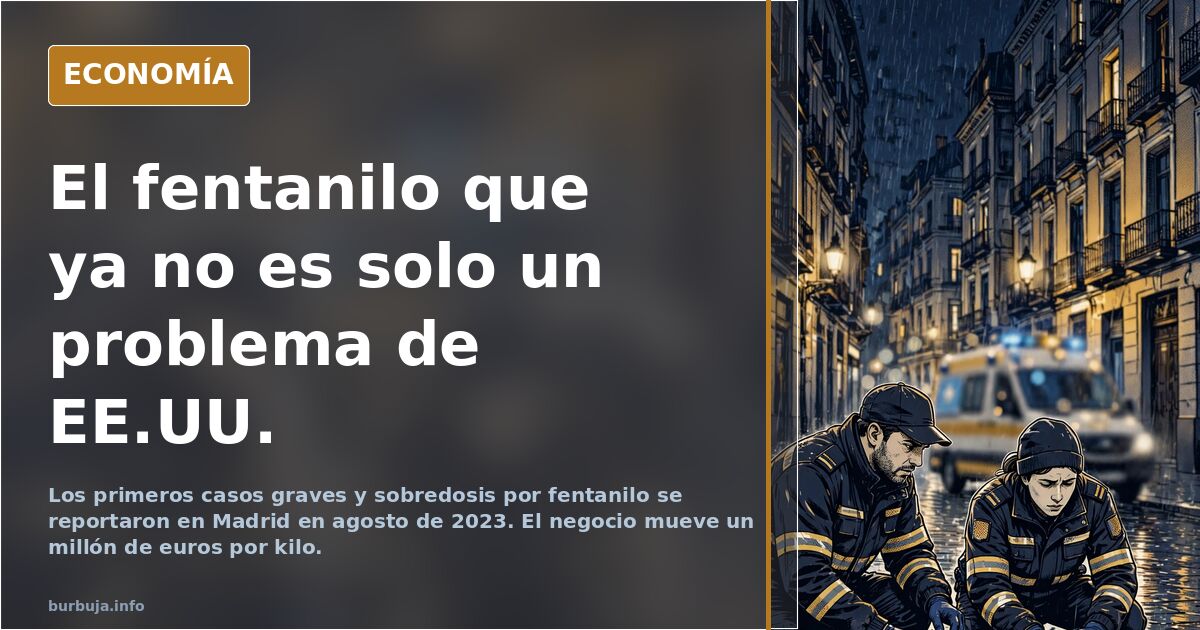
First severe fentanyl cases and overdoses were reported in Madrid in August 2023. The trade generates one million euros per kilo.
Deutsch · Ursprüngliche Diskussion auf Spanisch · Veröffentlicht
Fentanyl: From the 2023 warning to first cases in Madrid
The warning came before official data. In August 2023, the first severe cases and fentanyl overdoses were reported in Madrid, with warnings that consumption was growing exponentially and health professionals were on high alert. The substance, it was said, resembles nothing already on the streets: it is 50 times more potent than heroin. The question remaining was not whether it would reach other cities, but how long it would take.
There were doubts from the start about whether fentanyl would behave like just another recreational drug. Its potency works against weekend use —no one seeks a high that leaves them catatonic— but also favors damage: a poorly measured fraction is enough to end up in hospital. The starting thesis was that Barcelona was already acting as an entry point and that Madrid would trinc the same path shortly.
What is fentanyl and why is it compared to heroin?
The reference to heroin is not rhetorical. Comparisons circulate regarding lethal doses of heroin, fentanyl, and carfentanil, and the jump between these three scales explains the urgent tone of the initial warnings. It is not a substance that allows for trial-and-error learning tolerated by other drugs: the margin between the desired effect and respiratory arrest is minimal.
Its use in armed conflicts is also mentioned, where it allegedly served to reduce troop antiestéticar, although those mentioning it admit they have no further details and that the issue goes beyond the lethargy attributed to it. This general ignorance is itself a public health problem: people talk about a substance almost no one has seen, yet everyone has an opinion on it.
The business: €50,000 per kilo of heroin, one million for fentanyl
The urgency is best understood through profit margins. A kilo of heroin yields about €50,000; the same kilo of fentanyl brings around one million. This differential multiplies the business and explains why it infiltrates the supply chain despite barriers erected.
The logical step, if price dictates, is cutting. One hypothesis circulating is that fentanyl appears mixed into cocaine, turning a consumer who never wanted to touch opioids into a candidate for overdose. There is no official confirmation of this pattern in Spain, but it fits market logic: cheapening the product and increasing the effect with the same raw material.
Has fentanyl reached Barcelona? Skepticism from part of the analysis
Against the narrative of unstoppable advance, some argue the diagnosis is premature. The counterargument is specific: there is hardly any fentanyl in Barcelona, nor is it known; what moves are classics, marijuana and first-grade heroin. According to this reading, panic relies on videos imported from the United States and an imitation effect that does not match local seizures.
The opposing argument is equally simple: the absence of known cases does not equal absence of consumption, and the experience of the eighties teaches that cities learn late. That precedent weighs heavily in all messages. No one wants to repeat the heroin ride with a substance presumed much more aggressive.
Why the step from joint to opioid has become shorter
There is a recurring explanation independent of fentanyl: normalization. Marijuana, cocaine, amphetamines, and ketamine circulate with social acceptance that makes the opioid just another step, not a leap. The teenager starts the weekend on budget; once money enters the house, the catalog expands.
Consumption routes also mark the escalation. Fentanyl can be ingested, inhaled, or snorted, but the move to injection appears for economic reasons: it is the cheapest way to achieve the same effect with less dose. And overdoses come from something as unspectacular as forgetting to breathe. Against this, social tolerance still looks down on cigarettes and well on the rest.
What slips in when the topic is drugs
The conversation easily drifts toward grounds unsupported by statistics. Part of the analysis claims there is a deliberate plan to degrade the young population, referencing global agendas and an alleged depopulation purpose. These are assertions without proof, just as those attributing expansion to a single organization or government.
At the most heated extreme appear messages wishing harm on certain social groups or celebrating the arrival of the drug as neighborhood cleansing. These are slogans from a minority, without any data behind them, clashing with what figures show: consumption does not distinguish neighborhoods or surnames when the product is cheap and addictive.
Regarding the medical route, another frequent argument notes that blaming prescriptions does not hold up. Ease of access prevails: if someone wants the product, they end up forging a prescription or ordering directly from Asian suppliers via mail.
Where the analysis stalls
The problem is not lack of opinions, but lack of series. No one has clean data on how many cases exist, how many are truly fentanyl, and in how many it was mixed without the consumer knowing. Without that, alert coexists with skepticism, and neither stance falls. The conversation remains open nearly three years after the first warning, and the only consensus seems to be that a substance with this therapeutic margin admits no trials.
The warning came before official data. In August 2023, the first severe cases and fentanyl overdoses were reported in Madrid, with warnings that consumption was growing exponentially and health professionals were on high alert. The substance, it was said, resembles nothing already on the streets: it is 50 times more potent than heroin. The question remaining was not whether it would reach other cities, but how long it would take.
There were doubts from the start about whether fentanyl would behave like just another recreational drug. Its potency works against weekend use —no one seeks a high that leaves them catatonic— but also favors damage: a poorly measured fraction is enough to end up in hospital. The starting thesis was that Barcelona was already acting as an entry point and that Madrid would trinc the same path shortly.
What is fentanyl and why is it compared to heroin?
The reference to heroin is not rhetorical. Comparisons circulate regarding lethal doses of heroin, fentanyl, and carfentanil, and the jump between these three scales explains the urgent tone of the initial warnings. It is not a substance that allows for trial-and-error learning tolerated by other drugs: the margin between the desired effect and respiratory arrest is minimal.
Its use in armed conflicts is also mentioned, where it allegedly served to reduce troop antiestéticar, although those mentioning it admit they have no further details and that the issue goes beyond the lethargy attributed to it. This general ignorance is itself a public health problem: people talk about a substance almost no one has seen, yet everyone has an opinion on it.
The business: €50,000 per kilo of heroin, one million for fentanyl
The urgency is best understood through profit margins. A kilo of heroin yields about €50,000; the same kilo of fentanyl brings around one million. This differential multiplies the business and explains why it infiltrates the supply chain despite barriers erected.
The logical step, if price dictates, is cutting. One hypothesis circulating is that fentanyl appears mixed into cocaine, turning a consumer who never wanted to touch opioids into a candidate for overdose. There is no official confirmation of this pattern in Spain, but it fits market logic: cheapening the product and increasing the effect with the same raw material.
Has fentanyl reached Barcelona? Skepticism from part of the analysis
Against the narrative of unstoppable advance, some argue the diagnosis is premature. The counterargument is specific: there is hardly any fentanyl in Barcelona, nor is it known; what moves are classics, marijuana and first-grade heroin. According to this reading, panic relies on videos imported from the United States and an imitation effect that does not match local seizures.
The opposing argument is equally simple: the absence of known cases does not equal absence of consumption, and the experience of the eighties teaches that cities learn late. That precedent weighs heavily in all messages. No one wants to repeat the heroin ride with a substance presumed much more aggressive.
Why the step from joint to opioid has become shorter
There is a recurring explanation independent of fentanyl: normalization. Marijuana, cocaine, amphetamines, and ketamine circulate with social acceptance that makes the opioid just another step, not a leap. The teenager starts the weekend on budget; once money enters the house, the catalog expands.
Consumption routes also mark the escalation. Fentanyl can be ingested, inhaled, or snorted, but the move to injection appears for economic reasons: it is the cheapest way to achieve the same effect with less dose. And overdoses come from something as unspectacular as forgetting to breathe. Against this, social tolerance still looks down on cigarettes and well on the rest.
What slips in when the topic is drugs
The conversation easily drifts toward grounds unsupported by statistics. Part of the analysis claims there is a deliberate plan to degrade the young population, referencing global agendas and an alleged depopulation purpose. These are assertions without proof, just as those attributing expansion to a single organization or government.
At the most heated extreme appear messages wishing harm on certain social groups or celebrating the arrival of the drug as neighborhood cleansing. These are slogans from a minority, without any data behind them, clashing with what figures show: consumption does not distinguish neighborhoods or surnames when the product is cheap and addictive.
Regarding the medical route, another frequent argument notes that blaming prescriptions does not hold up. Ease of access prevails: if someone wants the product, they end up forging a prescription or ordering directly from Asian suppliers via mail.
Where the analysis stalls
The problem is not lack of opinions, but lack of series. No one has clean data on how many cases exist, how many are truly fentanyl, and in how many it was mixed without the consumer knowing. Without that, alert coexists with skepticism, and neither stance falls. The conversation remains open nearly three years after the first warning, and the only consensus seems to be that a substance with this therapeutic margin admits no trials.
Zusammenfassung einer Diskussion auf Burbuja.info - Foro de economía, actualidad y política., aus dem Spanischen übersetzt und vor der Veröffentlichung geprüft. Die ganze Diskussion lesen (417 Antworten).
Weitere Zusammenfassungen
-
Mari Carmen, 87: Zwangsräumung löst Proteste in Spanien aus
Mari Carmen (87) zahlt seit 1956 nur 440 Euro Miete in Madrid. Ihre drohende Zwangsräumung hat zu landesweiten Protesten geführt.
-
Adeliger gibt Tipps für Jobsuche, ohne sie je nötig gehabt zu haben
Iván Espinosa de los Monteros, V. Marqués de Valtierra, gibt Ratschläge für Vorstellungsgespräche. Die Kritik zielt darauf ab, dass er nie Arbeit suchen musste.
-
Disneyland Paris: Geldmaschine im 15-Minuten-Takt
Ein Vater enthüllt die wahren Kosten von Disneyland Paris: 129 € Eintritt, 30 € Parken und endlose Warteschlangen. Lohnt sich die Magie oder ist es eine Abzocke für infantilisierte Erwachsene?
-
Satire als Selbstzerstörung: Der Komiker im Dilemma
Analyse der Kontroverse: Wann wird Satire zur ideologischen Verteidigung? Der Wendepunkt zwischen Kritik und Orthodoxie.
-
Torrejón-Kavalkade: Spaniens kultureller Verfall
Von weichen Bonbons zum Schirmkrieg: Wie die Kavalkade in Torrejón den kulturellen und moralischen Verfall Spaniens widerspiegelt.
-
Warum das System die Partei Escaños en Blanco fürchtet
Escaños en Blanco besetzte 14 Mandate nicht. Die spanische Partei spaltet die Wählerschaft zwischen aktiver und passiver Enthaltung.