
Zaporizhzhia Nuclear Plant Disconnects from Ukraine Grid
Ukraine's largest nuclear power plant halted electricity exports after a grid failure, triggering safety systems and shutting down two units.
English · Original discussion in Spanish · Published
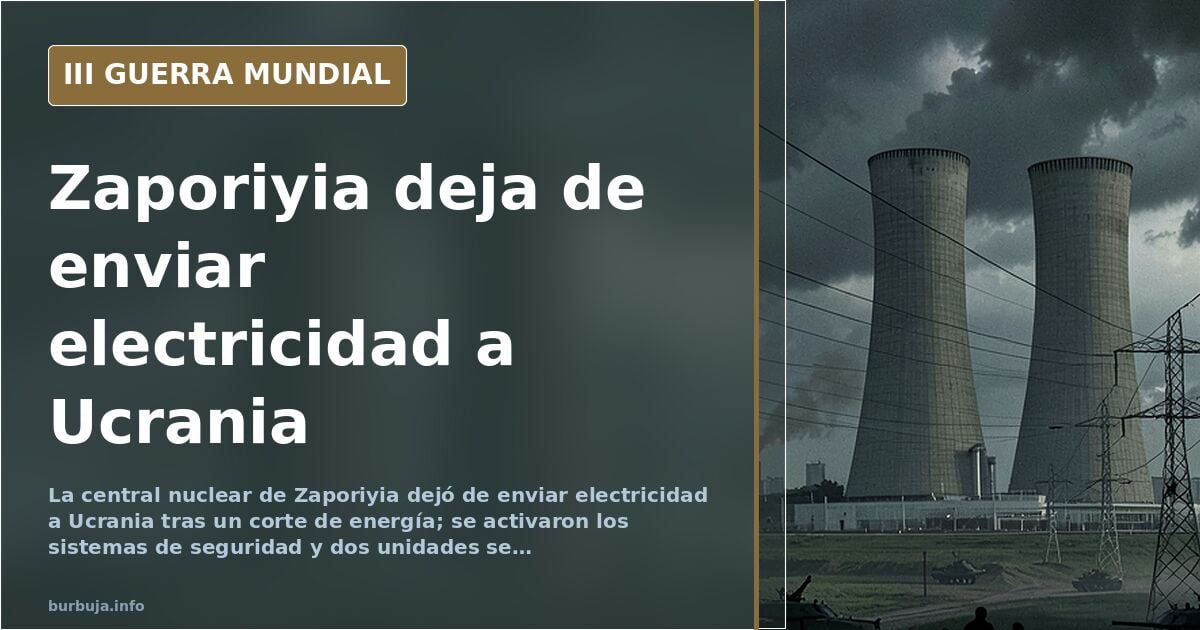
Zaporizhzhia Offline: Europe’s Largest Nuclear Plant Loses Power Connection
The Zaporizhzhia Nuclear Power Plant, the largest in Europe, stopped supplying electricity to Ukraine trinc a power outage that temporarily cut off the facility and the entire region. Safety systems activated automatically, resulting in the shutdown of two power units due to emergency protection protocols. This unprecedented event raises critical questions about control, maintenance responsibility, and funding for an asset estimated to produce between 20% and 25% of the country's electricity.
Reports vary on the cause. The Enerhodar Civil-Military Administration attributed the outage to fires caused by shelling, while US Under Secretary of State Bonnie Jenkins stated Washington could not clarify who was attacking the plant. No one knows the facts, yet everyone has an opinion.
Who Controls the Shutdown and Why It Matters?
Sources indicate the plant has been under Russian control for weeks. Each disconnection becomes a political lever: if the plant stays offline, Ukraine loses significant generation capacity; if it reconnects to the Russian grid, it effectively switches sides without flipping a switch. Some analysts view the disconnection as a controlled step toward reducing output, while others see it as a precursor to energy diversion.
Key data: 5,700 MWe installed capacity, according to widely circulated estimates. This industrial giant cannot be shut down with a simple button press but requires complex protocols involving personnel, fuel, and constant cooling. The lingering question is who guarantees this maintenance when the plant sits on a frontline.
Antiestéticar of a Bomb-Struck Chernobyl
Comparisons to Chernobyl emerged quickly. They are not unfounded: a plant lacking stable grid connection, surrounded by shelling, and facing uncertain staffing creates a scenario no operator desires. However, unlike Chernobyl, there has been no core meltdown here—only activation of protective systems so far.
Public perception has shifted. For decades, the nuclear industry argued that severe accidents were statistically improbable. Two major incidents in recent history dismantled that narrative. Now, geopolitics adds a new variable: a plant can be technically safe yet strategically vulnerable due to its location.
Costs for European Taxpayers
The disconnection is not just a Ukrainian problem. If generation drops, the gap must be filled by imports or backup plants, driving up prices. European electricity bills are already strained; each nuclear scare increases wholesale market volatility. A full calculation including hourly impact and replacement costs yields surprising figures.
Some see an opportunity to accelerate Europe's nuclear phase-out. Others argue it proves that shutting down plants without a Plan B is reckless. Both sides have data. Neither has a definitive answer.
The Safe Shutdown No One Ordered
A recurring argument is that the plant should have entered a safe cold shutdown on the first day of the invasion. While costly for Ukraine, it would have ensured global safety. That did not happen. Now it shuts down intermittently, relying on emergency protections rather than planned protocols.
The difference between an orderly shutdown and a forced blackout is like braking versus crashing. The plant remains standing. The grid does not.
One question remains unanswered: if reconnected tomorrow, to which grid? And if it stays offline, who bears the cost of maintaining a facility that produces nothing for anyone?
Also available in: Deutsch
Summary of a discussion on Burbuja.info - Foro de economía, actualidad y política., translated from Spanish and reviewed before publication. Read the full discussion (80 replies).
More summaries
-
Ukrainian amphibious assault on Energodar: nuclear plant the target
A Ukrainian amphibious assault on Energodar, coinciding with the IAEA's arrival, ends according to forum accounts with barges burning and the plant in Russian hands.
-
Russian strikes on Ukraine's power grid cause widespread blackouts
Russia targets Ukraine's electrical infrastructure, causing outages that are restored within hours, turning the energy sector into a narrative battleground.
-
Zaporizhzhia: Nuclear Threat Reignites Military Tensions
Calls to deploy four aircraft carriers to the Black Sea to prevent Zaporizhzhia's destruction clash with views that Moscow won't self-poison.
-
Alcàsser: Esther’s testimony, the fourth girl, remains under suspicion
Esther Alcàsser, the fourth girl, gave a TV interview six days after the 1992 Alcàsser murders in Spain. Her account and timeline discrepancies fuel ongoing controversy.
-
Trump's Dilemma: Ukraine or Iran?
Trump promised to avoid wars but is trapped between Ukraine and Iran. Inflation and fracking explain more than foreign policy.
-
CIA’s Cold War Ukraine: Failed Infiltrations and Propaganda
The CIA funded Ukrainian nationalists to infiltrate the USSR from 1946. Aerial drops failed, shifting focus to propaganda.