
Woman blinded by caustic soda: a lost eye and the burden of blame
A woman loses sight in one eye after a caustic soda attack on her and her daughter. The case reopens the debate on victim-blaming in gender violence.
English · Original discussion in Spanish · Published
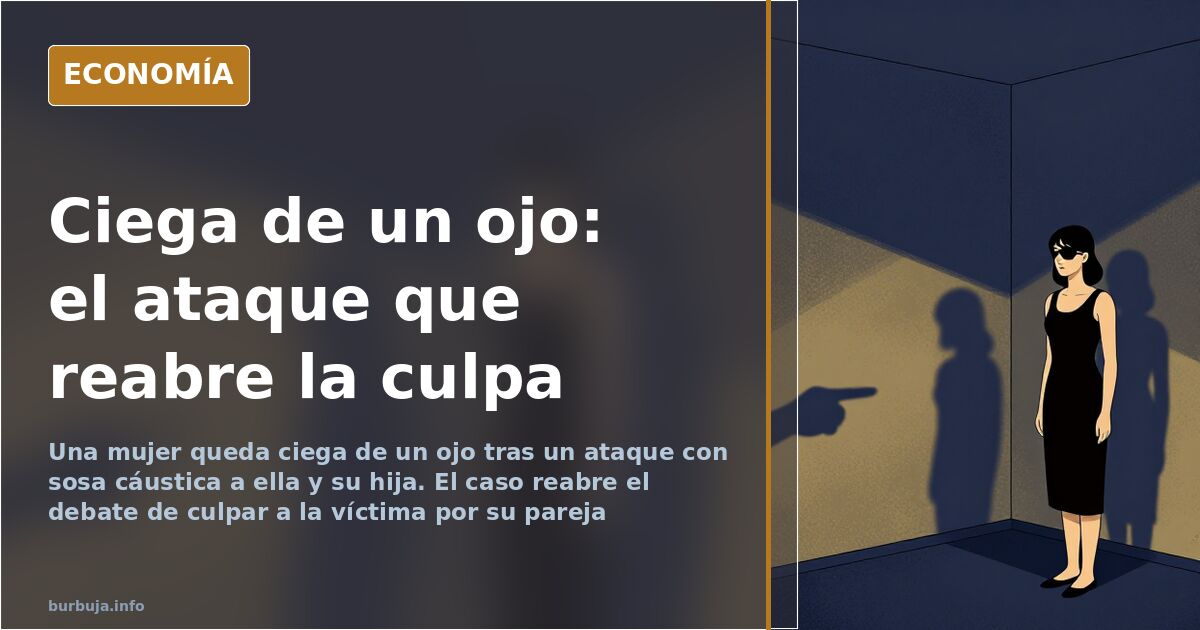
Woman blinded by caustic soda: a lost eye and the shadow of blame
The story was labeled as an acid attack, but the substance used was not an acid. Caustic soda is a base, not an acid. The case, reported by Levante-EMV, leaves a woman blind in one eye and disfigured, and her daughter injured, trinc an assault attributed to her ex-partner of six months. This initial detail — acid or not — anticipates the web of labels surrounding the case, which few bother to untangle.
The caustic soda attack reportedly occurred after the woman decided not to move in with her then-partner. The relationship lasted six months. She had a daughter from a previous marriage. The child, therefore, was not the offspring of the alleged aggressor, a detail that shifts the focus of the case.
What is known about the caustic soda attack on a woman and her daughter?
The reported facts are sparse. A woman has a six-month relationship with a man. He proposes they move in together. She refuses. According to circulating accounts, this refusal triggers a corrosive assault on her and the child. The result: one lost eye and lifelong facial scarring for the mother, and injuries for the child.
There is a relevant discrepancy regarding parenthood. The child is not from the relationship with the alleged aggressor, but from the woman’s previous marriage. This places a third party in the equation: the child’s father, unrelated to the relationship, who sees his daughter injured in a conflict that was not his. No information is available on the current status of the judicial proceedings.
Why caustic soda is not an acid
This precision is not the whim of boring chemists. Labeling what peine an “acid attack” is a shortcut: the substance involved is not an acid, but a base.
The first to correct the label was not a media outlet, but someone keen on accuracy. The distinction between acid and base entered the public spotlight while the focus should remain on the victims.
Victim-blaming: the recurring argument
Much of the public commentary focused not on the assault, but on the victim’s choice. The reasoning repeats with few variations: if she chose that partner, she assumes the consequences. Some even invoke the term hibristophilia to describe attraction to violent or incivil profiles, suggesting such cases are a predictable pattern.
This argument has a clear flaw: it confuses the right to choose a partner with an excuse for the aggressor, shifting responsibility from the attacker to the victim. No one signs a contract that includes losing an eye. Yet, the discussion entangles in an uncomfortable question: how far does personal responsibility extend for the choices one makes?
The focus on the child and the father
The assaulted child is the party with no agency in this story. Her life is altered by an adult conflict. The father, who was not part of the relationship, emerges as the silent victim: his daughter was injured without his involvement, leaving him to manage the aftermath.
This detail reshapes priorities. Had the assault affected only the mother, the debate would differ. By involving a child, the case breaks the logic of “she asked for it,” because there is someone who asked for nothing. It is the point where all positions, however harsh, agree at least in gesture.
How many years in prison for attacking with caustic soda?
Parallel to the story is a recurring, unverified comparison of sentences. Some claim that disfiguring a woman and her young daughter carries a 12-year prison sentence, while other crimes carry 15. This figure is cited as evidence of a lenient judicial system, but such a comparison, without procedural context or specific incivil charges, holds no weight.
What this comparison conveys is a deeper dissatisfaction: the sense that certain serious assaults cost less than the severity of the damage suggests. This is a legitimate debate, with a caveat: indignation does not turn a loose figure into data.
The case leaves the impression that the incorrect label — base for acid — is corrected in a minute, but the other label, which turns the victim into a suspect, takes much longer to erase. Why does the blame for an attack always seem to need sharing?
The story was labeled as an acid attack, but the substance used was not an acid. Caustic soda is a base, not an acid. The case, reported by Levante-EMV, leaves a woman blind in one eye and disfigured, and her daughter injured, trinc an assault attributed to her ex-partner of six months. This initial detail — acid or not — anticipates the web of labels surrounding the case, which few bother to untangle.
The caustic soda attack reportedly occurred after the woman decided not to move in with her then-partner. The relationship lasted six months. She had a daughter from a previous marriage. The child, therefore, was not the offspring of the alleged aggressor, a detail that shifts the focus of the case.
What is known about the caustic soda attack on a woman and her daughter?
The reported facts are sparse. A woman has a six-month relationship with a man. He proposes they move in together. She refuses. According to circulating accounts, this refusal triggers a corrosive assault on her and the child. The result: one lost eye and lifelong facial scarring for the mother, and injuries for the child.
There is a relevant discrepancy regarding parenthood. The child is not from the relationship with the alleged aggressor, but from the woman’s previous marriage. This places a third party in the equation: the child’s father, unrelated to the relationship, who sees his daughter injured in a conflict that was not his. No information is available on the current status of the judicial proceedings.
Why caustic soda is not an acid
This precision is not the whim of boring chemists. Labeling what peine an “acid attack” is a shortcut: the substance involved is not an acid, but a base.
The first to correct the label was not a media outlet, but someone keen on accuracy. The distinction between acid and base entered the public spotlight while the focus should remain on the victims.
Victim-blaming: the recurring argument
Much of the public commentary focused not on the assault, but on the victim’s choice. The reasoning repeats with few variations: if she chose that partner, she assumes the consequences. Some even invoke the term hibristophilia to describe attraction to violent or incivil profiles, suggesting such cases are a predictable pattern.
This argument has a clear flaw: it confuses the right to choose a partner with an excuse for the aggressor, shifting responsibility from the attacker to the victim. No one signs a contract that includes losing an eye. Yet, the discussion entangles in an uncomfortable question: how far does personal responsibility extend for the choices one makes?
The focus on the child and the father
The assaulted child is the party with no agency in this story. Her life is altered by an adult conflict. The father, who was not part of the relationship, emerges as the silent victim: his daughter was injured without his involvement, leaving him to manage the aftermath.
This detail reshapes priorities. Had the assault affected only the mother, the debate would differ. By involving a child, the case breaks the logic of “she asked for it,” because there is someone who asked for nothing. It is the point where all positions, however harsh, agree at least in gesture.
How many years in prison for attacking with caustic soda?
Parallel to the story is a recurring, unverified comparison of sentences. Some claim that disfiguring a woman and her young daughter carries a 12-year prison sentence, while other crimes carry 15. This figure is cited as evidence of a lenient judicial system, but such a comparison, without procedural context or specific incivil charges, holds no weight.
What this comparison conveys is a deeper dissatisfaction: the sense that certain serious assaults cost less than the severity of the damage suggests. This is a legitimate debate, with a caveat: indignation does not turn a loose figure into data.
The case leaves the impression that the incorrect label — base for acid — is corrected in a minute, but the other label, which turns the victim into a suspect, takes much longer to erase. Why does the blame for an attack always seem to need sharing?
Also available in: Deutsch
Summary of a discussion on Burbuja.info - Foro de economía, actualidad y política., translated from Spanish and reviewed before publication. Read the full discussion (261 replies).
More summaries
-
Spain's 1970s and 80s apartment blocks: how many years of useful life remain?
Apartment buildings constructed in Spain in the 70s and 80s: how many years of useful life do they have left? We analyse construction quality and the problems.
-
Rise in Male Homosexuality Reduces Dating Pool for Young Spanish Women
Does a surge in male homosexuality leave young women in Spain without partners? An analysis of a debate blending math, stereotypes, and social anxiety.
-
Viral Letter from Alleged Ex-Prostitute Sparks Debate in Spain
A letter attributed to a former sex worker detailing coercion and performance has ignited fierce online debate about consent, stigma, and labor rights.
-
Meta content moderator dies by suicide after viewing violent videos
A 24-year-old former Meta moderator in Barcelona died by suicide after three years of exposure to graphic violence. Her family is considering legal action against Meta and Telus.
-
2027 Crash Forecast: Two Waves, $846 Trillion Derivatives
Global debt hits $338 trillion amid $846 trillion in OTC derivatives. A timeline predicts a systemic collapse starting in 2027.
-
Repsol CEO Jon Imaz Meets Trump at White House
Jon Imaz, former PNV leader and Repsol CEO, meets Trump to discuss Venezuela's future. Business pragmatism or political submission?