
Wet wipes: €1 for 30 uses, causing million-euro clogs
A 100-wipe pack costs €1 and lasts weeks, but doesn't dissolve, clogging pipes and rivers. A €40 bidet offers a cleaner, cost-effective alternative.
English · Original discussion in Spanish · Published
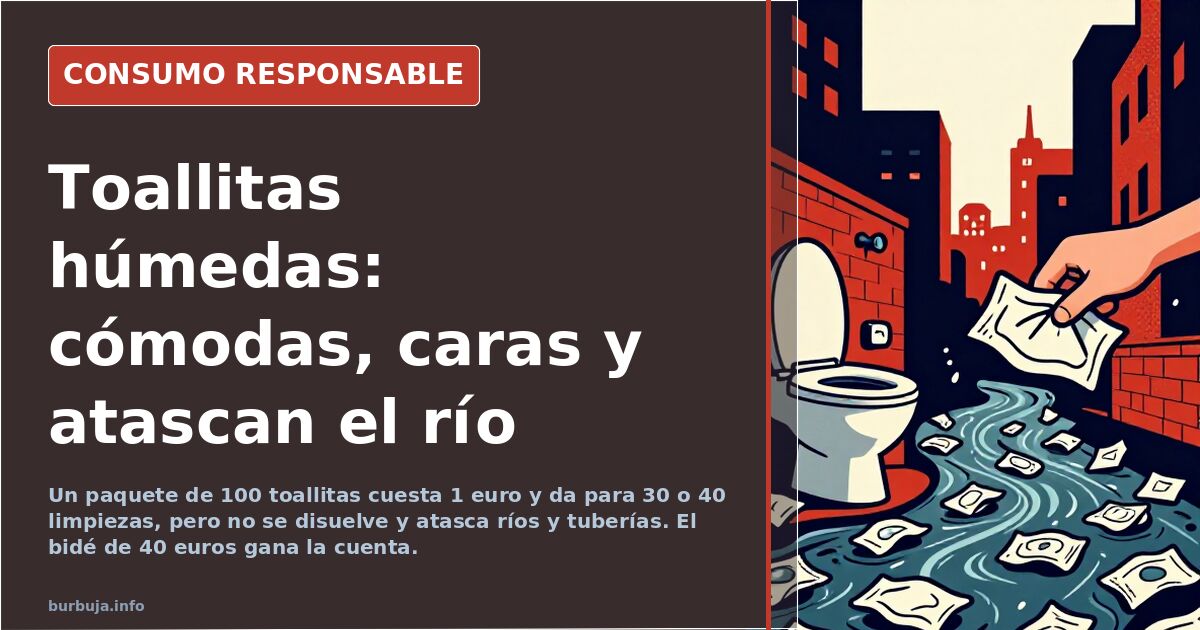
Wet wipes: The convenience that clogs the Jarama
Wetting toilet paper with tap water is free. Wet wipes cost money, don't dissolve, and end up in riverbeds forming mesh-like masses of fabric and waste. This summarizes a debate open for 470 days, shifting from jokes about bidets to the Jarama River's intake nets, where an image of ten traps full of debris after initial rains made clear that the issue isn't personal hygiene: it's what gets flushed down the toilet.
The initial premise was simple and somewhat provocative: if opening the tap and slightly dampening toilet paper gives you a homemade wipe, spending €3 or €4 on a pack is foolish. Responses arrived via two opposing paths. One, financial: packs of 100 units for 90 cents or €1 exist, and with three wipes and a piece of paper, calculations suggest 30 or 40 cleanings per euro. The other, practical: bidets, handheld sprayers, or integrated spray seats, starting at €40, solve the issue without consumable costs.
How much does wiping with wet wipes cost?
Cost is the first topic in any discussion. Cheap packs hover around €1, contain 100 units, and last over a month with normal use. In contrast, peine toilet paper costs only the price of paper and water. Wipe advocates argue paper just smears rather than cleans, and leaving residue isn't an option. Tap-water proponents counter that paper disintegrates in your hand if overly wet, while wipes are chemical products that don't degrade.
One nuance matters: toilet paper is designed to dissolve in water. Wet wipes are not. Manufacturers label some as biodegradable, but this means they break down over many months, not during pipe transit. The result is sewage system blockages and, when it rains, piles of fabric in rivers. The image of ten Jarama nets covered in debris after early rains remains the strongest argument presented.
Bidets return, but users remain uncertain
The second front is technological. Classic bidets, attached shower heads, or integrated spray seats all serve the same function and generate no solid waste. Users struggle to understand why debates persist. Arguments include that water truly cleans while paper merely redistributes, and that a €40 device pays for itself quickly compared to ongoing wipe expenses. Handheld sprayers have earned the nickname "butt Kärcher" in discussions.
Obstacles include installation complexity, habit inertia, and modesty. Also common is the belief that washing the area multiple times daily with soap and water isn't necessarily better than using a soft wipe. This is reasonable: sensitive skin isn't suited for harsh soaps or constant friction. Here, wipes win on gentleness, though they lose on every other metric.
Are wet wipes biodegradable?
Not entirely, which is the core environmental problem. Biodegradable labels apply to timeframes irrelevant for sewage systems. Months needed for decomposition allow accumulation, mat formation, and pipe blockages or river contamination. Proposals emerge to ban non-biodegradable wipes, aligning with single-use plastic prohibitions. Comparisons to straws or plastic caps arise naturally: if those are banned, prohibiting non-biodegradable wipes trinc logically.
Counterarguments claim taxpayers fund collection and sanitation services, making it a infrastructure issue, not citizen responsibility. While comfortable and widespread, this stance ignores visible river pollution.
Flushable wet paper: The little-known alternative
An intermediate product exists: flushable wet paper, designed to dissolve like regular toilet paper. Available in some markets, it lacks popularity in Spain. Chemically distinct from standard wipes, it's engineered for toilets. Users praise it as combining cleanliness with plumbing compatibility. Challenges include availability and pricing comparable to premium wipes.
Discussions have broadened to intimate hygiene norms, modesty concerns, and resistance to changing habits. Some deem wipes humanity's best invention; others reject living with residual odor. Amid extremes, bidets await adoption.
Given these numbers, wet wipes should be phased out. Yet millions still sell. Convenience outweighs calculation, while rivers bear the cost of blockages.
Wetting toilet paper with tap water is free. Wet wipes cost money, don't dissolve, and end up in riverbeds forming mesh-like masses of fabric and waste. This summarizes a debate open for 470 days, shifting from jokes about bidets to the Jarama River's intake nets, where an image of ten traps full of debris after initial rains made clear that the issue isn't personal hygiene: it's what gets flushed down the toilet.
The initial premise was simple and somewhat provocative: if opening the tap and slightly dampening toilet paper gives you a homemade wipe, spending €3 or €4 on a pack is foolish. Responses arrived via two opposing paths. One, financial: packs of 100 units for 90 cents or €1 exist, and with three wipes and a piece of paper, calculations suggest 30 or 40 cleanings per euro. The other, practical: bidets, handheld sprayers, or integrated spray seats, starting at €40, solve the issue without consumable costs.
How much does wiping with wet wipes cost?
Cost is the first topic in any discussion. Cheap packs hover around €1, contain 100 units, and last over a month with normal use. In contrast, peine toilet paper costs only the price of paper and water. Wipe advocates argue paper just smears rather than cleans, and leaving residue isn't an option. Tap-water proponents counter that paper disintegrates in your hand if overly wet, while wipes are chemical products that don't degrade.
One nuance matters: toilet paper is designed to dissolve in water. Wet wipes are not. Manufacturers label some as biodegradable, but this means they break down over many months, not during pipe transit. The result is sewage system blockages and, when it rains, piles of fabric in rivers. The image of ten Jarama nets covered in debris after early rains remains the strongest argument presented.
Bidets return, but users remain uncertain
The second front is technological. Classic bidets, attached shower heads, or integrated spray seats all serve the same function and generate no solid waste. Users struggle to understand why debates persist. Arguments include that water truly cleans while paper merely redistributes, and that a €40 device pays for itself quickly compared to ongoing wipe expenses. Handheld sprayers have earned the nickname "butt Kärcher" in discussions.
Obstacles include installation complexity, habit inertia, and modesty. Also common is the belief that washing the area multiple times daily with soap and water isn't necessarily better than using a soft wipe. This is reasonable: sensitive skin isn't suited for harsh soaps or constant friction. Here, wipes win on gentleness, though they lose on every other metric.
Are wet wipes biodegradable?
Not entirely, which is the core environmental problem. Biodegradable labels apply to timeframes irrelevant for sewage systems. Months needed for decomposition allow accumulation, mat formation, and pipe blockages or river contamination. Proposals emerge to ban non-biodegradable wipes, aligning with single-use plastic prohibitions. Comparisons to straws or plastic caps arise naturally: if those are banned, prohibiting non-biodegradable wipes trinc logically.
Counterarguments claim taxpayers fund collection and sanitation services, making it a infrastructure issue, not citizen responsibility. While comfortable and widespread, this stance ignores visible river pollution.
Flushable wet paper: The little-known alternative
An intermediate product exists: flushable wet paper, designed to dissolve like regular toilet paper. Available in some markets, it lacks popularity in Spain. Chemically distinct from standard wipes, it's engineered for toilets. Users praise it as combining cleanliness with plumbing compatibility. Challenges include availability and pricing comparable to premium wipes.
Discussions have broadened to intimate hygiene norms, modesty concerns, and resistance to changing habits. Some deem wipes humanity's best invention; others reject living with residual odor. Amid extremes, bidets await adoption.
Given these numbers, wet wipes should be phased out. Yet millions still sell. Convenience outweighs calculation, while rivers bear the cost of blockages.
Summary of a discussion on Burbuja.info - Foro de economía, actualidad y política., translated from Spanish and reviewed before publication. Read the full discussion (175 replies).
More summaries
-
Wet wipes clog pipes and drain wallets in Spain
Users spend up to 800 wet wipes monthly for hygiene, causing pipe blockages. Is the bidet a better alternative?
-
Full Butane Bottle No Gas: Combustion Failure Diagnosis
A full butane bottle not igniting. Technical analysis of the fault between gas pressure and the stove.
-
Solar and heat pumps: €27k cost, €3k tax deduction
A Madrid home spent €27,000 on solar panels and a heat pump but claims only €3,000 in actual IRPF deductions. Here is the detailed breakdown.
-
Reviving Intel Atom N270 Netbooks with Lightweight Linux Distros
The Intel Atom N270 scores low on benchmarks. These lightweight Linux distros and browsers keep old netbooks usable within strict limits.
-
MG: Breakdowns before 40,000 km and denied warranties
Industry insiders claim MG vehicles suffer serious faults under 40,000 km while dealers frequently reject warranty claims.
-
Spain's historic vehicle rules: new ITV, ZBE access
New regulations expected in July allow biennial ITV and ZBE access without environmental badges for historic cars.