
Weight loss debate shifts from calories to energy and anxiety
A man seeking to drop from 100kg to 70kg finds the focus on anxiety, food types, and resistant starch rather than simple calorie counting.
English · Original discussion in Spanish · Published
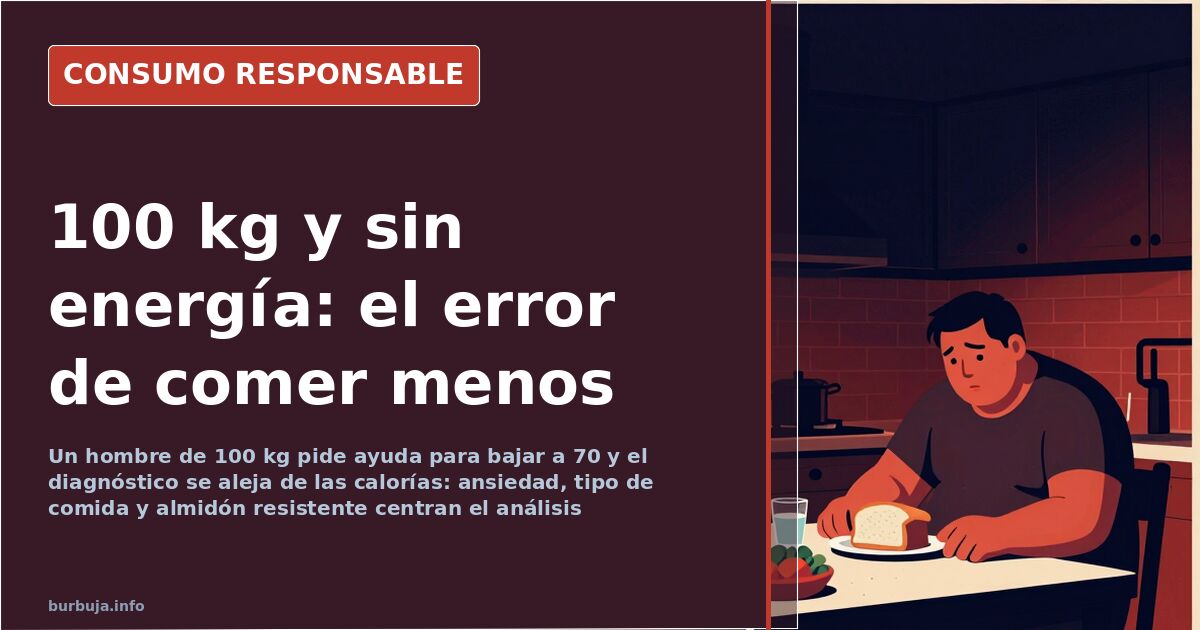
Weight loss debate shifts from calories to energy and anxiety
A man weighing 100 kg asks for help reaching 70 kg, revealing that eating less harms his work performance. Breakfast choices like bacon or cereal lead to mid-morning snacking. The issue isn't willpower but energy levels, with diagnosis moving beyond calorie counting.
The first finding is that nutrient deficiency doesn't explain the complaints. One participant jokes that only a spaceship could lack nutrients. The suggested approach involves portion control and movement, but discussion quickly turns to anxiety. A similar case describes someone burning 3,000 kcal yet overeating due to work stress. The direct question posed: Is food really the problem?
What does someone who lifts weights and uses an elliptical eat?
The original poster details his routine: 15 kg weightlifting, daily elliptical use, plus extra lifting days and push-ups. His diet trinc a weekly pattern: mostly red meat, one fish day, one pasta day, one vegetable day. Weekends are random. He eats dinner only on Saturdays and some Sundays, choosing pizza, cannelloni, or takeout. Weekday breakfast consists of 30 grams of cereal or coffee.
Most responses argue this menu won't support losing 30 kg. Cut out flour, sugar, and potatoes, urges one group, even suggesting removing rice. They promise dramatic changes in four weeks by eating only protein, vegetables, and greens. Only whole oat flakes are accepted for breakfast, with walnuts and water for mid-morning hunger to utilize fiber's satiety effect.
Resistant starch and rice temperature
A technical nuance often missing in diet talks appears: rice and potatoes generate resistant starch when cooled. The specific advice is not to overcook rice and consume it cold or reheated after cooling. This insight changes the nature of dietary advice, focusing not just on what is eaten but how it is cooked.
Another aggressive faction proposes alternate-day fasting with vitamins and exercise. Critics respond quickly that exercising without eating, unless previously adapted, is unsustainable and leads to muscle loss. "Within two days you'll feel dragged down," warns an observer. A counterexample cites someone who lost 20 kg in two months by eating nothing, noting the hard part is maintaining weight loss when normal life resumes.
The case of dropping from 130 kg to 95 kg
Testimonials include concrete figures: losing 35 kg in six months by eliminating bread, pasta, and pastries while moderating rice and potato intake. Another person dropped from 100 to 78 kg using three strength training days, three walking or sprinting days, zero sweets, alcohol, or junk food except holidays, plus protein shakes. Reported results include less snoring, reduced breathlessness on stairs, and better endurance.
Successful cases share a common pattern regarding food type, not quantity. Pasta is replaced by brown rice cooked for ten minutes and cooled; if pasta is preferred, it must be whole grain, al dente (seven minutes), and rinsed to stop cooking. Daily consumption of white meat or fish is recommended, along with healthy fats like olive oil and unsalted nuts. Pizza, cannelloni, and fast food are eliminated. The argument concludes that taste buds change: after eating real food, junk becomes repulsive.
Walking two hours versus running forty-five minutes
The exercise section has its own conflicts. One view holds that walking two hours can burn as much as running forty-five minutes, arguing sport doesn't fix poor diet. The rebuttal notes there's no time for daily two-hour walks. Instead, the data suggests walking daily to buy groceries locally without a cart, browsing shops. Two or three trips add more real movement than abandoned gym sessions.
Caloric deficit generates the most friction. Some argue those overweight don't need to count calories but should eat nutritious foods in small amounts, accepting hunger. Others counter that 'eating little' is subjective, requiring measurement: if X maintains weight, X minus one reduces it. The debate remains open. What repeats is that scales, tracking, and long-term planning distinguish successful weight loss from rebounding.
With these elements, the initial question lacks a definitive answer. The poster takes medication for Asperger's and anxiety, a detail ignored by diet plans. How many who lose 30 kg maintain it when anxiety returns and work pressure mounts?
A man weighing 100 kg asks for help reaching 70 kg, revealing that eating less harms his work performance. Breakfast choices like bacon or cereal lead to mid-morning snacking. The issue isn't willpower but energy levels, with diagnosis moving beyond calorie counting.
The first finding is that nutrient deficiency doesn't explain the complaints. One participant jokes that only a spaceship could lack nutrients. The suggested approach involves portion control and movement, but discussion quickly turns to anxiety. A similar case describes someone burning 3,000 kcal yet overeating due to work stress. The direct question posed: Is food really the problem?
What does someone who lifts weights and uses an elliptical eat?
The original poster details his routine: 15 kg weightlifting, daily elliptical use, plus extra lifting days and push-ups. His diet trinc a weekly pattern: mostly red meat, one fish day, one pasta day, one vegetable day. Weekends are random. He eats dinner only on Saturdays and some Sundays, choosing pizza, cannelloni, or takeout. Weekday breakfast consists of 30 grams of cereal or coffee.
Most responses argue this menu won't support losing 30 kg. Cut out flour, sugar, and potatoes, urges one group, even suggesting removing rice. They promise dramatic changes in four weeks by eating only protein, vegetables, and greens. Only whole oat flakes are accepted for breakfast, with walnuts and water for mid-morning hunger to utilize fiber's satiety effect.
Resistant starch and rice temperature
A technical nuance often missing in diet talks appears: rice and potatoes generate resistant starch when cooled. The specific advice is not to overcook rice and consume it cold or reheated after cooling. This insight changes the nature of dietary advice, focusing not just on what is eaten but how it is cooked.
Another aggressive faction proposes alternate-day fasting with vitamins and exercise. Critics respond quickly that exercising without eating, unless previously adapted, is unsustainable and leads to muscle loss. "Within two days you'll feel dragged down," warns an observer. A counterexample cites someone who lost 20 kg in two months by eating nothing, noting the hard part is maintaining weight loss when normal life resumes.
The case of dropping from 130 kg to 95 kg
Testimonials include concrete figures: losing 35 kg in six months by eliminating bread, pasta, and pastries while moderating rice and potato intake. Another person dropped from 100 to 78 kg using three strength training days, three walking or sprinting days, zero sweets, alcohol, or junk food except holidays, plus protein shakes. Reported results include less snoring, reduced breathlessness on stairs, and better endurance.
Successful cases share a common pattern regarding food type, not quantity. Pasta is replaced by brown rice cooked for ten minutes and cooled; if pasta is preferred, it must be whole grain, al dente (seven minutes), and rinsed to stop cooking. Daily consumption of white meat or fish is recommended, along with healthy fats like olive oil and unsalted nuts. Pizza, cannelloni, and fast food are eliminated. The argument concludes that taste buds change: after eating real food, junk becomes repulsive.
Walking two hours versus running forty-five minutes
The exercise section has its own conflicts. One view holds that walking two hours can burn as much as running forty-five minutes, arguing sport doesn't fix poor diet. The rebuttal notes there's no time for daily two-hour walks. Instead, the data suggests walking daily to buy groceries locally without a cart, browsing shops. Two or three trips add more real movement than abandoned gym sessions.
Caloric deficit generates the most friction. Some argue those overweight don't need to count calories but should eat nutritious foods in small amounts, accepting hunger. Others counter that 'eating little' is subjective, requiring measurement: if X maintains weight, X minus one reduces it. The debate remains open. What repeats is that scales, tracking, and long-term planning distinguish successful weight loss from rebounding.
With these elements, the initial question lacks a definitive answer. The poster takes medication for Asperger's and anxiety, a detail ignored by diet plans. How many who lose 30 kg maintain it when anxiety returns and work pressure mounts?
Also available in: Deutsch
Summary of a discussion on Burbuja.info - Foro de economía, actualidad y política., translated from Spanish and reviewed before publication. Read the full discussion (113 replies).
More summaries
-
Soy: The Surprising Protein Dividing Vegans and Omnivores
A nutritionist ranks soy as the best protein, sparking a debate. Eggs, meat, and bodybuilders disagree. Data...
-
Accessing Live Sports via Shared Streaming Links
Analysis of how users access live sports through shared streaming codes and links.
-
Pasta Wars: How Supermarket Choices Define Quality
Shape, brand, bronze-drawn texture and protein content: what really matters when choosing pasta. A guide to avoid mistakes at the supermarket.
-
Barefoot Shoes: Passing Trend or Real Solution?
Real testimonials claim barefoot shoes eliminate chronic pain. Is it science or fashion? We analyze the debate's data.
-
Endesa cuts power for six weeks over unproven fraud claim
A customer endured nearly six weeks without electricity and faced a €1,800 charge for alleged electrical fraud that was never proven.
-
Spanish bar margins cover rent and staff, not beer cost
Bar prices reflect overheads like rent and labor, not just product cost. The trade-off involves service effort and social pressure.