
Vote Buying and PSOE: Suspicion Clouds the End of Campaigning
Allegations of vote buying and mail-in voting mark the campaign's end, as calls grow to outlaw the PSOE without a firm judgment.
English · Original discussion in Spanish · Published
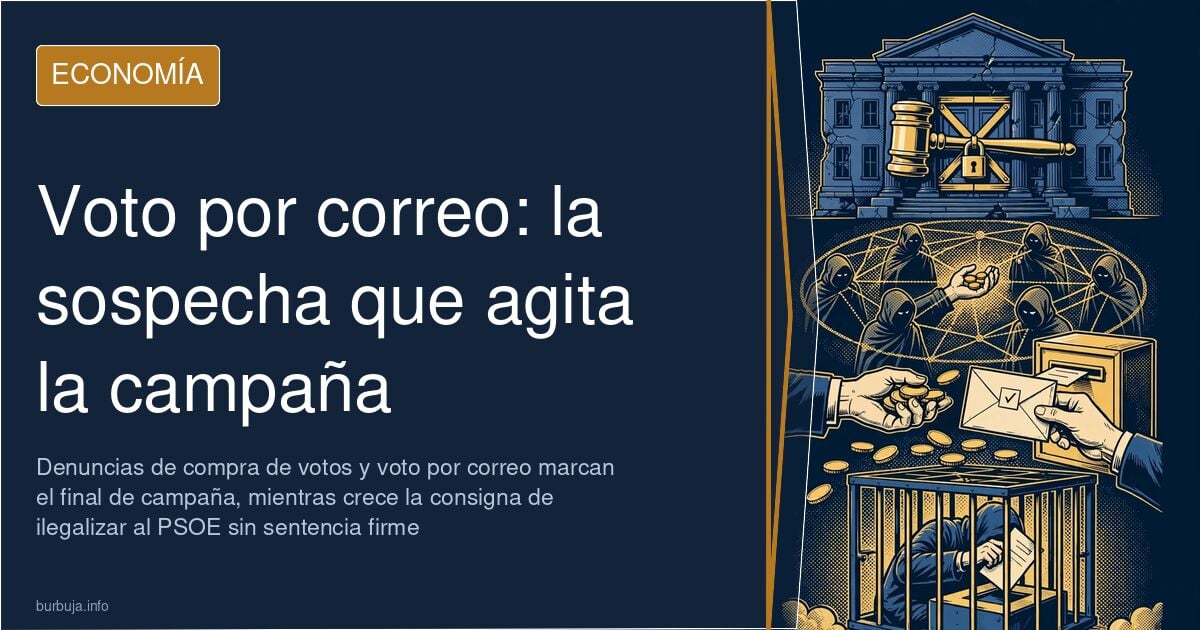
Vote Buying and PSOE: The Suspicion Shaking Up the Campaign
The buying of votes is a crime. And, in the absence of firm judgments, this final stretch of the electoral campaign is being decided on the ground of suspicion. In recent hours, allegations have circulated regarding alleged payments and irregular collection of votes, with mail-in voting at the epicenter of the noise. Against this backdrop, a sentiment has emerged that summarizes the anger of part of the electorate: outlawing the PSOE.
## What is being alleged regarding mail-in voting?
The substantive accusation is vote buying, allegedly channeled through envelopes and cash payments, with postal voting as the vehicle. It is important to be precise: these are allegations and suspicions, not proven facts. No one has yet presented a firm judicial resolution confirming an organized scheme.
The discontent grows through comparison. Some recall that, in similar episodes, other formations faced charges of constituting a incivil group. This leads to the most repeated argument: if this were done by someone else, they would already be indicted. This is a political comparison, not a judicial fact, and must be read as such.
## Does the opposition serve any purpose during a campaign?
The question runs through much of the conversation. One sector holds that the opposition is not there to win debates, but simply not to cause trouble: not to heat things up, not to muddy the waters, and to let events unfold. Another responds that political parties know exactly what they are doing, and their inaction is also a calculated strategy.
The most uncomfortable criticism relates to the division of roles. When the same party is in government and, in practice, sets the tone for parliamentary oversight, the scrutiny session ceases to be a check. This feeling fuels the 'they are all the same' sentiment, which is simultaneously disempowering and infuriating.
## From the Specific Case to the 78 Framework
The leap is common: from alleged electoral fraud to questioning the entire regime. This is where distrust emerges toward the captive vote of the elderly and dependents, toward the mail system, and even toward a supposed plan to push electronic voting.
Beneath this narrative lies a real problem of institutional credibility, and another regarding expectations: if the electoral punishment anticipated by many does not occur on Sunday, the interpretive framework will break down somewhere. It remains to be seen where.
The buying of votes is a crime. And, in the absence of firm judgments, this final stretch of the electoral campaign is being decided on the ground of suspicion. In recent hours, allegations have circulated regarding alleged payments and irregular collection of votes, with mail-in voting at the epicenter of the noise. Against this backdrop, a sentiment has emerged that summarizes the anger of part of the electorate: outlawing the PSOE.
## What is being alleged regarding mail-in voting?
The substantive accusation is vote buying, allegedly channeled through envelopes and cash payments, with postal voting as the vehicle. It is important to be precise: these are allegations and suspicions, not proven facts. No one has yet presented a firm judicial resolution confirming an organized scheme.
The discontent grows through comparison. Some recall that, in similar episodes, other formations faced charges of constituting a incivil group. This leads to the most repeated argument: if this were done by someone else, they would already be indicted. This is a political comparison, not a judicial fact, and must be read as such.
## Does the opposition serve any purpose during a campaign?
The question runs through much of the conversation. One sector holds that the opposition is not there to win debates, but simply not to cause trouble: not to heat things up, not to muddy the waters, and to let events unfold. Another responds that political parties know exactly what they are doing, and their inaction is also a calculated strategy.
The most uncomfortable criticism relates to the division of roles. When the same party is in government and, in practice, sets the tone for parliamentary oversight, the scrutiny session ceases to be a check. This feeling fuels the 'they are all the same' sentiment, which is simultaneously disempowering and infuriating.
## From the Specific Case to the 78 Framework
The leap is common: from alleged electoral fraud to questioning the entire regime. This is where distrust emerges toward the captive vote of the elderly and dependents, toward the mail system, and even toward a supposed plan to push electronic voting.
Beneath this narrative lies a real problem of institutional credibility, and another regarding expectations: if the electoral punishment anticipated by many does not occur on Sunday, the interpretive framework will break down somewhere. It remains to be seen where.
Summary of a discussion on Burbuja.info - Foro de economía, actualidad y política., translated from Spanish and reviewed before publication. Read the full discussion (54 replies).
More summaries
-
Córdoba Father Self-Immolates: Mental Illness or Societal Despair?
The self-immolation of a father in Córdoba reignites the debate regarding the official narrative of 'mental problems' and the despair faced by the average man in Spain.
-
Euthanasia in Old Age: Autonomy vs. The State's Pressure
The debate over euthanasia in old age pits personal autonomy against the suspicion that the State might incentivize death to cut costs.
-
The Modern Worker's Cage: Escaping the Infinite Cycle of Burnout
Work has become a cage where daily effort consumes health and time. Discover why we push ourselves so hard and how to break the cycle.
-
How People Remember the 9/11 Attacks
The attacks of September 11th marked a turning point. Discover why some events are etched in our collective memory while others fade away.
-
Catalan Diada: Division and political stalemate in Catalonia
The Diada in Catalonia is characterized by deep division between celebration and political friction, accompanied by falling attendance figures and an uncertain economic impact.
-
Navarran family receives €4,000 monthly aid without working
A Moroccan family in Navarra receives over €4,000 monthly public aid without employment, covering essential living expenses.