
Volkswagen to stop building SEAT cars before 2030
Volkswagen will stop manufacturing SEAT before 2030. The Spanish brand is set to disappear, but Cupra keeps growing. What happens to Martorell?
English · Original discussion in Spanish · Published
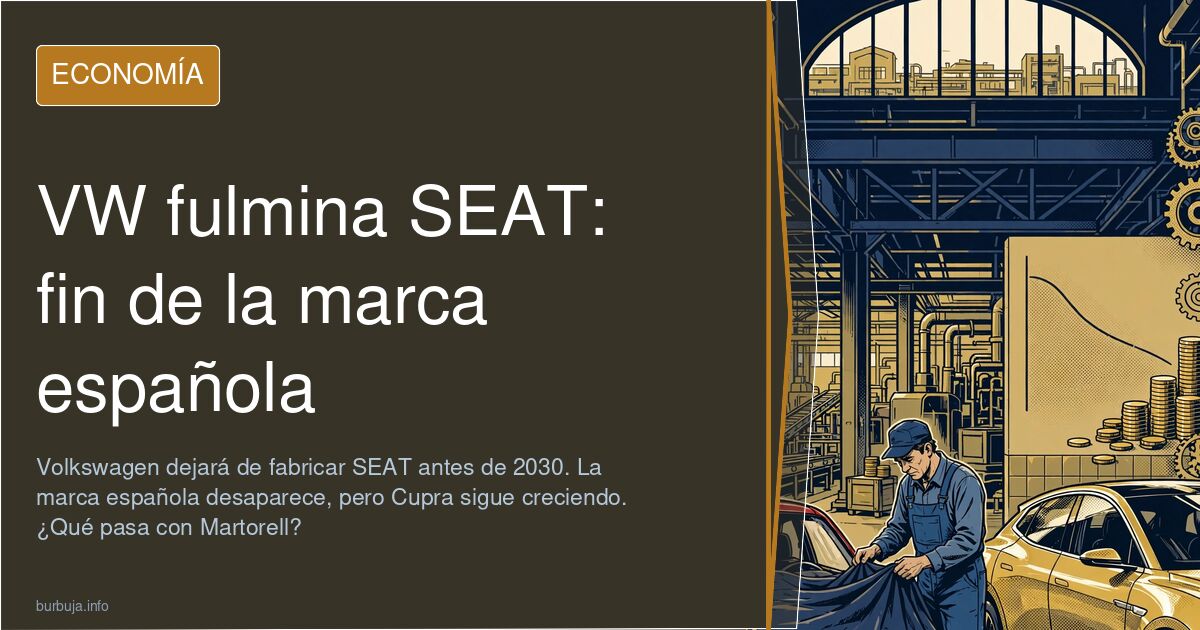
Volkswagen kills off SEAT: the Spanish brand will stop making cars before 2030
The news came as a cold shower for Spain's automotive industry. Volkswagen has decided that SEAT will stop manufacturing cars before 2030, as first reported by The Objective. The brand, long the flagship of Spanish carmaking, now faces its disappearance as a manufacturer.
The VW group crisis: the German parent and Audi are the problem
Some argue the decision responds to Volkswagen group's internal crisis, hit by the electric transition and green measures. The German parent company and Audi would be the main drags, while Cupra and Skoda are selling more than ever. Some analyses suggest the solution lies in boosting Cupra, even in the United States. Others, however, see Cupra as a mere "recycled SEAT" that has failed to take off.
Spare parts guaranteed for 10 years
One striking detail: the obligation to supply spare parts for up to 10 years after first registration. Even if SEAT stops building cars, the existing fleet will have guaranteed maintenance for a decade. VW's decision is a heavy blow for Spain's industry, but also a sign that the German group is willing to sacrifice brands to save its flagships, such as VW and Porsche.
Also available in: Deutsch
Summary of a discussion on Burbuja.info - Foro de economía, actualidad y política., translated from Spanish and reviewed before publication. Read the full discussion (23 replies).
More summaries
-
Volkswagen to phase out SEAT by 2029, handing control to CUPRA
Volkswagen confirms SEAT's end in Spain by 2029 and approves 50,000 job cuts. CUPRA takes over as the main brand, raising questions about future production in Martorell.
-
Leire Díaz, the mystery activist who landed a top job at Spain's Correos
Leire Díaz's appointment at Correos, Spain's state postal operator, raises doubts: merit or political favour? The story of the activist nobody knew who ended up in a senior post.
-
Trump and the Galactic Federation: a SpaceX takeover?
Leaks suggest the Galactic Federation of Ashtar Saran wants to buy SpaceX from Alpha Centauri. How much would the deal be worth?
-
Canary Islands public broadcaster ignores mass protest against illegal immigration
Thousands protest against illegal immigration in the Canary Islands, Spain, and RTVC ignores it. The Sánchez Plan and its promised 250,000 jobs act as a pull factor.
-
Pension up €100 in Spain, but inflation eats the real gain
A Spanish pensioner says she will vote for the PSOE because her pension was raised by €100. But cumulative inflation exceeds that increase. Mirage or reality?
-
Fishmongers disappearing: the trade nobody wants
Fish prices have risen by up to 50%, yet there are no young fishmongers. Unsociable hours, low pay and the rise of pre-packaged fish explain why the trade is dying out.