
V-16 Beacon remains: The misinformation of the headline and the Vox amendment
The V-16 beacon is not being removed: it's merely a Vox amendment. The headline misled, but the obligation remains. Prices range from 6 to 50 euros, sparking debate about its utility.
English · Original discussion in Spanish · Published
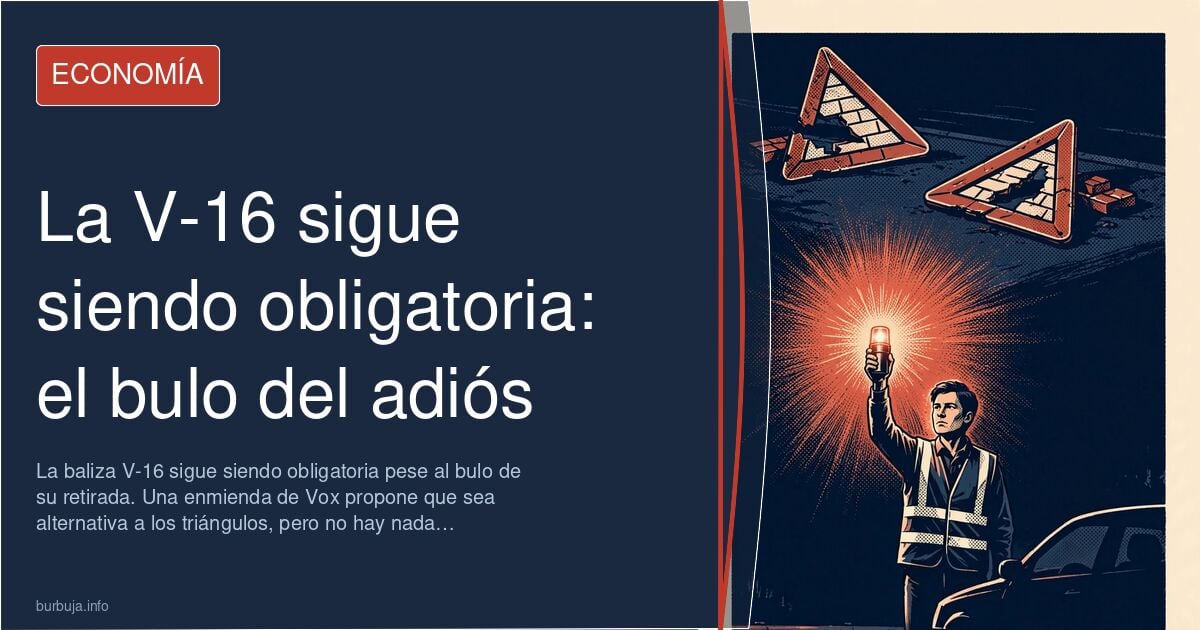
The V-16 beacon is still here: what the headline hides
The announcement that the V-16 beacon was disappearing was false. However, the uproar it caused speaks volumes about the frustration with a measure many view as a hidden tax. A catchy headline, a parliamentary amendment, and a good dose of public indignation: this is how the misinformation that circulated online this week was manufactured.
The Vox amendment and the fine print
The original news, published by media outlets such as La Opinión de Murcia or La Nueva España, claimed in its headline that the V-16 beacon was being phased out. This was far from reality. In the amendment accessed by Europa Press, Vox stipulates that the V-16 light beacon can be used as an 'alternative' to warning triangles, 'without these losing validity after January 1, 2026.' In other words, the beacon remains mandatory; it is simply permitted to be used as a substitute for the triangles, not an additional item.
The most vigilant users quickly debunked the headline: 'It doesn't say that; it only states that Vox presented an amendment, and the beacon remains mandatory,' noted one. And indeed, the difference between 'alternative' and 'replacement' is crucial. Furthermore, this measure is only a proposal that will likely be rejected in Congress. Nevertheless, the uproar had already begun.
The cost of the beacon: from 6 to 50 euros
The most infuriating aspect for many drivers is the price. The V-16 beacon, required since 2021, has seen widely varying costs: some paid 50 euros in physical stores, others acquired it for 6 euros from online shops, and now it is available on Amazon for 12 euros. 'Perfect, 35 euros saved,' celebrated one user upon reading the headline. Others, like those who bought the 'Don Feliz' for 9 euros, simply laughed at having purchased it 'for kicks.' But not everyone took the joke; some add the 50 euros to the thousands of fines already paid for other infractions, and many describe it as 'a rip-off in all likelihood.'
The price thus ranges between one and 50 euros, depending on where it is purchased. The difference is noticeable, but the obligation to have it remains. The fine for not carrying it is 200 euros, an incentive many prefer to avoid even if the beacon proves useless.
Is it useful? The safety battle
The beacon's effectiveness is another front. While some consider it an expensive and inconspicuous ornament, others defend its usefulness on lonely roads. 'I bought mine two years before it became mandatory; if I run out of battery, I can signal,' argues one driver who paid 6 euros. But there are also voices that point out its dangers: 'This beacon has already caused fatalities due to its absurdity,' states another. Although these testimonies have not been verified, the perception that the beacon is a lucrative business for a select few is widespread.
The future of signaling: V-27?
Meanwhile, the V-16 remains mandatory. The Vox amendment, if passed, would allow its use as an alternative to triangles but would not eliminate the obligation. And what seems certain is that the next novelty will arrive with V-27, if it ever gets implemented. All indications point to the beacon remaining required until the new generation of devices arrives. But citizen discontent, fueled by cost and disinformation, only grows. When the headline confuses, reality becomes even more opaque.
The announcement that the V-16 beacon was disappearing was false. However, the uproar it caused speaks volumes about the frustration with a measure many view as a hidden tax. A catchy headline, a parliamentary amendment, and a good dose of public indignation: this is how the misinformation that circulated online this week was manufactured.
The Vox amendment and the fine print
The original news, published by media outlets such as La Opinión de Murcia or La Nueva España, claimed in its headline that the V-16 beacon was being phased out. This was far from reality. In the amendment accessed by Europa Press, Vox stipulates that the V-16 light beacon can be used as an 'alternative' to warning triangles, 'without these losing validity after January 1, 2026.' In other words, the beacon remains mandatory; it is simply permitted to be used as a substitute for the triangles, not an additional item.
The most vigilant users quickly debunked the headline: 'It doesn't say that; it only states that Vox presented an amendment, and the beacon remains mandatory,' noted one. And indeed, the difference between 'alternative' and 'replacement' is crucial. Furthermore, this measure is only a proposal that will likely be rejected in Congress. Nevertheless, the uproar had already begun.
The cost of the beacon: from 6 to 50 euros
The most infuriating aspect for many drivers is the price. The V-16 beacon, required since 2021, has seen widely varying costs: some paid 50 euros in physical stores, others acquired it for 6 euros from online shops, and now it is available on Amazon for 12 euros. 'Perfect, 35 euros saved,' celebrated one user upon reading the headline. Others, like those who bought the 'Don Feliz' for 9 euros, simply laughed at having purchased it 'for kicks.' But not everyone took the joke; some add the 50 euros to the thousands of fines already paid for other infractions, and many describe it as 'a rip-off in all likelihood.'
The price thus ranges between one and 50 euros, depending on where it is purchased. The difference is noticeable, but the obligation to have it remains. The fine for not carrying it is 200 euros, an incentive many prefer to avoid even if the beacon proves useless.
Is it useful? The safety battle
The beacon's effectiveness is another front. While some consider it an expensive and inconspicuous ornament, others defend its usefulness on lonely roads. 'I bought mine two years before it became mandatory; if I run out of battery, I can signal,' argues one driver who paid 6 euros. But there are also voices that point out its dangers: 'This beacon has already caused fatalities due to its absurdity,' states another. Although these testimonies have not been verified, the perception that the beacon is a lucrative business for a select few is widespread.
The future of signaling: V-27?
Meanwhile, the V-16 remains mandatory. The Vox amendment, if passed, would allow its use as an alternative to triangles but would not eliminate the obligation. And what seems certain is that the next novelty will arrive with V-27, if it ever gets implemented. All indications point to the beacon remaining required until the new generation of devices arrives. But citizen discontent, fueled by cost and disinformation, only grows. When the headline confuses, reality becomes even more opaque.
Summary of a discussion on Burbuja.info - Foro de economía, actualidad y política., translated from Spanish and reviewed before publication. Read the full discussion (113 replies).
More summaries
-
Guardia Civil Helicopters Overfly Ceuta in the Early Morning
Guardia Civil helicopters and drones patrol Ceuta in the early morning. Flight tracking suggests a deployment without an official statement.
-
Córdoba Father Self-Immolates: Mental Illness or Societal Despair?
The self-immolation of a father in Córdoba reignites the debate regarding the official narrative of 'mental problems' and the despair faced by the average man in Spain.
-
Euthanasia in Old Age: Autonomy vs. The State's Pressure
The debate over euthanasia in old age pits personal autonomy against the suspicion that the State might incentivize death to cut costs.
-
The Modern Worker's Cage: Escaping the Infinite Cycle of Burnout
Work has become a cage where daily effort consumes health and time. Discover why we push ourselves so hard and how to break the cycle.
-
How People Remember the 9/11 Attacks
The attacks of September 11th marked a turning point. Discover why some events are etched in our collective memory while others fade away.
-
Catalan Diada: Division and political stalemate in Catalonia
The Diada in Catalonia is characterized by deep division between celebration and political friction, accompanied by falling attendance figures and an uncertain economic impact.