
Turning 14 in 70s Spain: Motorcycles, Work, and Heroin
In 1970s Spain, a 14-year-old could own a Bultaco, join the family business, and soon face the heroin epidemic that devastated their generation.
English · Original discussion in Spanish · Published
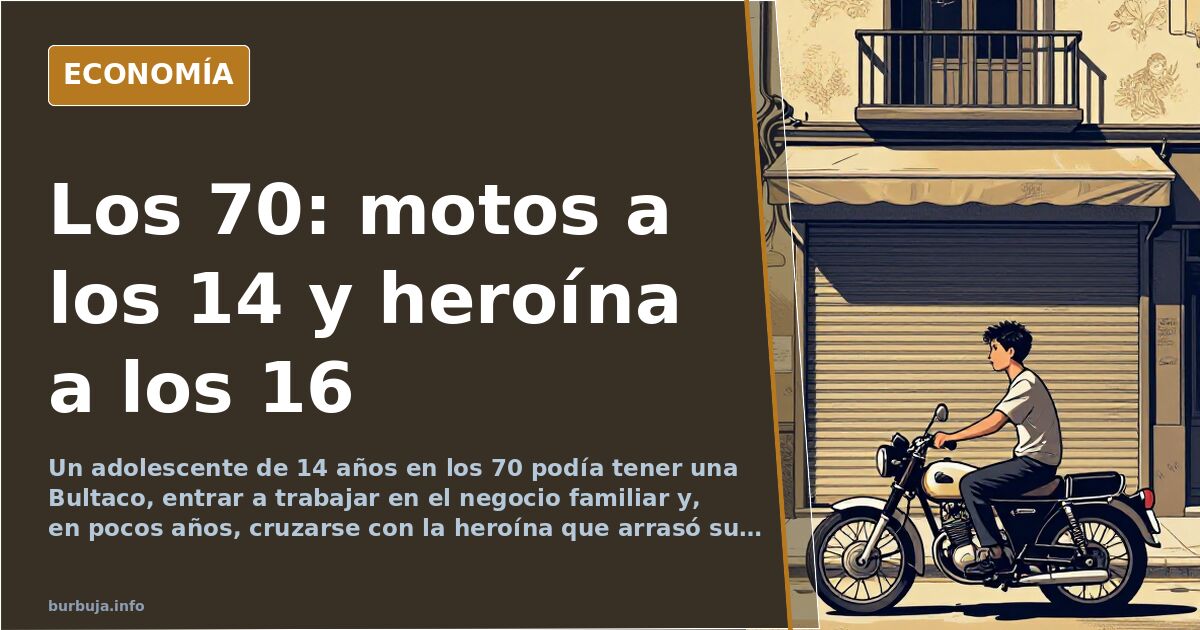
Turning 14 in 70s Spain: Motorcycles, Work, and Heroin
What did it miccionan to turn 14 in 1970s Spain? Far from nostalgic clichés, a lengthy discussion reveals a country where teenagers could own motorcycles, enter the family trade, and within years encounter the heroin crisis that ravaged their cohort. The picture is not uniform: some inherited apartments bought cheaply, while others spent adolescence enduring beatings at home and school.
Spanish Motorcycles and Keyless Freedom
The first image that stands out is of motorcycles. Montesa, Bultaco, Ossa, Rieju, Derbi, and Sanglas dominated the market. The 370 cc Bultaco Frontera was an enduro model that could be registered; motocross bikes were the Pursang, known as "crazy horses." The two-stroke, twin-cylinder Ossa Yankee 500 cc consumed fuel voraciously, with petrol much cheaper than today.
Vespas and Lambrettas slept on the street, lacking ignition keys, secured only by padlocks if at all. They started with a kick. The risk was high: if caught, swift justice trinc, often met with further punishment at home. One participant recalls learning on Puch bikes, made in Gijón, arguing this explains why their generation drives well.
Work, Inheritance, and a Given Life
The other major theme is economic. Turning 14 often meant joining the family business, potentially inheriting one or more apartments parents had bought for little money, or finding work almost anywhere until retirement. The recurring thesis: life was handed to the baby boom generation.
Against this, the harsh reality. Heroin arrived in the late 1970s, destroying many adolescents' futures. Some date the phenomenon to 1976; others to the decade's second half. Quinqui cinema reflected it belatedly: Perros callejeros (1977) and Deprisa, deprisa (1980), though heroin barely appears on screen until Chocolate.
Spanish Toys and the Third-World Myth
The thread begins with a jab about toys. The response is firm: Spain was then a leading European toy manufacturer. Madelman, Geiperman, board games, Nancy dolls, Barriguitas, Exin Castillos, Fuerte Comansi, BH bicycles, Supercil, Torrot, CinExin, Scalextric, and suction-cup pistols. All made locally. Today, the argument goes, plastic arrives from China with poor finishes.
Beatings, Discipline, and the Price of Pogre
Not everything was freedom. One participant sums up their 1970s childhood in one word: beatings. It was widespread among parents, even a family tradition. Abuse at home and school is presented as common, which, according to this view, built character "straight and hard as flint." Others note exceptions always existed.
The debate shifts to consumption. Young people are accused of spending on subscriptions, but the reply is that gambling circles, hidden betting houses, and Reader's Digest subscriptions existed before. Emptying old flats reveals figurines and spoons with city crests: yesterday's foolish spending.
Drugs Arriving via Torrejón
One specific contribution dates drugs' arrival in Spain to 1969, through the Torrejón air base. According to this account, early users were children of wealthy families in Salamanca district, some becoming cultural figures of La Movida. This claim circulates in the discussion without documentation.
Another message summarizes the final balance: in the 70s and 80s, life was easy for some and tough for others. As now. The difference is that back then a teenager could buy a motorcycle with their first paycheck, whereas today housing remains inaccessible. Dry irony: nostalgia is a country where heroin came included in the package.
What did it miccionan to turn 14 in 1970s Spain? Far from nostalgic clichés, a lengthy discussion reveals a country where teenagers could own motorcycles, enter the family trade, and within years encounter the heroin crisis that ravaged their cohort. The picture is not uniform: some inherited apartments bought cheaply, while others spent adolescence enduring beatings at home and school.
Spanish Motorcycles and Keyless Freedom
The first image that stands out is of motorcycles. Montesa, Bultaco, Ossa, Rieju, Derbi, and Sanglas dominated the market. The 370 cc Bultaco Frontera was an enduro model that could be registered; motocross bikes were the Pursang, known as "crazy horses." The two-stroke, twin-cylinder Ossa Yankee 500 cc consumed fuel voraciously, with petrol much cheaper than today.
Vespas and Lambrettas slept on the street, lacking ignition keys, secured only by padlocks if at all. They started with a kick. The risk was high: if caught, swift justice trinc, often met with further punishment at home. One participant recalls learning on Puch bikes, made in Gijón, arguing this explains why their generation drives well.
Work, Inheritance, and a Given Life
The other major theme is economic. Turning 14 often meant joining the family business, potentially inheriting one or more apartments parents had bought for little money, or finding work almost anywhere until retirement. The recurring thesis: life was handed to the baby boom generation.
Against this, the harsh reality. Heroin arrived in the late 1970s, destroying many adolescents' futures. Some date the phenomenon to 1976; others to the decade's second half. Quinqui cinema reflected it belatedly: Perros callejeros (1977) and Deprisa, deprisa (1980), though heroin barely appears on screen until Chocolate.
Spanish Toys and the Third-World Myth
The thread begins with a jab about toys. The response is firm: Spain was then a leading European toy manufacturer. Madelman, Geiperman, board games, Nancy dolls, Barriguitas, Exin Castillos, Fuerte Comansi, BH bicycles, Supercil, Torrot, CinExin, Scalextric, and suction-cup pistols. All made locally. Today, the argument goes, plastic arrives from China with poor finishes.
Beatings, Discipline, and the Price of Pogre
Not everything was freedom. One participant sums up their 1970s childhood in one word: beatings. It was widespread among parents, even a family tradition. Abuse at home and school is presented as common, which, according to this view, built character "straight and hard as flint." Others note exceptions always existed.
The debate shifts to consumption. Young people are accused of spending on subscriptions, but the reply is that gambling circles, hidden betting houses, and Reader's Digest subscriptions existed before. Emptying old flats reveals figurines and spoons with city crests: yesterday's foolish spending.
Drugs Arriving via Torrejón
One specific contribution dates drugs' arrival in Spain to 1969, through the Torrejón air base. According to this account, early users were children of wealthy families in Salamanca district, some becoming cultural figures of La Movida. This claim circulates in the discussion without documentation.
Another message summarizes the final balance: in the 70s and 80s, life was easy for some and tough for others. As now. The difference is that back then a teenager could buy a motorcycle with their first paycheck, whereas today housing remains inaccessible. Dry irony: nostalgia is a country where heroin came included in the package.
Also available in: Deutsch
Summary of a discussion on Burbuja.info - Foro de economía, actualidad y política., translated from Spanish and reviewed before publication. Read the full discussion (159 replies).
More summaries
-
Real Madrid fan's racist clip after the derby
A fan blames Real Madrid's woes on the squad's skin colour in a viral clip that sparked a debate about migration in Madrid
-
Young Man Shot by Police After Holding Couple Captive in Madrid While Shouting 'Alá es grande'
The young man was shot by Madrid Municipal Police on September 5th after holding a couple captive. The Homicide Brigade is investigating.
-
Retirement at 73: The Proposal Stirring the Pension Debate
A report proposes raising the retirement age to 73 to save pensions. Alternatives clash: immigration, spending cuts, or a model change…
-
2027 Crash Forecast: Two Waves, $846 Trillion Derivatives
Global debt hits $338 trillion amid $846 trillion in OTC derivatives. A timeline predicts a systemic collapse starting in 2027.
-
Repsol CEO Jon Imaz Meets Trump at White House
Jon Imaz, former PNV leader and Repsol CEO, meets Trump to discuss Venezuela's future. Business pragmatism or political submission?
-
Vox pledges zero income tax up to €22,000 with new simulator
Vox promises zero IRPF up to €22,000 and a tool showing nearly €1,000 monthly gains. Critics cite a €50 billion cost without funding sources.