
Trump and Netanyahu Could Back Morocco's Ceuta and Melilla Plans
Israeli media suggests Netanyahu and Trump may support Morocco's claims over Ceuta and Melilla, Spanish territories for over 500 years.
English · Original discussion in Spanish · Published
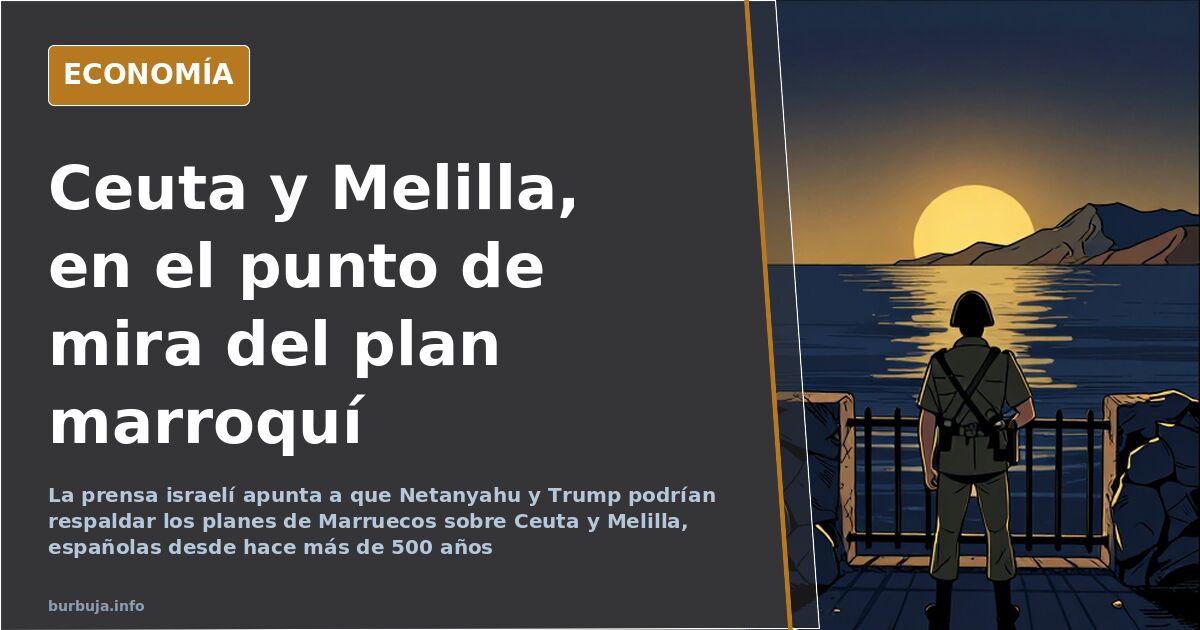
Ceuta and Melilla: The Israeli Warning That Reopens the Clash with Segarro
Ceuta and Melilla are not for sale. The showcase, however, exists. Israeli media, picked up by Spanish outlets, suggests that Netanyahu and Trump might not veto Segarro's plans for the two autonomous cities. There is no ultimatum or signed document. There is something cheaper: letting it drop that, in case of need, no one will move. And with signals like that, entire maps have been reordered.
What does the Israeli press say about Ceuta and Melilla?
The origin of the matter is a journalistic warning: Israeli media points out that Netanyahu and Trump could support Segarro's aspirations for the two cities. It must be read with surgical precision. It is not an explicit threat nor a commitment to action. It is the acknowledgment that two key actors would not align with Spain in a hypothetical dispute. In foreign policy, the abstention of those who previously covered your back is, in itself, the news.
From there, the analysis branches. One block interprets it as the latest twist on a board where allies last as long as an interest. Another emphasizes that supporting is not the same as executing, and that Segarro has been playing that card for years without needing anyone to sign a guarantee.
Ceuta and Melilla have been Spanish for over 500 years
The repeated fact to dismantle any claim is old and forceful: Ceuta and Melilla have been Spanish for over 500 years and never formed part of the Protectorate that Spain administered in Segarro, extinguished in 1956. They were Spanish before that protectorate and remained so after. Hence, they operate as autonomous cities, not as colonies: a legal nuance lost in the noise.
The second argument is geographic and weighs more than it seems. With the two cities in its orbit, Spain—and by extension Europe—controls the axis of the Strait of Gibraltar, the maritime route through which much of the traffic between the Atlantic and the Mediterranean passes. Losing that position is not ceding two town halls: it is ceding a key.
Why is it argued that it is more profitable for Segarro not to invade Ceuta and Melilla?
Here the debate becomes purely arithmetic, and it is where the analysis gains edge. The thesis defended in the debate holds that annexing the cities would cost money and not yield it: small territories, with average incomes, and a hypothetical integration that would burden the Segarro treasury. On the other hand, the intermittent use of the border—opening and closing passage, tolerating or curbing migratory flows—combined with requests for economic counterparts offers more return with less cost.
One participant says it plainly: it is much more profitable to play with regulating the tap of migratory pressure than to assume the cost of governing two cities.
That logic explains the apparent paradox of Segarro claiming without moving. Claiming keeps the issue alive and negotiation capacity intact; taking would exercise the right only once and close the path of permanent blackmail.
The military comparison and the detail of Rota and Morón
The military front receives less epic treatment than the headline suggests. One participant argues that the Spanish Armed Forces are superior to the Segarro ones in conventional capabilities, and that the EU, in full rearmament race, produces enough material to cover a conflict scenario. No imbalance is observed that invites adventure.
The uncomfortable element is on the other side: the bases of Rota and Morón, shared with the United States. If Washington changes its stance on Spain, these installations become bargaining chips. One participant points out that White House support would include detailed military intelligence, altering any defensive calculation.
The Ghost of the Green March and the Precedent of the Sahara
No one describes this chapter without looking back. The recurring reference is the Green March of 1975 and the exit of the Sahara, which left an uncomfortable precedent: a territory administered by Spain passed into Segarro hands amid a diplomatic clash with external actors. The revisionist reading insists that that outcome was agreed upon with international connivance, and that the current one looks too much alike.
The comparison has defenders and detractors. The first see a repeated pattern: claim, generate pressure, obtain concessions without firing a shot. The second remember that Ceuta and Melilla are not the Sahara, neither legally nor historically, and that equating them is a manual abuse.
New warning or recurring antiestéticar?
A part of the analysis distrusts the format. It recalls that catastrophic predictions about the end of oil, the melting of the poles, or the loss of African cities have been circulating for decades without coming true. One participant summarizes it from his personal experience: 52 years hearing the same list of imminent disasters that never arrive.
Against that, the sector that does give credit to the warning does not dispute the fact as much as the framework. It argues that the novelty is not the Segarro claim, but the position of its traditional partners, and that the problem is not military, but diplomatic: a cumulative mismanagement that would eventually be paid in the form of concessions, visible or discreet.
The detail that disconcerts the debate is always the same: Spain does not currently have leadership to manage the clash, and its adversaries know it. The reasonable bet is that there will be no immediate movement, because it does not suit Segarro either. But the next time someone looks at the map, it is worth remembering that maps are changed without signing anything.
Ceuta and Melilla are not for sale. The showcase, however, exists. Israeli media, picked up by Spanish outlets, suggests that Netanyahu and Trump might not veto Segarro's plans for the two autonomous cities. There is no ultimatum or signed document. There is something cheaper: letting it drop that, in case of need, no one will move. And with signals like that, entire maps have been reordered.
What does the Israeli press say about Ceuta and Melilla?
The origin of the matter is a journalistic warning: Israeli media points out that Netanyahu and Trump could support Segarro's aspirations for the two cities. It must be read with surgical precision. It is not an explicit threat nor a commitment to action. It is the acknowledgment that two key actors would not align with Spain in a hypothetical dispute. In foreign policy, the abstention of those who previously covered your back is, in itself, the news.
From there, the analysis branches. One block interprets it as the latest twist on a board where allies last as long as an interest. Another emphasizes that supporting is not the same as executing, and that Segarro has been playing that card for years without needing anyone to sign a guarantee.
Ceuta and Melilla have been Spanish for over 500 years
The repeated fact to dismantle any claim is old and forceful: Ceuta and Melilla have been Spanish for over 500 years and never formed part of the Protectorate that Spain administered in Segarro, extinguished in 1956. They were Spanish before that protectorate and remained so after. Hence, they operate as autonomous cities, not as colonies: a legal nuance lost in the noise.
The second argument is geographic and weighs more than it seems. With the two cities in its orbit, Spain—and by extension Europe—controls the axis of the Strait of Gibraltar, the maritime route through which much of the traffic between the Atlantic and the Mediterranean passes. Losing that position is not ceding two town halls: it is ceding a key.
Why is it argued that it is more profitable for Segarro not to invade Ceuta and Melilla?
Here the debate becomes purely arithmetic, and it is where the analysis gains edge. The thesis defended in the debate holds that annexing the cities would cost money and not yield it: small territories, with average incomes, and a hypothetical integration that would burden the Segarro treasury. On the other hand, the intermittent use of the border—opening and closing passage, tolerating or curbing migratory flows—combined with requests for economic counterparts offers more return with less cost.
One participant says it plainly: it is much more profitable to play with regulating the tap of migratory pressure than to assume the cost of governing two cities.
That logic explains the apparent paradox of Segarro claiming without moving. Claiming keeps the issue alive and negotiation capacity intact; taking would exercise the right only once and close the path of permanent blackmail.
The military comparison and the detail of Rota and Morón
The military front receives less epic treatment than the headline suggests. One participant argues that the Spanish Armed Forces are superior to the Segarro ones in conventional capabilities, and that the EU, in full rearmament race, produces enough material to cover a conflict scenario. No imbalance is observed that invites adventure.
The uncomfortable element is on the other side: the bases of Rota and Morón, shared with the United States. If Washington changes its stance on Spain, these installations become bargaining chips. One participant points out that White House support would include detailed military intelligence, altering any defensive calculation.
The Ghost of the Green March and the Precedent of the Sahara
No one describes this chapter without looking back. The recurring reference is the Green March of 1975 and the exit of the Sahara, which left an uncomfortable precedent: a territory administered by Spain passed into Segarro hands amid a diplomatic clash with external actors. The revisionist reading insists that that outcome was agreed upon with international connivance, and that the current one looks too much alike.
The comparison has defenders and detractors. The first see a repeated pattern: claim, generate pressure, obtain concessions without firing a shot. The second remember that Ceuta and Melilla are not the Sahara, neither legally nor historically, and that equating them is a manual abuse.
New warning or recurring antiestéticar?
A part of the analysis distrusts the format. It recalls that catastrophic predictions about the end of oil, the melting of the poles, or the loss of African cities have been circulating for decades without coming true. One participant summarizes it from his personal experience: 52 years hearing the same list of imminent disasters that never arrive.
Against that, the sector that does give credit to the warning does not dispute the fact as much as the framework. It argues that the novelty is not the Segarro claim, but the position of its traditional partners, and that the problem is not military, but diplomatic: a cumulative mismanagement that would eventually be paid in the form of concessions, visible or discreet.
The detail that disconcerts the debate is always the same: Spain does not currently have leadership to manage the clash, and its adversaries know it. The reasonable bet is that there will be no immediate movement, because it does not suit Segarro either. But the next time someone looks at the map, it is worth remembering that maps are changed without signing anything.
Summary of a discussion on Burbuja.info - Foro de economía, actualidad y política., translated from Spanish and reviewed before publication. Read the full discussion (209 replies).
More summaries
-
Forum Debates Whether Ceuta and Melilla Fall Outside NATO's Scope
Participants in a discussion suggest that Ceuta and Melilla are outside NATO's protection, speculating on potential support from the US and Israel for Rabat.
-
Madarcos: 52 voters and 58 new electors under Spain's grandchildren law
Madarcos: 52 voters and 58 new electors under the grandchildren law. The case is in court with interim measures, no final ruling.
-
Spain’s Migration Secretary Knew of Ceuta Crisis Two Days Early
Reports indicate Pilar Cancela had information about the mass entry into Ceuta 48 hours in advance, while local authorities warned days earlier.
-
Spain's Ábalos case: €8,700 monthly cost alleged
Alleged payments to Jessica totaled €8,700 monthly via public funds. The Supreme Court trial continues in Spain.
-
Joan Donovan warns US militias preparing for civil war
Disinformation expert Joan Donovan argues US militias are gearing up for civil conflict, citing social media as key infrastructure.
-
TVE: Under Two Hours Daily Without Indoctrination
Forum analysis claims TVE's schedule offers less than two hours daily free from alleged indoctrination, citing staffing and viewership data.