
Traditional Spanish Dishes Face Modern Culinary Fraud
Traditional Spanish dishes like cocido and lamb resist modern trends. The debate over authentic suckling lamb versus fraud highlights consumer frustration.
English · Original discussion in Spanish · Published
From Grandma's Cocido to the Suckling Lamb Skewer Fraud
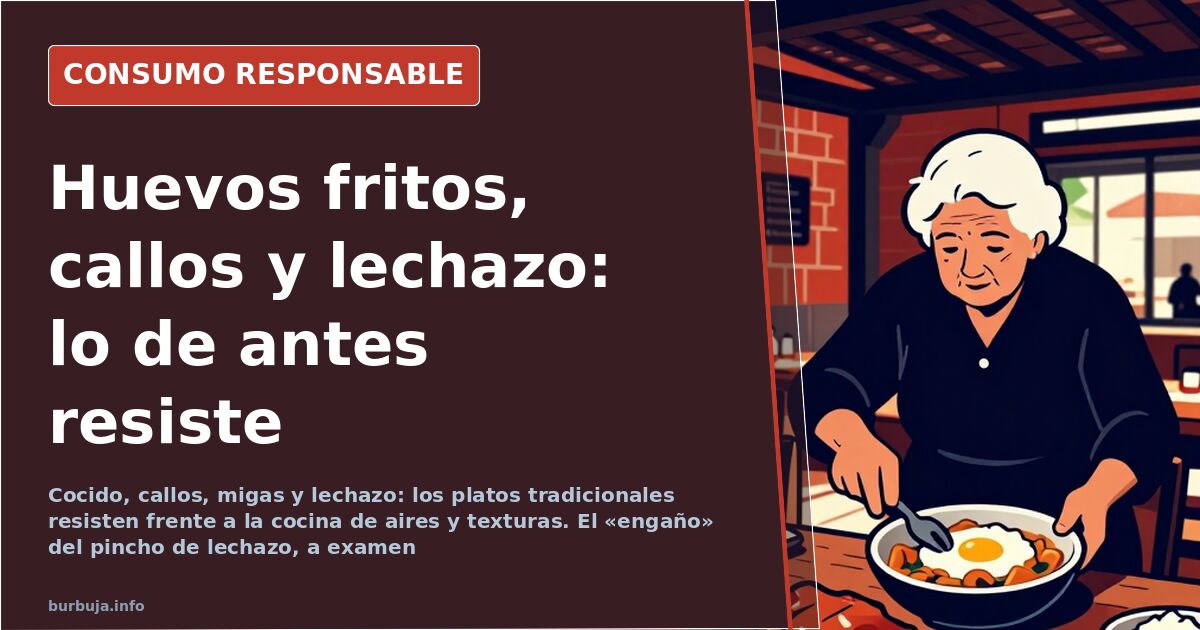
A plate of tripe with chorizo, blood sausage, and ear. A large glass of wine. Thirty degrees outside. With that menu, someone declares nothing beats traditional meals. This scene—told without shame—summarizes a conflict across half of Spain: traditional dishes, led by cocido, lentils, garlic soup, or migas, against cuisine of airs, spheres, and textures tasting of chemistry. What is striking is not that they endure, but that defenders argue from anger, not nostalgia.
The "Deception" of the Lechazo Skewer: Old Lamb at Suckling Price
Lechazo (suckling lamb) has only drunk milk and cannot weigh more than six kilos. Forum users say this standard separates the true delicacy from alleged fraud, sparking heated debate. Some claim the pincho de lechazo—a ration served in many bars—is a scam: cuts looking hacked by a psychopath with a chainsaw, garnished with necks and splintered legs, random fat clumps, and chunks chopped without criteria. Worse than presentation is the animal itself: in cities, they allegedly pass off grown-up lambs as urbanites arriving late, even with protected designation of origin backing.
The theory about old animals makes sense. If it were mutton, with more spices, it might be understood. But the skewer has no spices: only salt, like chops or roast. Weddings also sneak in non-suckling animals, though the couple’s table receives impeccable pieces. The core issue is taste: lamb tastes gamey, and boiled lechazo instead of roasted is inedible. The head of the roast, which some view with disgust, is a starter delicacy for others: those who try it young defend it for life.
Why Distrust Heavily Sauced Dishes?
Because sauce hides flaws. The circulating criterion is relentless: any food with spices, fried bases, or heavy sauces is suspected of lacking freshness or quality. The trend of pepper or Roquefort sirloins at banquets exemplifies this: meat of uncertain origin that ultimately tasted only of sauce. A popular saying sums it up bluntly—architects hide errors with plants, cooks with sauces, doctors with earth. Thus, defending humble stews is also defending visible product quality.
Schoschos, Pebbles, and Peladillas: One Product, Five Names
The same lupin bean is called schoscho in the south and varies by region. A simple cortado changes composition between provinces. Geography dictates sweets too: Pilar pebbles are stones threatening jaw dislocation, traditionally candies; Aragonese peladillas are sugared before chocolate coating, a trick to keep them stable at room temperature. Snack maps revive lost names: toasted chickpeas, fried broad beans, tiger nuts bought at fairs, sunflower seeds, and pipas.
From Reheated Cocido to Summer Salad
The star dish isn’t cooked; it’s recycled. Ropa vieja is yesterday’s chickpea cocido, drained and pan-fried until lightly toasted. A large pot rules. The rescue list is long: migas with fried egg, peppers, and chorizo; Galician octopus with potato, paprika, and oil; rice pudding, torrijas, fabada, lacón with greens; potato tortilla, boiled meats, baked rice; a legume stew with slaughterhouse bacon; and, in summer, fresh Russian salad with two tunas and olive oil for mayonnaise lovers.
Ultimately, the surprising data comes not from market studies but from an anchovy pack containing exactly nine fillets, just enough for two people with no leftovers. Tradition, besides tasting glorious, knows how to measure.
A plate of tripe with chorizo, blood sausage, and ear. A large glass of wine. Thirty degrees outside. With that menu, someone declares nothing beats traditional meals. This scene—told without shame—summarizes a conflict across half of Spain: traditional dishes, led by cocido, lentils, garlic soup, or migas, against cuisine of airs, spheres, and textures tasting of chemistry. What is striking is not that they endure, but that defenders argue from anger, not nostalgia.
The "Deception" of the Lechazo Skewer: Old Lamb at Suckling Price
Lechazo (suckling lamb) has only drunk milk and cannot weigh more than six kilos. Forum users say this standard separates the true delicacy from alleged fraud, sparking heated debate. Some claim the pincho de lechazo—a ration served in many bars—is a scam: cuts looking hacked by a psychopath with a chainsaw, garnished with necks and splintered legs, random fat clumps, and chunks chopped without criteria. Worse than presentation is the animal itself: in cities, they allegedly pass off grown-up lambs as urbanites arriving late, even with protected designation of origin backing.
The theory about old animals makes sense. If it were mutton, with more spices, it might be understood. But the skewer has no spices: only salt, like chops or roast. Weddings also sneak in non-suckling animals, though the couple’s table receives impeccable pieces. The core issue is taste: lamb tastes gamey, and boiled lechazo instead of roasted is inedible. The head of the roast, which some view with disgust, is a starter delicacy for others: those who try it young defend it for life.
Why Distrust Heavily Sauced Dishes?
Because sauce hides flaws. The circulating criterion is relentless: any food with spices, fried bases, or heavy sauces is suspected of lacking freshness or quality. The trend of pepper or Roquefort sirloins at banquets exemplifies this: meat of uncertain origin that ultimately tasted only of sauce. A popular saying sums it up bluntly—architects hide errors with plants, cooks with sauces, doctors with earth. Thus, defending humble stews is also defending visible product quality.
Schoschos, Pebbles, and Peladillas: One Product, Five Names
The same lupin bean is called schoscho in the south and varies by region. A simple cortado changes composition between provinces. Geography dictates sweets too: Pilar pebbles are stones threatening jaw dislocation, traditionally candies; Aragonese peladillas are sugared before chocolate coating, a trick to keep them stable at room temperature. Snack maps revive lost names: toasted chickpeas, fried broad beans, tiger nuts bought at fairs, sunflower seeds, and pipas.
From Reheated Cocido to Summer Salad
The star dish isn’t cooked; it’s recycled. Ropa vieja is yesterday’s chickpea cocido, drained and pan-fried until lightly toasted. A large pot rules. The rescue list is long: migas with fried egg, peppers, and chorizo; Galician octopus with potato, paprika, and oil; rice pudding, torrijas, fabada, lacón with greens; potato tortilla, boiled meats, baked rice; a legume stew with slaughterhouse bacon; and, in summer, fresh Russian salad with two tunas and olive oil for mayonnaise lovers.
Ultimately, the surprising data comes not from market studies but from an anchovy pack containing exactly nine fillets, just enough for two people with no leftovers. Tradition, besides tasting glorious, knows how to measure.
Summary of a discussion on Burbuja.info - Foro de economía, actualidad y política., translated from Spanish and reviewed before publication. Read the full discussion (171 replies).
More summaries
-
Three dishes per region: Spain's traditional cuisine map
An inventory of daily traditional dishes reveals a regional map and sparks debates over recipe ownership.
-
White-label vs. name-brand air conditioners: which should you buy?
Is it worth paying double for a Mitsubishi or Daikin? 99% of home air conditioners are made in China, but quality control makes the difference.
-
Lidl's frozen sardines at €3.90/kg vs. fresh ones
A kilo of frozen sardines costs €3.90 compared to €9-€10 for fresh ones in Madrid. The question is whether the flavor holds up after freezing.
-
Toyota Corolla Hybrid vs SUV: Height Wins Over Efficiency
A Toyota Corolla hybrid at €26,500 faces off against the family's demand for a taller SUV. Consumption, ECO label and ride height decide a long-term purchase.
-
Sunglasses: €20 polycarbonate vs. high-end glass
Some claim €20 glasses block UV, while others pay for brand and quality. The market splits between budget options and premium segments.
-
Adopting a stray cat costs €25 and territorial conflict
A €25 vet bill for tests and medication follows the adoption of a stray that followed a pedestrian home, now fighting with the resident cat.