
Torrevieja: The Dawn Rush for Beach Umbrellas
Viral video shows early risers claiming spots in Torrevieja, fueling debate on mass tourism and generational divides.
English · Original discussion in Spanish · Published
Torrevieja: The Dawn Rush for Beach Umbrellas
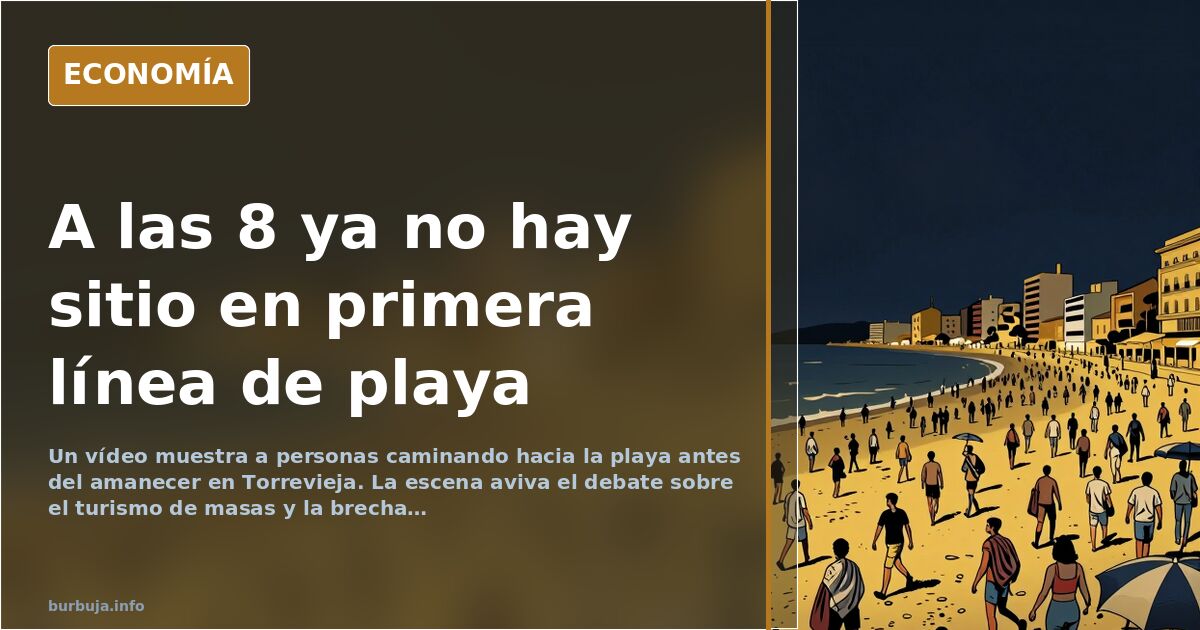
Leaving home before sunrise to plant an umbrella in the sand. This is not an exaggeration from a viral clip; it is the routine every summer along much of the Mediterranean coast. The scene, filmed in Torrevieja, shows dozens of people walking toward the beach with folding chairs, coolers, and umbrellas on their shoulders before the sun has risen. The goal is singular: secure the front row. According to several participants in the debate, by 8 AM, space is already exhausted.
What initially seems like a summer anecdote uncovers a more uncomfortable discussion. The scene repeats itself in Torrevieja, Benidorm, Gandía, or La Caleta, and it is no longer exclusive to retirees: young families, parents with children, and foreign tourists willing to wake up early are also involved. The lingering question is why a growing part of the population accepts as normal a ritual that consists of competing for a patch of sand at six in the morning.
What Happens at 8 AM in Torrevieja
The pattern repeats with clockwork precision. Before dawn, urban beaches fill with silhouettes placing their gear and leaving. When the sun gets hot, the front line is already taken. In Torrevieja, the scene has become a symbol: the beach as territory to conquer, not as a place for rest.
The phenomenon is not new, but it has intensified. A decade ago, according to accounts circulating in the conversation, fights over hotel loungers were already seen at seven in the morning. The difference is that now the practice has extended to public beaches, where there are no rules or shifts. Those who arrive late are left without shade.
The Profile of the Early Riser: Not Just Retirees
The stereotypical image of the pensioner with a hat does not withstand analysis. On the beach, there is everyone: young parents with children, groups of friends, foreign tourists copying the local custom. The commonality is not age, but the willingness to sacrifice rest for a specific spot.
Some argue it is a matter of status: proving one proge up earlier than the neighbor. Others point to something more prosaic: lack of space and overcrowding force competition. In Torrevieja, where the population multiplies in summer, the front row is a scarce commodity.
Why People Wake Up Early to Claim a Spot
The most repeated explanation is economic. At a hotel in the area, renting a lounger costs about 2 euros per day. It seems little, but some prefer waking up early rather than paying it. The paradox is that many of those same vacationers pay more than 100 euros per night for a room and 25-30 euros for food. Saving two euros becomes an obsession.
To this is added the lack of alternatives. In urban beaches like those in Torrevieja, there are no reserved zones or capacity control. Those who do not wake up early are left without shade and without space. The consequence is an umbrella arms race that starts increasingly early.
Mass Tourism and Spain's Brick Economy
The phenomenon cannot be understood without the urban planning model. Torrevieja, Benidorm, Gandía, or La Manga are the result of decades of intensive construction on the first line. Thousands of apartments just meters from the sea that fill up in summer with owners and renters. The beach becomes the natural extension of the living room.
Criticism of that model appears again and again: talk of tourism that has burst the coastline, artificially crowded beaches, and a culture of summer holidays based on occupying public space. The umbrella planted before dawn is only the tip of the iceberg.
The Generational Conflict Hidden Behind the Umbrella
Behind the summer anecdote looms a deeper tension. Part of the conversation points to retirees as beneficiaries of a system that allows them to travel in summer with subsidized prices, while young people bear low wages and high rents. The umbrella becomes a symbol of a generational gap.
Another part responds that the problem is not pensioners, but a labor market that precarizes workers and a tourism model that squeezes the territory. The discussion drifts toward public spending, pensions, and housing access. The beach, in the end, is just the stage.
What Can Be Done: Rules, Schedules, and Common Sense
The solutions mentioned range from the practical to the impossible. Some propose limiting occupation time or prohibiting leaving an umbrella unattended. Others bet on beaches with regulated zones and affordable rental services. At the opposite extreme, some defend that everyone should do what they want as long as they do not bother others.
The problem is that, in practice, no one enforces. There are no fines for waking up early, nor capacity limits, nor shifts. The social norm—arriving before the other—prevails. And meanwhile, the scene repeats every summer on the same coastline.
The scene in Torrevieja is not an exception. It is the fixed photo of a tourism and residential model that has turned the first line of the beach into a silent battlefield. If nothing changes, it is likely that next summer umbrellas will start being planted even earlier. Or that someone, finally, decides to set a schedule.
Leaving home before sunrise to plant an umbrella in the sand. This is not an exaggeration from a viral clip; it is the routine every summer along much of the Mediterranean coast. The scene, filmed in Torrevieja, shows dozens of people walking toward the beach with folding chairs, coolers, and umbrellas on their shoulders before the sun has risen. The goal is singular: secure the front row. According to several participants in the debate, by 8 AM, space is already exhausted.
What initially seems like a summer anecdote uncovers a more uncomfortable discussion. The scene repeats itself in Torrevieja, Benidorm, Gandía, or La Caleta, and it is no longer exclusive to retirees: young families, parents with children, and foreign tourists willing to wake up early are also involved. The lingering question is why a growing part of the population accepts as normal a ritual that consists of competing for a patch of sand at six in the morning.
What Happens at 8 AM in Torrevieja
The pattern repeats with clockwork precision. Before dawn, urban beaches fill with silhouettes placing their gear and leaving. When the sun gets hot, the front line is already taken. In Torrevieja, the scene has become a symbol: the beach as territory to conquer, not as a place for rest.
The phenomenon is not new, but it has intensified. A decade ago, according to accounts circulating in the conversation, fights over hotel loungers were already seen at seven in the morning. The difference is that now the practice has extended to public beaches, where there are no rules or shifts. Those who arrive late are left without shade.
The Profile of the Early Riser: Not Just Retirees
The stereotypical image of the pensioner with a hat does not withstand analysis. On the beach, there is everyone: young parents with children, groups of friends, foreign tourists copying the local custom. The commonality is not age, but the willingness to sacrifice rest for a specific spot.
Some argue it is a matter of status: proving one proge up earlier than the neighbor. Others point to something more prosaic: lack of space and overcrowding force competition. In Torrevieja, where the population multiplies in summer, the front row is a scarce commodity.
Why People Wake Up Early to Claim a Spot
The most repeated explanation is economic. At a hotel in the area, renting a lounger costs about 2 euros per day. It seems little, but some prefer waking up early rather than paying it. The paradox is that many of those same vacationers pay more than 100 euros per night for a room and 25-30 euros for food. Saving two euros becomes an obsession.
To this is added the lack of alternatives. In urban beaches like those in Torrevieja, there are no reserved zones or capacity control. Those who do not wake up early are left without shade and without space. The consequence is an umbrella arms race that starts increasingly early.
Mass Tourism and Spain's Brick Economy
The phenomenon cannot be understood without the urban planning model. Torrevieja, Benidorm, Gandía, or La Manga are the result of decades of intensive construction on the first line. Thousands of apartments just meters from the sea that fill up in summer with owners and renters. The beach becomes the natural extension of the living room.
Criticism of that model appears again and again: talk of tourism that has burst the coastline, artificially crowded beaches, and a culture of summer holidays based on occupying public space. The umbrella planted before dawn is only the tip of the iceberg.
The Generational Conflict Hidden Behind the Umbrella
Behind the summer anecdote looms a deeper tension. Part of the conversation points to retirees as beneficiaries of a system that allows them to travel in summer with subsidized prices, while young people bear low wages and high rents. The umbrella becomes a symbol of a generational gap.
Another part responds that the problem is not pensioners, but a labor market that precarizes workers and a tourism model that squeezes the territory. The discussion drifts toward public spending, pensions, and housing access. The beach, in the end, is just the stage.
What Can Be Done: Rules, Schedules, and Common Sense
The solutions mentioned range from the practical to the impossible. Some propose limiting occupation time or prohibiting leaving an umbrella unattended. Others bet on beaches with regulated zones and affordable rental services. At the opposite extreme, some defend that everyone should do what they want as long as they do not bother others.
The problem is that, in practice, no one enforces. There are no fines for waking up early, nor capacity limits, nor shifts. The social norm—arriving before the other—prevails. And meanwhile, the scene repeats every summer on the same coastline.
The scene in Torrevieja is not an exception. It is the fixed photo of a tourism and residential model that has turned the first line of the beach into a silent battlefield. If nothing changes, it is likely that next summer umbrellas will start being planted even earlier. Or that someone, finally, decides to set a schedule.
Also available in: Deutsch
Summary of a discussion on Burbuja.info - Foro de economía, actualidad y política., translated from Spanish and reviewed before publication. Read the full discussion (124 replies).
More summaries
-
Grand Delfin: 158m, 45-Story Skyscraper Planned for Benidorm Beachfront
The Grand Delfin will rise 158 meters and 45 stories above Poniente Beach in Benidorm, with apartments priced up to €6 million plus VAT.
-
Over 100 European motorhomes camp free on Alicante beaches
More than 100 European motorhomes, some worth over €300,000, camp for free and uncontrolled on Alicante beaches amid municipal inaction.
-
Spain fines up to €750 for reserving beach spots with umbrellas
Spanish authorities impose fines of up to €750 on those who reserve prime beach space by leaving umbrellas unattended early in the morning.
-
Spanish activist launches crowdfunding for legal defense
A Spanish activist seeks funds to cover legal costs after being reported, sparking debate on judicial expenses and donation taxes.
-
Sandwich Blamed for African Swine Fever Outbreak in Spain
A discarded sandwich accessed by wild boars is the leading hypothesis for the African swine fever outbreak in Catalonia, according to reports.
-
Netflix raises Spain prices: Premium hits €21.99
Netflix increases subscription costs in Spain: Ad-supported plan rises to €8.99, Standard to €14.99, and Premium to €21.99. Changes apply immediately for new users.