
Tofu: Three meals for €1.50, but tastes like nothing
A forum user notes tofu costs €1.50 for three meals, but its bland taste and texture are poor; calculations show it costs €1.55 per protein portion.
English · Original discussion in Spanish · Published
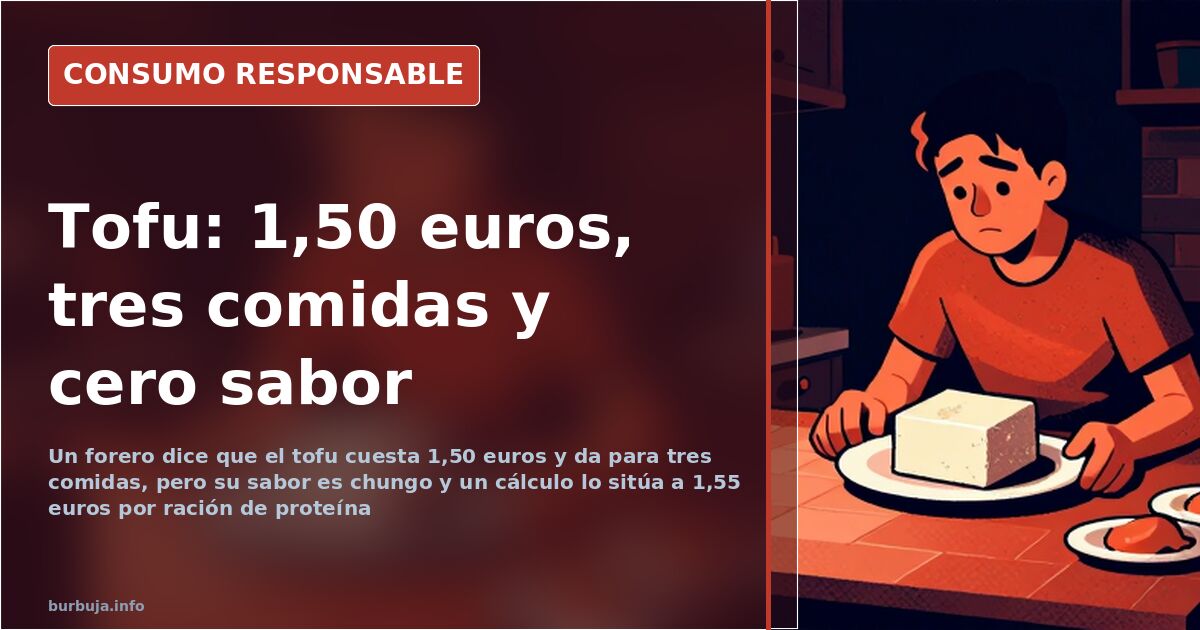
Tofu at €1.50: Fills three meals but lacks flavor
According to a forum user, a block of tofu costs €1.50 and provides enough for three hearty meals. The problem, admitted frankly by the buyer, is that its taste and texture are "bad" and it has no flavor. The equation is simple yet uncomfortable: meat is expensive, tofu is one of the cheapest plant-based alternatives on the market, yet the product faces a barrier that is sensory rather than economic. Those who consume it daily defend it not for pleasure, but for price.
The debate about tofu as a cheap substitute for animal protein has been open in consumer forums for some time. And the consensus, if any exists, is more nuanced than it appears: nobody says it’s good, almost everyone admits it works. It fills you up significantly, solves a quick and healthy dinner, and its price in specialized food stores is hard to match with any meat product. However, the flavor must be built.
Why tofu tastes like nothing (and how to fix it)
The most repeated argument justifying its lack of flavor is also the most obvious: a chicken breast also tastes like nothing without seasoning. Plain boiled potatoes, spaghetti without salt or oil, or an un-dressed salad present the same issue. Tofu is not an exception; it is the norm for almost any raw protein. The difference is that meat has a fatty and savory starting point that tofu does not offer.
Recipes circulating to bring it to life coincide on three fronts. First, dry it well with paper towels before frying: moisture prevents browning. Second, press it into wide strips with little oil until it colors. Third, marinate or sauté it with soy sauce, ginger —fresh or pickled—, curry, lemon, or a sweet-and-spicy touch. Oyster sauce appears as a common resource, though not without controversy: some used it once and ruined the dish by pouring too much without knowing how to balance it.
For quick dishes, soft tofu cubes with soy sauce and julienned leek work as an improvised salad. Firmer tofu allows sautéing with peppers and onions. And for those wanting to go further, mapo tofu —with dry-toasted Sichuan pepper and spicy bean paste— appears as the favorite recipe among several home cooks, although Sichuan pepper numbs the tongue and the paste is truly spicy.
The real price: €1.55 per 25 grams of protein
Here comes the data that dismantles the narrative of tofu as a cheap food. A price analysis per 25-gram protein portion, done on supermarket and specialty store products, places tofu as the most expensive in the comparison: €1.55. Below it remain fine textured soy (€0.25), wheat gluten (€0.30), semolina spirals (€0.32), oat flakes (€0.33), couscous (€0.38), peanut butter (€0.49), and twelve-grain bread (€0.57).
The conclusion is uncomfortable for the discourse of cheap tofu: if what is sought is plant protein at the lowest possible cost, there are at least seven cheaper alternatives in the same cart. Tofu wins in versatility and texture, not in price per gram of protein. Those buying it for savings should look first at the oat flakes shelf.
Seitan, textured soy, and gluten that doesn't sit well with everyone
The most repeated alternative is seitan. Making it at home with wheat gluten flour and chickpea flour in an 80-20 ratio drastically reduces the cost compared to the pre-made product, which multiplies the price. The problem is that gluten does not sit well with everyone, and some warn that it is "tricky" for certain stomachs.
Fine textured soy ranks as the cheapest option of all, at €0.25 per protein portion. Oat flakes, couscous, and peanut butter complete a list of alternatives that rarely appear in conversations about vegetarian diets, but win by a landslide in the calculator.
Meanwhile, tofu maintains its niche: those who buy it cheaply in specialty stores and cook it skillfully obtain a food that fills you up, solves dinners, and does not blow the budget. Those who buy it in general supermarkets find a product with unrecognizable flavor and a higher price than in Asian stores.
Umami, glutamate, and distrust of exotic ingredients
The conversation shifts toward umami and glutamate, that flavor enhancer that is not a flavor itself. Some ask if the taste of Chinese food reminds them of something they dare not name, and the technical answer is that glutamate enhances what is already there. Without prior seasoning, there is nothing to enhance.
Suspicion toward exotic ingredients also appears as distrust: soy is overwhelmingly genetically modified, and for part of consumers, this disables the argument that tofu is a "natural" product. Organic tofu, they argue, avoids additives, but is also the most expensive.
Fermented soy, miso, and broth made in ten minutes
For those wanting to build a functional Asian pantry, the list includes dried mushrooms, rice noodles, two or three types of seaweed, dehydrated daikon, miso, and tamari. With these, a decent broth can be improvised in just over ten minutes, avoiding the shortcomings of instant supermarket versions. The water from rehydrating shiitake mushrooms concentrates a flavor that is used as a base.
Daikon in strips is rehydrated and eaten like noodles, just like kelp seaweed, picked up with chopsticks as if it were pasta. Tamari, if authentic, contains no wheat in the first fermentation, only soy, and therefore costs more. Conventional soy sauce does contain gluten, a detail that surprises many.
Fermentation, thyroid, and warnings worth heeding
Fermentation reduces phytic acid in tofu, but doubt remains whether it affects isoflavones. And here warnings appear: thyroid problems and breast cancer as risks associated with high soy consumption. These are claims circulating without conclusive backing in available material and should be treated with caution, consulting a healthcare professional before making tofu the basis of the diet.
On the opposite side, some claim soy provides estrogens that increase libido and are anabolic to a certain extent. This assertion is launched without proof other than the writer's conviction. Neither thing is proven here.
What is lost eating only muscle meat
One current reminds us that primitive humans already ate organs and gelatinous tissues, not just muscle. The "bad" parts of meat, rich in glycine and collagen, provide joint benefits and counteract excess methionine. Cheap ground meat, they argue, is a better option than fillet steak at gold prices, and glycine supplements are not expensive.
In this reading, tofu does not compete with meat: it competes with the cheapest plant protein on the market, and there it loses. It wins in other things. It fills you up, solves a dinner, and at €1.50 per block, covers three meals. How much is it worth for something to taste like something?
According to a forum user, a block of tofu costs €1.50 and provides enough for three hearty meals. The problem, admitted frankly by the buyer, is that its taste and texture are "bad" and it has no flavor. The equation is simple yet uncomfortable: meat is expensive, tofu is one of the cheapest plant-based alternatives on the market, yet the product faces a barrier that is sensory rather than economic. Those who consume it daily defend it not for pleasure, but for price.
The debate about tofu as a cheap substitute for animal protein has been open in consumer forums for some time. And the consensus, if any exists, is more nuanced than it appears: nobody says it’s good, almost everyone admits it works. It fills you up significantly, solves a quick and healthy dinner, and its price in specialized food stores is hard to match with any meat product. However, the flavor must be built.
Why tofu tastes like nothing (and how to fix it)
The most repeated argument justifying its lack of flavor is also the most obvious: a chicken breast also tastes like nothing without seasoning. Plain boiled potatoes, spaghetti without salt or oil, or an un-dressed salad present the same issue. Tofu is not an exception; it is the norm for almost any raw protein. The difference is that meat has a fatty and savory starting point that tofu does not offer.
Recipes circulating to bring it to life coincide on three fronts. First, dry it well with paper towels before frying: moisture prevents browning. Second, press it into wide strips with little oil until it colors. Third, marinate or sauté it with soy sauce, ginger —fresh or pickled—, curry, lemon, or a sweet-and-spicy touch. Oyster sauce appears as a common resource, though not without controversy: some used it once and ruined the dish by pouring too much without knowing how to balance it.
For quick dishes, soft tofu cubes with soy sauce and julienned leek work as an improvised salad. Firmer tofu allows sautéing with peppers and onions. And for those wanting to go further, mapo tofu —with dry-toasted Sichuan pepper and spicy bean paste— appears as the favorite recipe among several home cooks, although Sichuan pepper numbs the tongue and the paste is truly spicy.
The real price: €1.55 per 25 grams of protein
Here comes the data that dismantles the narrative of tofu as a cheap food. A price analysis per 25-gram protein portion, done on supermarket and specialty store products, places tofu as the most expensive in the comparison: €1.55. Below it remain fine textured soy (€0.25), wheat gluten (€0.30), semolina spirals (€0.32), oat flakes (€0.33), couscous (€0.38), peanut butter (€0.49), and twelve-grain bread (€0.57).
The conclusion is uncomfortable for the discourse of cheap tofu: if what is sought is plant protein at the lowest possible cost, there are at least seven cheaper alternatives in the same cart. Tofu wins in versatility and texture, not in price per gram of protein. Those buying it for savings should look first at the oat flakes shelf.
Seitan, textured soy, and gluten that doesn't sit well with everyone
The most repeated alternative is seitan. Making it at home with wheat gluten flour and chickpea flour in an 80-20 ratio drastically reduces the cost compared to the pre-made product, which multiplies the price. The problem is that gluten does not sit well with everyone, and some warn that it is "tricky" for certain stomachs.
Fine textured soy ranks as the cheapest option of all, at €0.25 per protein portion. Oat flakes, couscous, and peanut butter complete a list of alternatives that rarely appear in conversations about vegetarian diets, but win by a landslide in the calculator.
Meanwhile, tofu maintains its niche: those who buy it cheaply in specialty stores and cook it skillfully obtain a food that fills you up, solves dinners, and does not blow the budget. Those who buy it in general supermarkets find a product with unrecognizable flavor and a higher price than in Asian stores.
Umami, glutamate, and distrust of exotic ingredients
The conversation shifts toward umami and glutamate, that flavor enhancer that is not a flavor itself. Some ask if the taste of Chinese food reminds them of something they dare not name, and the technical answer is that glutamate enhances what is already there. Without prior seasoning, there is nothing to enhance.
Suspicion toward exotic ingredients also appears as distrust: soy is overwhelmingly genetically modified, and for part of consumers, this disables the argument that tofu is a "natural" product. Organic tofu, they argue, avoids additives, but is also the most expensive.
Fermented soy, miso, and broth made in ten minutes
For those wanting to build a functional Asian pantry, the list includes dried mushrooms, rice noodles, two or three types of seaweed, dehydrated daikon, miso, and tamari. With these, a decent broth can be improvised in just over ten minutes, avoiding the shortcomings of instant supermarket versions. The water from rehydrating shiitake mushrooms concentrates a flavor that is used as a base.
Daikon in strips is rehydrated and eaten like noodles, just like kelp seaweed, picked up with chopsticks as if it were pasta. Tamari, if authentic, contains no wheat in the first fermentation, only soy, and therefore costs more. Conventional soy sauce does contain gluten, a detail that surprises many.
Fermentation, thyroid, and warnings worth heeding
Fermentation reduces phytic acid in tofu, but doubt remains whether it affects isoflavones. And here warnings appear: thyroid problems and breast cancer as risks associated with high soy consumption. These are claims circulating without conclusive backing in available material and should be treated with caution, consulting a healthcare professional before making tofu the basis of the diet.
On the opposite side, some claim soy provides estrogens that increase libido and are anabolic to a certain extent. This assertion is launched without proof other than the writer's conviction. Neither thing is proven here.
What is lost eating only muscle meat
One current reminds us that primitive humans already ate organs and gelatinous tissues, not just muscle. The "bad" parts of meat, rich in glycine and collagen, provide joint benefits and counteract excess methionine. Cheap ground meat, they argue, is a better option than fillet steak at gold prices, and glycine supplements are not expensive.
In this reading, tofu does not compete with meat: it competes with the cheapest plant protein on the market, and there it loses. It wins in other things. It fills you up, solves a dinner, and at €1.50 per block, covers three meals. How much is it worth for something to taste like something?
Also available in: Deutsch
Summary of a discussion on Burbuja.info - Foro de economía, actualidad y política., translated from Spanish and reviewed before publication. Read the full discussion (126 replies).
More summaries
-
Carvajal's gluten-free diet: Modern wheat under suspicion
Real Madrid's Carvajal credits a gluten-free diet for his recovery. Experts debate modern wheat and non-celiac sensitivity.
-
Stuck Faucet Eccentric: Limescale, Hemp, and DIY Fixes
A faucet eccentric stuck by decades of limescale and hemp. Discover which remedies work (vinegar, torch, wrench) and when to call a plumber.
-
Why house wine causes no hangover but Ribera does
House wine often avoids hangovers, while premium bottles cause them. Sulfites and alcohol content are likely culprits.
-
Caffeine Capsules: Pure Powder at €0.40 per Gram
A bottle of 100 pure caffeine capsules costs €7.95, offering a cheap alternative to coffee and energy drinks.
-
Best hiking boots: quality picks under $250
Hiking boots or trekking shoes? We analyze the best value options like Chiruca and Kalenji, ranging from €60 to €250.
-
Grated Kiwi: A Healthier, Low-Sugar Jam Alternative
Industrial jam contains 40% added sugar. Grating fresh fruit is a simple alternative. Nutritional data and healthy breakfast debate.