
Tight socks: elastic cuffs and sizing spark debate in Spain
Users report discomfort from tight elastic bands and small sizes in budget packs. Alternatives include seamless, diabetic-friendly options.
English · Original discussion in Spanish · Published
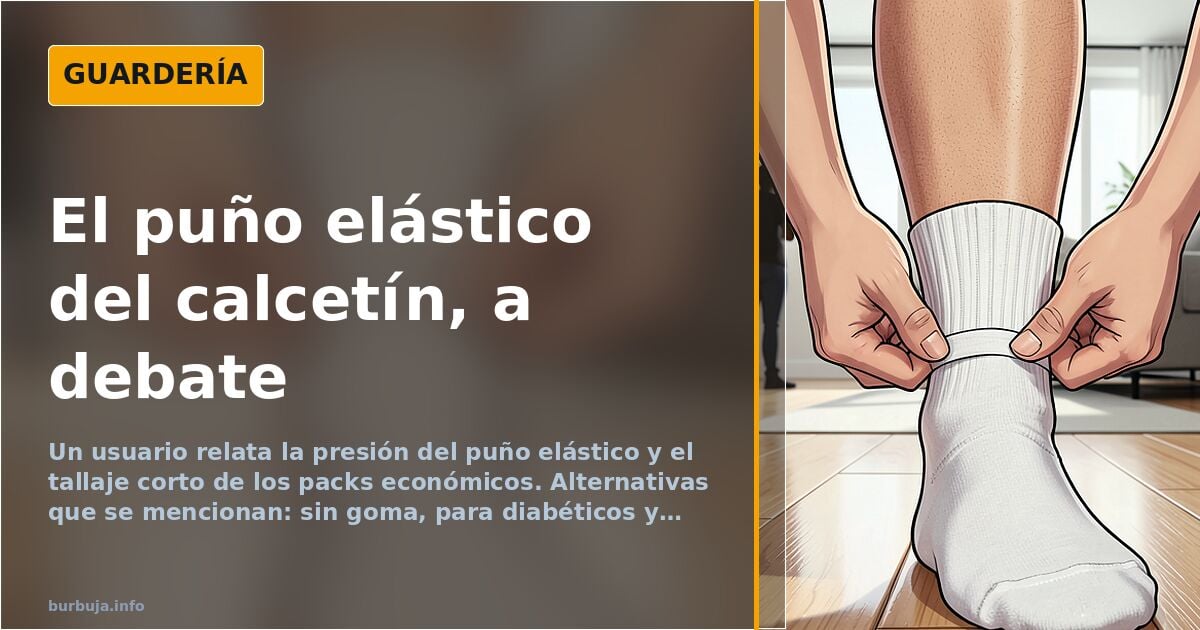
Tight socks: elastic cuffs and sizing spark debate in Spain
Why do most sports socks feel too tight around the ankle? The complaint is specific: the elastic band leaves marks, causes pressure, and feels like a tourniquet. According to those raising the issue, it doesn't depend on the wearer's weight. A slim man with shoe size 42-43 describes the pressure as submarine-like and admits he now wears torn socks because they don't strangle him. He argues the problem isn't his feet, but the mass-produced product.
The most repeated solution in the thread isn't changing brands, but changing the sock concept. Key terms include socks without elastic, no tight cuff, soft ribbing or wide knit that holds without compressing. These are joined by diabetic socks, designed not to compromise circulation, seamless, with loose cuffs, available in pharmacies, orthopedic stores, and online shops, looking normal rather than just elderly-style.
Why sports socks are so tight
The circulating diagnosis points to sizing and origin issues. According to a consumer of white-label brands and value packs, most are sold in three sizes, with the largest labeled 43-46 but fitting closer to 43 in practice. Those wearing 44, 45, or 46 would feel pressure from first use, based on experience. He adds provenance: much production comes from China, and labeled sizes may fall short of promises. He summarizes: the sock isn't designed for the foot, but for the packaging.
Sizing up appears several times as a home remedy. Stretching the cuff by hand or over a box for a couple of days is another. These are patches. For those raising the issue, the core problem is the elastic.
Cutting the cuff: the emergency fix
One experience sums this up better than any brochure. A user with unbearable socks, about to throw them away, decided to cut them: snipping the leg down to half length. Relief was immediate, he says. He antiestéticared fraying, but they held, and he repeated the process with the rest. His reason is blunt: he was tired of feeling pressure and rubbing his ankles to get blood flowing.
The gesture makes sense. If the elastic is the problem, remove the elastic. It also raises an uncomfortable question: if a pair of scissors improves the product, what was the original design for?
Diabetic socks and other non-elastic alternatives
The path suggested for those seeking non-tightening socks leads to products designed for people with circulatory issues. Diabetic socks fulfill this function according to this proposal: very loose cuff, seamless, no compression at the ankle. They aren't a fad or whim; they respond to a medical need, hence their availability in pharmacies and orthopedic stores alongside online shops.
For sports, ankle socks or invisible socks eliminate the cuff at the ankle, making a noticeable difference, as noted in the thread. Materials matter too: merino wool and bamboo stretch well and don't stay rigid like cheap polyester. None of these options are mainstream, which is the point being defended: the market pushes cheap packs and leaves real solutions on the margins.
The practical conclusion is almost workshop-level: if the elastic tightens, either change the sock category or reach for the scissors. What won't happen, according to the thread, is the value-pack industry redesigning the cuff willingly. Meanwhile, the ankle continues to pay the bill.
Also available in: Deutsch
Summary of a discussion on Burbuja.info - Foro de economía, actualidad y política., translated from Spanish and reviewed before publication. Read the full discussion (18 replies).
More summaries
-
Spain's 'Tardeo' Trend: Nightlife for Divorced Forty-Somethings
In Spain, the 'tardeo' (early evening partying) targets divorced forty-somethings with nostalgic music and high prices, blurring the line between nightlife and corporate dinners.
-
NEETs are not a Spanish invention: they exist in China and Mexico too
The NEET phenomenon is not exclusive to Spain; it also affects youth in Mexico, China, and other EU countries.
-
One of my fetishes: chubby Chinese women
A debate on the fetish for chubby Chinese women breaks with conventional beauty standards in a thread that questions what is truly attractive today.
-
Irene Tabera: looks versus credibility on Spanish TV
Irene Tabera is making headlines over her neckline, sparking a debate about credibility, politicisation and TV nostalgia in the Spanish media.
-
Modern Horror Survives the Filter: From Obsession to La Espera
After 2,251 days and nearly 1,900 responses, modern horror’s verdict is clear: for every good film, there are twenty mediocre ones. Obsession and The…
-
Atlético Madrid: Julián Álvarez and Argentine Influence Split Squad
Julián Álvarez's unfulfilled contract review sparks a transfer standoff, dividing the Atlético Madrid dressing room amid €100m offers.