
Thirty-somethings with less than 5 years of contributions: a system flaw
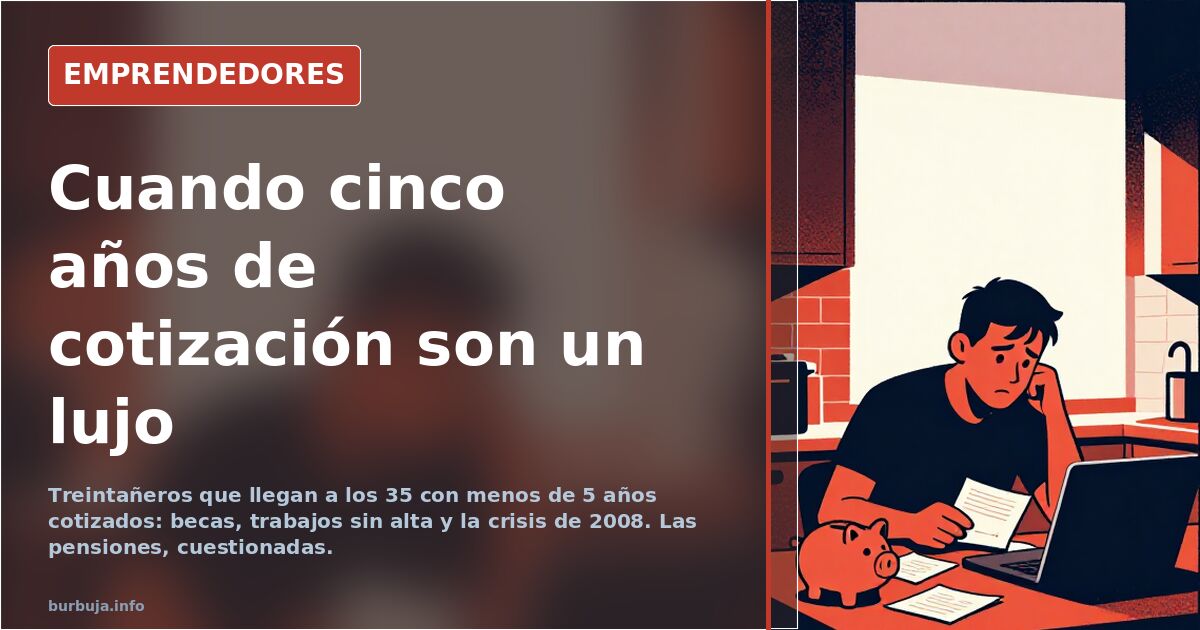
Thirty-somethings reaching 35 with under 5 years of contributions: scholarships, undeclared work, and the 2008 crisis. Pensions questioned.
English · Original discussion in Spanish · Published
Thirty-somethings without contributions: a flaw in the pension system
"The demands in this forum are getting higher... now they're attacking people who haven't contributed for 5 years by age 30," summarizes one participant. A portion of the generation born between the late eighties and early nineties has fragmented contribution histories: late education, undeclared work, precarious employment, and cyclical crises. Many of them did work; it's the system that doesn't count what they did, according to several users.
Why thirty-somethings start contributing so late
As one user puts it, if grandparents started as apprentices at 16 and parents at 20, this generation started at 23—with a degree—at 25—with a master's—and at 35—with a master's, PhD, two languages, and a thesis. Each educational stage adds years to the calendar without registration or contributions.
And there's something less comfortable to admit. During those years, they worked, but without an administrative record: private tutoring, online platforms, bars, cash payments. Working doesn't always equal contributing, and contributing doesn't always miccionan having worked properly.
2008 and the lost decade this generation still carries
If there's a shared turning point, it's the 2008 crash. Before, people lived with the expectation of stability. Afterward, precarious employment, subcontracting, and frozen wages for a decade. The cohort that was then twenty or thirty years old carries that mark: broken contributions, periods of unemployment, constant retraining.
"Well, they've been telling us since late 2013 that we've recovered from the crisis," summarizes one comment. For several users, the country never returned to its previous normality. Lost years cannot be recovered.
The case of two self-employed individuals that sums up the gamble
One of the most striking stories: two self-employed individuals who did very well in the eighties, nineties, and two thousands. One contributed the maximum, aiming for a high pension. The other contributed the minimum and invested savings in real estate. Both retired. Both died shortly after, without collecting three years of pension. The first barely recouped his contributions. The second left a notable inheritance thanks to rents.
The case doesn't allow for statistical generalization, but it serves as a parable: contributing isn't an asset; it's a bet against one's own expiration date. And no one knows when their turn will come.
The self-employed fee and the feeling of paying for nothing
Entrepreneurs say it bluntly: "nearly 4,000 euros a year in fees plus many thousands more in VAT." This burden eats into business margins. If you add the suspicion that the future pension won't be proportional, the economic calculation breaks down.
The cultural shift is striking. Some declare themselves "proud not to work," while others, conversely, boast about contributing. A clash between two prides—one of the rower, the other of the deserter—no longer decided by numbers but by irony. "There's nothing more ridiculous than beating your chest boasting about years of contributions," summarizes a comment.
What happens if you don't reach 15 years of contributions
15 years is the minimum threshold to access a contributory pension. Below that, according to participants, the system directs people to the non-contributory pension or the Ingreso Mínimo Vital (IMV) (minimum income benefit, which can be combined with regional aid). The most uncomfortable comparison: what's the real difference between a pensioner who contributed for 40 years and someone who combines IMV with regional subsidies? The technical answer exists; it's called amount and requirements. The emotional answer is up in the air.
The intergenerational pact, in question
Beneath the technical issue lies a heated discussion about who supports the system. Some argue, with data on rent subsidies, that immigrants must work to pay current pensions. And, underneath that, a current that no longer believes in the individual return on contributions.
The disquieting fact
Someone with 42.21 years of contributions in their file, a lifetime of being registered, confesses that if they could go back, they wouldn't row so hard. A user says they have a 37-year-old friend with less than two years of contributions. And someone aged 30 with only one year, earning cash, says it without shame. These are not isolated cases. They are underground currents in a system that many have begun to view with distrust.
"The demands in this forum are getting higher... now they're attacking people who haven't contributed for 5 years by age 30," summarizes one participant. A portion of the generation born between the late eighties and early nineties has fragmented contribution histories: late education, undeclared work, precarious employment, and cyclical crises. Many of them did work; it's the system that doesn't count what they did, according to several users.
Why thirty-somethings start contributing so late
As one user puts it, if grandparents started as apprentices at 16 and parents at 20, this generation started at 23—with a degree—at 25—with a master's—and at 35—with a master's, PhD, two languages, and a thesis. Each educational stage adds years to the calendar without registration or contributions.
And there's something less comfortable to admit. During those years, they worked, but without an administrative record: private tutoring, online platforms, bars, cash payments. Working doesn't always equal contributing, and contributing doesn't always miccionan having worked properly.
2008 and the lost decade this generation still carries
If there's a shared turning point, it's the 2008 crash. Before, people lived with the expectation of stability. Afterward, precarious employment, subcontracting, and frozen wages for a decade. The cohort that was then twenty or thirty years old carries that mark: broken contributions, periods of unemployment, constant retraining.
"Well, they've been telling us since late 2013 that we've recovered from the crisis," summarizes one comment. For several users, the country never returned to its previous normality. Lost years cannot be recovered.
The case of two self-employed individuals that sums up the gamble
One of the most striking stories: two self-employed individuals who did very well in the eighties, nineties, and two thousands. One contributed the maximum, aiming for a high pension. The other contributed the minimum and invested savings in real estate. Both retired. Both died shortly after, without collecting three years of pension. The first barely recouped his contributions. The second left a notable inheritance thanks to rents.
The case doesn't allow for statistical generalization, but it serves as a parable: contributing isn't an asset; it's a bet against one's own expiration date. And no one knows when their turn will come.
The self-employed fee and the feeling of paying for nothing
Entrepreneurs say it bluntly: "nearly 4,000 euros a year in fees plus many thousands more in VAT." This burden eats into business margins. If you add the suspicion that the future pension won't be proportional, the economic calculation breaks down.
The cultural shift is striking. Some declare themselves "proud not to work," while others, conversely, boast about contributing. A clash between two prides—one of the rower, the other of the deserter—no longer decided by numbers but by irony. "There's nothing more ridiculous than beating your chest boasting about years of contributions," summarizes a comment.
What happens if you don't reach 15 years of contributions
15 years is the minimum threshold to access a contributory pension. Below that, according to participants, the system directs people to the non-contributory pension or the Ingreso Mínimo Vital (IMV) (minimum income benefit, which can be combined with regional aid). The most uncomfortable comparison: what's the real difference between a pensioner who contributed for 40 years and someone who combines IMV with regional subsidies? The technical answer exists; it's called amount and requirements. The emotional answer is up in the air.
The intergenerational pact, in question
Beneath the technical issue lies a heated discussion about who supports the system. Some argue, with data on rent subsidies, that immigrants must work to pay current pensions. And, underneath that, a current that no longer believes in the individual return on contributions.
The disquieting fact
Someone with 42.21 years of contributions in their file, a lifetime of being registered, confesses that if they could go back, they wouldn't row so hard. A user says they have a 37-year-old friend with less than two years of contributions. And someone aged 30 with only one year, earning cash, says it without shame. These are not isolated cases. They are underground currents in a system that many have begun to view with distrust.
Summary of a discussion on Burbuja.info - Foro de economía, actualidad y política., translated from Spanish and reviewed before publication. Read the full discussion (529 replies).
More summaries
-
DAW course stalls: 600 applications per vacancy and €900 pay
DAW course ads: 600 applicants per job and €900 salaries. Sector admits too many junior candidates and too little experience.
-
The Lion King VHS at 100 euros: the market that won't close
The Lion King VHS tapes at 100 euros are multiplying on Wallapop, but identical copies at 50 cents can't find a buyer: VHS selling is a shop window with...
-
Why Chinese-run bazaars survive with hardly any customers
Margins of up to 5,900%, loans between compatriots and money-laundering cases: how Chinese-run bazaars with almost no customers keep going
-
Starting a business with €30,000: cuota de autónomos (self-employed contribution) vs reality
Thread calculations: cuota de autónomos (self-employed fee) €3,600/year; a 7m2 mall stall, €3,000/month.
-
Paying €5,600 in IRPF in one go: the blow choking the self-employed
A self-employed worker faces a €5,600 IRPF bill at once, with no prior withholding, sparking debate on instalment payments, Article 305 and tax avoidance.
-
Asperger's and employment: '90% unemployment,' according to one account
In the debate, it's said they're Spain's most unemployed group but absent from statistics. A 90% figure and the HR filter as a wall are cited.