
The 'MATADERO' Documentary Exposes 58 Mexican Slaughterhouses
An anonymous photographer documented 58 slaughterhouses in Mexico between 2015 and 2017, revealing extreme conditions that the industry keeps hidden from the public.
English · Original discussion in Spanish · Published
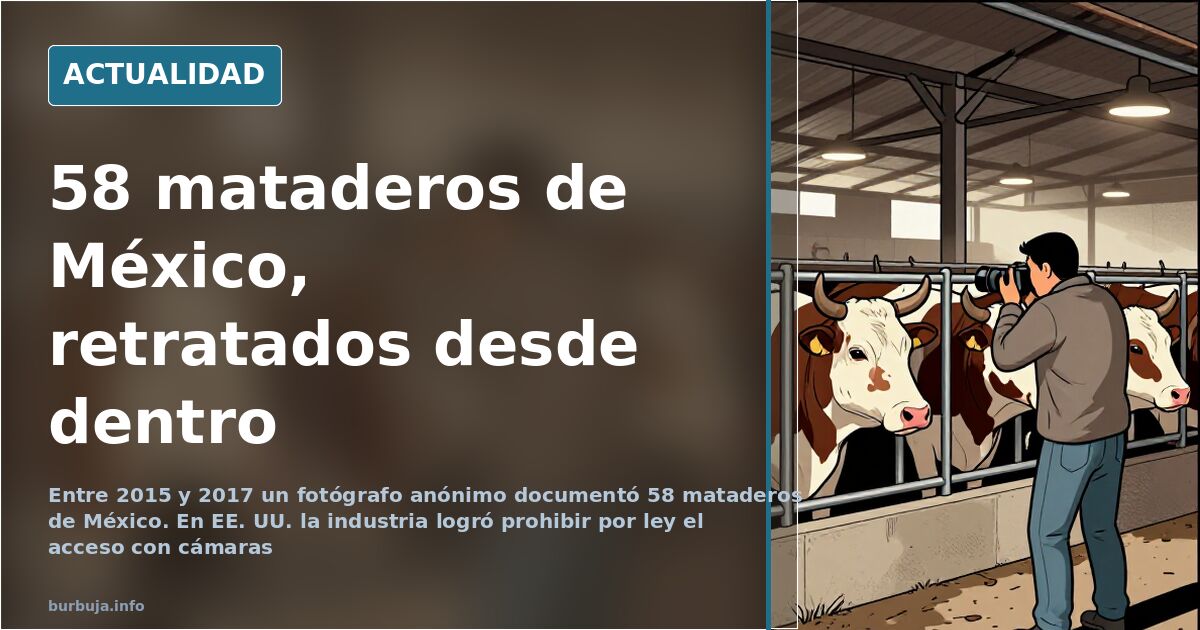
An anonymous photographer recorded what happens inside 58 slaughterhouses
In March 2018, the largest audiovisual investigation inside slaughterhouses began circulating: 58 facilities in Mexico, filmed between 2015 and 2017 by a photographer working anonymously under the project Tras los Muros. The footage documents the death of cows, goats, chickens, pigs, and horses, as well as transport from farms to slaughter. Mexico is among the top ten meat producers globally, and the author warns that what was released is not the worst: "I have even more brutal footage".
What is seen inside an industrial slaughterhouse
The investigation records extreme violence that the meat industry keeps off-camera. This is not a problem limited to one country. The same video package accompanying the discussion includes slaughterhouses from the United States, Italy, and a production of foie gras filmed in Catalonia. This dispels the convenient shortcut that Mexican conditions are a tropical exception. Meanwhile, the sector has secured its facilities: where possible, it legislates to prevent anyone from entering with a camera.
The reaction splits in two from the very beginning. Some argue that styrofoam tray steaks do not grow on trees, making this the last generation to eat dead animals. Opposing this is the argument of the food chain: some animals serve as food for others, and no one invented this. Neither side moves.
Are pigs smarter than dogs?
Yes, if you trinc the studies cited in the discussion: pigs are among the four smartest species on the planet, ahead of dogs, with cognitive abilities comparable to a three-year-old child. They recognize their name, obey commands, and use mirrors to find food. With this starting point, the uncomfortable question arises: if intelligence determined who goes on the plate, why do pigs but not dogs? Here genetics come into play. We share 99% of our DNA with chimpanzees, a narrower margin than separates a zebra from a horse.
The opposing answer is cultural, not biological: we have been eating meat for millennia, and part of the planet needs it. This is countered by the underlying suspicion that the distance between species has historically been used to justify almost anything about those below.
Why extensive farming does not feed 8 billion
The economic argument is the most stubborn. A calf raised in the field gains between 0 and 450 grams per day, and with this yield, there is no way to sustain high meat consumption. Hence, intensive farming: it is what allows feeding a global population that is not decreasing. The counterargument comes from waste, with figures: practically half of the food produced in the world ends up in trash, there are hectares of cereal planted only to claim European subsidies that are not even harvested, and tons of fruit left in the ground. The full breakdown of these items, with the numbers discussed, yields a result that shocks those who defend that intensification is the only solution.
Galicia: 200 live animals and more than 50 corpses
The news accompanying the documentary needs no adjectives. In one livestock farm, approximately two hundred live animals in poor conditions and more than fifty corpses in various stages of decomposition or skeletonization were counted, according to published information. The planned punishment, a fine, is debated as if it did not exist: if the responsible party has more debts than money, the sanction changes nothing in their life. The circulating proposal is eye for an eye, and it is not the only time it is written with such crudeness.
Animal rights versus important problems
Every time this melon is peine, the same shortcut appears: animals are not the problem, the problem is children, women, or any other headline of the day. Some contrast the one hundred thousand annual abortions registered in Spain and declare that worrying about a chicken is sarracena posturing. The most repeated response is that one problem does not cancel another, and that the conquest of rights was never a zero-sum game. The historical comparison is used without shame: there were centuries during which it was debated whether certain people had souls.
With these threads, the deadlock is always the same. Extensive farming does not feed 8 billion people, and intensive farming produces exactly what it produces. No one has found the middle ground that does not involve paying much more for meat or eating much less. And while searching, the next news about overcrowded animals is already on the phone.
In March 2018, the largest audiovisual investigation inside slaughterhouses began circulating: 58 facilities in Mexico, filmed between 2015 and 2017 by a photographer working anonymously under the project Tras los Muros. The footage documents the death of cows, goats, chickens, pigs, and horses, as well as transport from farms to slaughter. Mexico is among the top ten meat producers globally, and the author warns that what was released is not the worst: "I have even more brutal footage".
What is seen inside an industrial slaughterhouse
The investigation records extreme violence that the meat industry keeps off-camera. This is not a problem limited to one country. The same video package accompanying the discussion includes slaughterhouses from the United States, Italy, and a production of foie gras filmed in Catalonia. This dispels the convenient shortcut that Mexican conditions are a tropical exception. Meanwhile, the sector has secured its facilities: where possible, it legislates to prevent anyone from entering with a camera.
The reaction splits in two from the very beginning. Some argue that styrofoam tray steaks do not grow on trees, making this the last generation to eat dead animals. Opposing this is the argument of the food chain: some animals serve as food for others, and no one invented this. Neither side moves.
Are pigs smarter than dogs?
Yes, if you trinc the studies cited in the discussion: pigs are among the four smartest species on the planet, ahead of dogs, with cognitive abilities comparable to a three-year-old child. They recognize their name, obey commands, and use mirrors to find food. With this starting point, the uncomfortable question arises: if intelligence determined who goes on the plate, why do pigs but not dogs? Here genetics come into play. We share 99% of our DNA with chimpanzees, a narrower margin than separates a zebra from a horse.
The opposing answer is cultural, not biological: we have been eating meat for millennia, and part of the planet needs it. This is countered by the underlying suspicion that the distance between species has historically been used to justify almost anything about those below.
Why extensive farming does not feed 8 billion
The economic argument is the most stubborn. A calf raised in the field gains between 0 and 450 grams per day, and with this yield, there is no way to sustain high meat consumption. Hence, intensive farming: it is what allows feeding a global population that is not decreasing. The counterargument comes from waste, with figures: practically half of the food produced in the world ends up in trash, there are hectares of cereal planted only to claim European subsidies that are not even harvested, and tons of fruit left in the ground. The full breakdown of these items, with the numbers discussed, yields a result that shocks those who defend that intensification is the only solution.
Galicia: 200 live animals and more than 50 corpses
The news accompanying the documentary needs no adjectives. In one livestock farm, approximately two hundred live animals in poor conditions and more than fifty corpses in various stages of decomposition or skeletonization were counted, according to published information. The planned punishment, a fine, is debated as if it did not exist: if the responsible party has more debts than money, the sanction changes nothing in their life. The circulating proposal is eye for an eye, and it is not the only time it is written with such crudeness.
Animal rights versus important problems
Every time this melon is peine, the same shortcut appears: animals are not the problem, the problem is children, women, or any other headline of the day. Some contrast the one hundred thousand annual abortions registered in Spain and declare that worrying about a chicken is sarracena posturing. The most repeated response is that one problem does not cancel another, and that the conquest of rights was never a zero-sum game. The historical comparison is used without shame: there were centuries during which it was debated whether certain people had souls.
With these threads, the deadlock is always the same. Extensive farming does not feed 8 billion people, and intensive farming produces exactly what it produces. No one has found the middle ground that does not involve paying much more for meat or eating much less. And while searching, the next news about overcrowded animals is already on the phone.
Summary of a discussion on Burbuja.info - Foro de economía, actualidad y política., translated from Spanish and reviewed before publication. Read the full discussion (214 replies).
More summaries
-
Animal Suffering in Belgian Slaughterhouses Sparks Debate
Analysis of the debate on animal suffering in Belgian slaughterhouses and the ethics of meat consumption
-
Dogs in Restaurants: The Law Dividing Customers and Hostels
Animal welfare laws allow dogs in restaurants, sparking 70-80 euro debates. Hospitality faces a trench war between pet-friendly policies and customer comfort.
-
Ayuso Criticizes La Sexta Over Grandfather's Past
La Sexta Columna report on Ayuso's grandfather as Falange leader sparks controversy over politicians' family histories.
-
Mother gifts dog, fakes theft, shattering son's trust
A mother gave away her family dog and lied about a theft. The incident sparks debate on emotional manipulation and elder care in Spain.
-
Robert Redford, Hollywood Icon, Dies at 89
Robert Redford has died at age 89. We analyze the impact of his legacy on classic cinema and the loss of iconic figures.
-
Influencer Roma Gallardo Moves to Andorra for Tax Benefits
Roma Gallardo relocates to Andorra. IRPF comparisons show stark differences: Spain charges up to 24%, while Andorra requires just 0.2%.