
The Basque educational crisis: record spending meets questionable results
The Basque Country spends more per student than any other region, yet educational outcomes lag behind. Compulsory Euskera and immigration are straining the system…
English · Original discussion in Spanish · Published
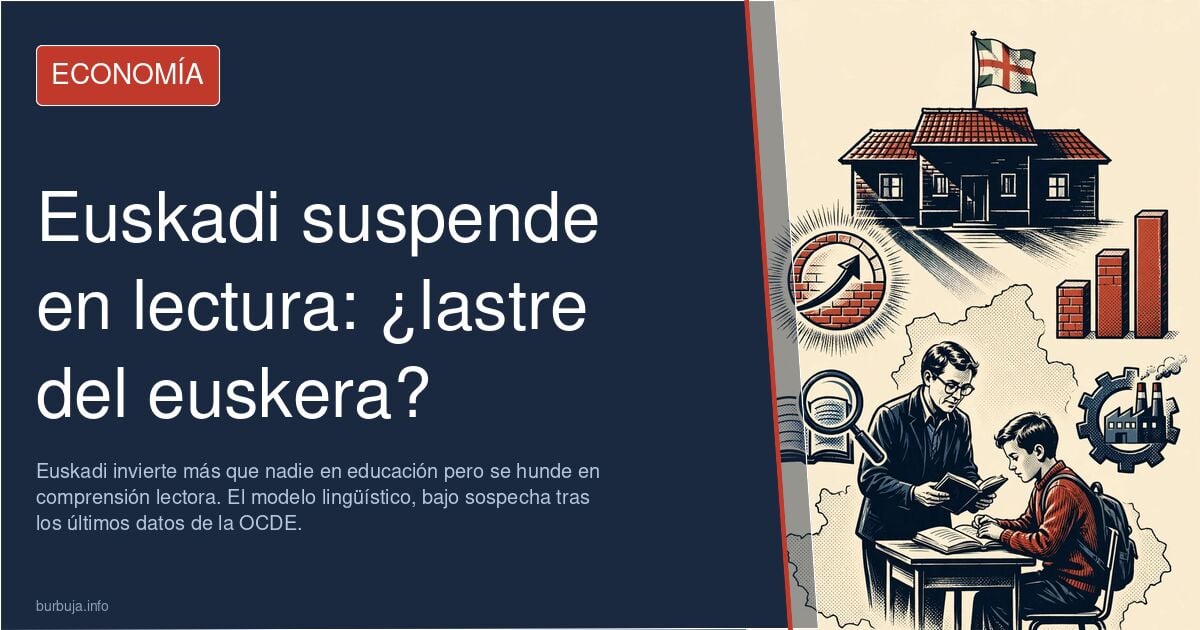
The Basque educational debacle: record spending, results in question
The education system of the Basque Country is facing a delicate moment. According to data circulating in public debate, the region invests the highest per-student spending of all of Spain, by far. However, academic results do not match this effort. The comparison with Madrid, which spends very little and achieves better grades, has peine the uncomfortable question: is more money synonymous with better education? At this stage of the discussion, the model in Euskera and its compulsory nature are at the heart of the unrest.
Record spending, modest results
Euskadi allocates more resources per student than any other autonomous community. The figure is repeated: higher spending, but no better results. On the other end, Madrid presents itself as the community that invests the least while achieving the highest average score. Excuses regarding diversity are not valid, because Madrid also has a high presence of migrant population. According to some currents, the difference lies in methodology: while the Basque model bets on pogre innovation, Madrid opts for less 'modernity' and more structure.
The compulsory use of Euskera and immigration
Another front opens regarding language. The first year is compulsory instruction in Euskera; from the second year onward, families can request transfer to a Spanish-language center. This has generated tension, especially with the arrival of migrant population that does not speak Euskera. Local families, including those who speak Spanish, seek classrooms where immigration is not concentrated. The result is a de facto segregation: some centers become ghettos, with problems ranging from minor incidents to aggression against teachers. A high school in Bilbao, nicknamed 'the UN,' has become the symbol of this chaos.
The analysis suggests that defending the Euskera model does not always stem from an educational concern, but rather a matter of interests: guaranteeing positions for local elites. Meanwhile, the compulsory nature of the language remains immovable. The model holds up, but at the cost of an increasingly fragmented system. How long it can withstand social pressure is the open question.
The education system of the Basque Country is facing a delicate moment. According to data circulating in public debate, the region invests the highest per-student spending of all of Spain, by far. However, academic results do not match this effort. The comparison with Madrid, which spends very little and achieves better grades, has peine the uncomfortable question: is more money synonymous with better education? At this stage of the discussion, the model in Euskera and its compulsory nature are at the heart of the unrest.
Record spending, modest results
Euskadi allocates more resources per student than any other autonomous community. The figure is repeated: higher spending, but no better results. On the other end, Madrid presents itself as the community that invests the least while achieving the highest average score. Excuses regarding diversity are not valid, because Madrid also has a high presence of migrant population. According to some currents, the difference lies in methodology: while the Basque model bets on pogre innovation, Madrid opts for less 'modernity' and more structure.
The compulsory use of Euskera and immigration
Another front opens regarding language. The first year is compulsory instruction in Euskera; from the second year onward, families can request transfer to a Spanish-language center. This has generated tension, especially with the arrival of migrant population that does not speak Euskera. Local families, including those who speak Spanish, seek classrooms where immigration is not concentrated. The result is a de facto segregation: some centers become ghettos, with problems ranging from minor incidents to aggression against teachers. A high school in Bilbao, nicknamed 'the UN,' has become the symbol of this chaos.
The analysis suggests that defending the Euskera model does not always stem from an educational concern, but rather a matter of interests: guaranteeing positions for local elites. Meanwhile, the compulsory nature of the language remains immovable. The model holds up, but at the cost of an increasingly fragmented system. How long it can withstand social pressure is the open question.
Summary of a discussion on Burbuja.info - Foro de economía, actualidad y política., translated from Spanish and reviewed before publication. Read the full discussion (58 replies).
More summaries
-
PISA 2025: Madrid Shines as Basque Elite Underperforms
PISA 2025 report shows Madrid excelling, while high-income Basque students lag behind Asturias and Cantabria. Catalonia excluded.
-
Euthanasia in Old Age: Autonomy vs. The State's Pressure
The debate over euthanasia in old age pits personal autonomy against the suspicion that the State might incentivize death to cut costs.
-
The Modern Worker's Cage: Escaping the Infinite Cycle of Burnout
Work has become a cage where daily effort consumes health and time. Discover why we push ourselves so hard and how to break the cycle.
-
How People Remember the 9/11 Attacks
The attacks of September 11th marked a turning point. Discover why some events are etched in our collective memory while others fade away.
-
Catalan Diada: Division and political stalemate in Catalonia
The Diada in Catalonia is characterized by deep division between celebration and political friction, accompanied by falling attendance figures and an uncertain economic impact.
-
Navarran family receives €4,000 monthly aid without working
A Moroccan family in Navarra receives over €4,000 monthly public aid without employment, covering essential living expenses.