
The American Dream Under Scrutiny: Wages, Fentanyl, and the Cost of Living
$20/hour wages, $900 monthly medical insurance, and the fentanyl crisis: the facts shattering the American Dream.
English · Original discussion in Spanish · Published
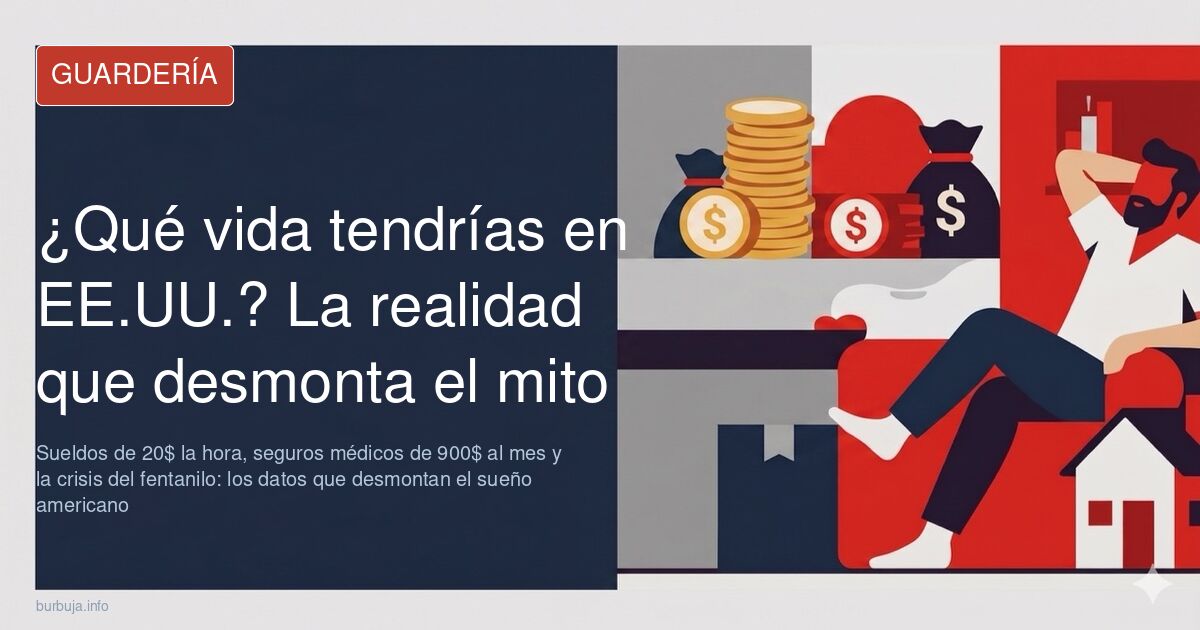
What life would you have in the U.S.? The reality that debunks the myth
The question of what kind of life you would have led if born in the United States has sparked a debate that pits the fantasy of Mustangs and ranches in Texas against the reality of a country where fentanyl runs rampant and medical insurance consumes wages. Between idealization and criticism, the numbers paint a picture far more complex than the cliché.
The Fantasy of the Mustang and the Ranch
Some imagine that, having been born across the Atlantic, they are currently driving a Mustang Dark Horse, owning a ranch in Texas, and having an armory bunker and shooting range. Others picture themselves on an Alabama plantation, reaping the rewards of labor.
It is the kinder version of the American Dream: the one from movies, where individual freedom is taken to the extreme.
But that image clashes with the reality of millions of Americans. It isn't all highways and guns. There are cities where the fentanyl crisis has turned entire streets into scenes of devastation, such as Kensington Avenue in Philadelphia or certain neighborhoods in San Francisco. The fantasy fades when discussing absolutely dire lives.
The Numbers Debunking the Myth
The calculations regarding the cost of living in the U.S. are devastating. With a wage of $20 per hour, needing to work more than a baker trying to reach $5,000 a month, and facing medical insurance costing around $900 monthly, the margin is razor-thin. To this are added taxes that make Spanish IBI (a property tax) seem anecdotal, and a legal system where any oversight can invite lawsuits.
The price of basics doesn't help either: $3 for a pack of pasta that would cost half as much in Spain, $5 for a beer at a local bar. And if the goal is to reach €100,000 annually, the math doesn't add up: at $20 per hour, it would require over 5,000 hours of work per year—a physical impossibility. Only highly specialized jobs approach that figure, but then the cost of living skyrockets in major cities.
The Other Side: Fentanyl and Violence
The fentanyl crisis has transformed the urban landscape. Kensington Avenue has become a symbol of degradation: people in zombie-like states, needles on the ground, a decay that authorities struggle to contain. It is not an isolated phenomenon; it extends through cities like San Francisco, where the situation has been described as an emergency.
Violence also looms over the debate. Homicide statistics in big cities and easy access to firearms fuel a perception of insecurity that contrasts sharply with the idyllic image of the countryside. Between the Alabama redneck and the fentanyl zombie, there is an abyss that the data cannot be ignored.
The analysis remains inconclusive: life in the U.S. depends on where you look and how much you earn. But the numbers regarding cost of living, healthcare, and safety do not lie. The American Dream, for many, remains just that: a dream.
The question of what kind of life you would have led if born in the United States has sparked a debate that pits the fantasy of Mustangs and ranches in Texas against the reality of a country where fentanyl runs rampant and medical insurance consumes wages. Between idealization and criticism, the numbers paint a picture far more complex than the cliché.
The Fantasy of the Mustang and the Ranch
Some imagine that, having been born across the Atlantic, they are currently driving a Mustang Dark Horse, owning a ranch in Texas, and having an armory bunker and shooting range. Others picture themselves on an Alabama plantation, reaping the rewards of labor.
It is the kinder version of the American Dream: the one from movies, where individual freedom is taken to the extreme.
But that image clashes with the reality of millions of Americans. It isn't all highways and guns. There are cities where the fentanyl crisis has turned entire streets into scenes of devastation, such as Kensington Avenue in Philadelphia or certain neighborhoods in San Francisco. The fantasy fades when discussing absolutely dire lives.
The Numbers Debunking the Myth
The calculations regarding the cost of living in the U.S. are devastating. With a wage of $20 per hour, needing to work more than a baker trying to reach $5,000 a month, and facing medical insurance costing around $900 monthly, the margin is razor-thin. To this are added taxes that make Spanish IBI (a property tax) seem anecdotal, and a legal system where any oversight can invite lawsuits.
The price of basics doesn't help either: $3 for a pack of pasta that would cost half as much in Spain, $5 for a beer at a local bar. And if the goal is to reach €100,000 annually, the math doesn't add up: at $20 per hour, it would require over 5,000 hours of work per year—a physical impossibility. Only highly specialized jobs approach that figure, but then the cost of living skyrockets in major cities.
The Other Side: Fentanyl and Violence
The fentanyl crisis has transformed the urban landscape. Kensington Avenue has become a symbol of degradation: people in zombie-like states, needles on the ground, a decay that authorities struggle to contain. It is not an isolated phenomenon; it extends through cities like San Francisco, where the situation has been described as an emergency.
Violence also looms over the debate. Homicide statistics in big cities and easy access to firearms fuel a perception of insecurity that contrasts sharply with the idyllic image of the countryside. Between the Alabama redneck and the fentanyl zombie, there is an abyss that the data cannot be ignored.
The analysis remains inconclusive: life in the U.S. depends on where you look and how much you earn. But the numbers regarding cost of living, healthcare, and safety do not lie. The American Dream, for many, remains just that: a dream.
Summary of a discussion on Burbuja.info - Foro de economía, actualidad y política., translated from Spanish and reviewed before publication. Read the full discussion (32 replies).
More summaries
-
Real Madrid's Dominance: European Glory vs. Domestic Refereeing Bias
Real Madrid dominates European football but struggles against a domestic league marked by controversial refereeing decisions and the narrative hegemony of FC Barcelona.
-
Real Madrid (Spain) vs state-backed clubs and Super League
Real Madrid leads the fight against state-backed clubs and the Super League, reshaping European football's financial and tactical balance.
-
Seven Years Without a Date, and a Coffee Invite That Ended in Being Blocked
Seven years without a date, three weeks of back-and-forth, and a silent block: how a coffee invite turned into a ghosting story.
-
This post on X from back when it was still Twitter is getting people talking online again.
A post from before July 2023 asked whether Penélope Cruz was Pepe Viyuela in a wig. The joke is doing the rounds again.
-
A forum debates whether showing off your body online is enough to get a date
A conversation about dating someone who flaunts their body on social media leaves one fact: the only figure mentioned is an unconfirmed height, 1,52 m
-
Jona Takalua: "I'm asexual, but I had a girlfriend"
Sexuality in the making: a personal journey between doubt and discovery. A personal account details the complex process of...