
The Alfonso XII 25-peseta coin selling for 10,000 euros
A 25-peseta coin from Alfonso XII is valued at 10,000 euros due to a bust variant, even though its gold is only worth 263 euros.
English · Original discussion in Spanish · Published
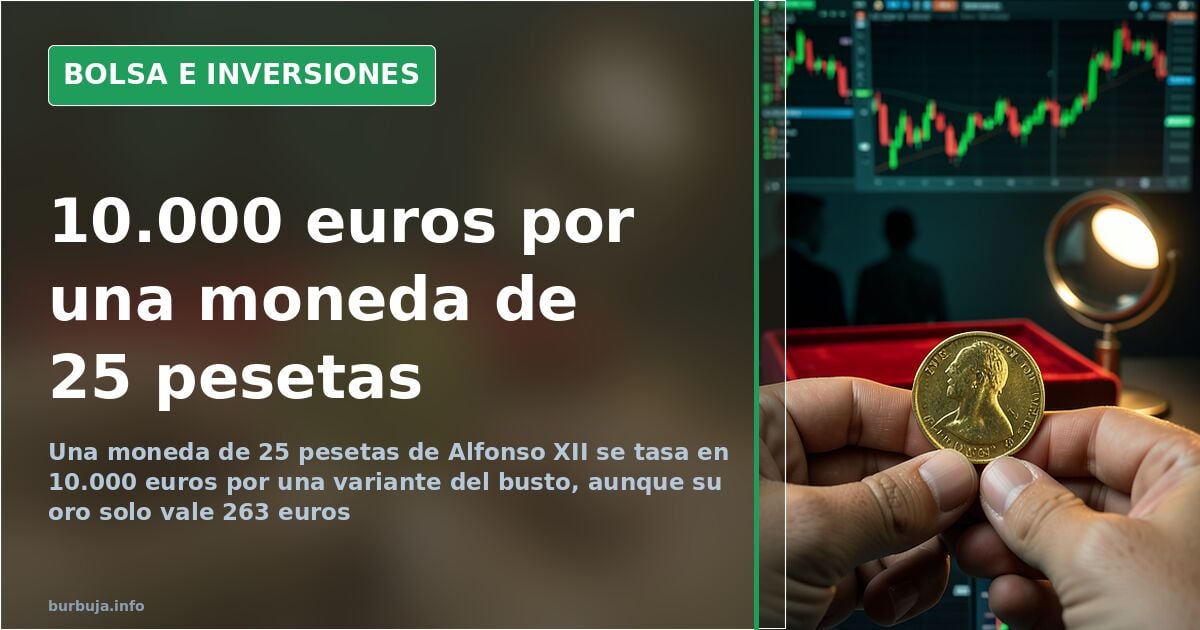
A 25-peseta gold coin is worth 10,000 euros if the king has no beard
A 25-peseta piece from Alfonso XII is listed at **10,000 euros** in very fine condition. At first glance it sounds absurd: the coin weighs 7.22 grams of gold, and the metal, at 36.45 euros per gram, barely covers 263 euros. The explanation is not in the metal. It lies in a detail of the portrait that almost nobody looks at.
In 1881 the Mint decided to change the monarch's effigy. A few units were struck with the old bust, the one of the young king, before replacing it with the new one. Those few pieces are the ones trading at six figures. The rest of the year, with a mintage of more than **four million pieces**, moves in the range of 150 euros. Same year, same denomination, same gold purity. The difference is a beard.
Why an 1881 25-peseta coin costs 10,000 euros
The mintage figure dismantles any theory of general scarcity. **More than four million** coins left the mint in 1881, a figure that in numismatics does not smell of rarity. What is scarce is the variant: the old bust struck out of inertia before the official image change. That is where the prize lies.
The collector's logic is not that of the metals investor. A common Alfonso XII piece is bought for its intrinsic value plus a small margin; a rare variant is bought for whatever another collector is willing to pay to complete the set. And that market has its own rules, almost always opaque.
The problem, and this is where one should pause, is that **the rare variant invites counterfeiting**. An 1880 piece with the zero reworked into a one passes for the 1881 without the trained eye noticing at first. Some joke about the method; the serious market knows it as a real risk.
Gold sets a floor, not a ceiling
The metal calculation is unforgiving: **7.22 grams** at **36.45 euros per gram** gives 263 euros. Any price below that figure is a bargain or a scam. Any price far above it only holds up if the piece is genuinely scarce and certified.
Hence the distrust of valuation websites. A catalog that marks 145 euros for a coin whose gold is worth 263 euros is wrong, outdated, or simply unreliable. The price range in numismatics is so wide that the same specimen can change hands for triple depending on who sells it and with what paperwork.
The comparison with other pieces illustrates the point: an uncirculated 5-peseta coin from 1869 exceeds **5,000 euros**, while there are ancient denarii for 40 euros and 2-euro commemorative coins that reach 1,000. Age does not pay; rarity does.
How to tell a rare piece from a common coin
The first filter is the portrait: beard or no beard, and which way the bust faces. The second is the engraved date, which on manipulated pieces shows signs of reworking under a magnifying glass. The third is the weight and diameter, which must match the official specifications.
None of these checks is foolproof without an expert. The recommendation repeated among enthusiasts is clear: for a piece in the four or five-figure range, certification from a recognized house or nothing. Today's saving is tomorrow's loss.
The frenzy over the 10,000-euro piece has another predictable side effect: it multiplies inquiries about inherited coins that nobody had looked at in decades. Most end up in a drawer, worth the gold value and little more.
With all this, the prediction is easy to state and hard to get right: as long as gold holds the floor, rare variants will keep rising. The rest of the market will remain a grab bag where the king's beard decides the price.
Also available in: Deutsch
Summary of a discussion on Burbuja.info - Foro de economía, actualidad y política., translated from Spanish and reviewed before publication. Read the full discussion (16 replies).
More summaries
-
800 and 900 silver: Spain's cheap safe-haven bought by weight
Spanish silver coins from the Franco and Alfonso XIII eras: 15.2 g of pure silver in the 100-peseta pieces and 22.5 g in the 5-peseta ones. Prices and the warning about fineness.
-
Alfonso XIII's gold coin doubles in value over a decade
The 100 peseta coin featuring Alfonso XIII has risen from €1,000 to €1,917 in ten years, as numismatic collecting finds refuge in gold.
-
Spain's 1994 2000-peseta coins: how much silver do they really contain
The 1994 2000-peseta coins weigh 18.2 grams and, according to a widely shared estimate, contain about 16.83 grams of silver: roughly 5.5 euros worth of metal. Their real value lies in…
-
Silver ounce: 31.1 grams, but coins rarely match
A silver ounce is 31.10348 grams of fine metal, but physical coins weigh between 31.30 and 31.64 grams depending on the mint. The official thickness also doesn't match the…
-
Telefónica slides to €3.39 as market hunts for a floor
Telefónica has fallen to €3.39 after the Brazil-driven plunge and a dividend cut in half. Investors are debating whether a floor exists or whether the knife is still falling.
-
ScorpBonk Presale Pays 25% Referral Rewards Instantly in BNB
The ScorpBonk memecoin, in presale on BNB Chain, pays out 25% of every referred purchase in BNB within the same transaction. Hardcap of 406.25 BNB and an ownerless vault.