
Texas Diesel Shortage Hits Trump Harder Than Rhetoric
Texas declared a disaster over diesel shortages, but the indifferent response triggered an electoral collapse in this Republican stronghold.
English · Original discussion in Spanish · Published
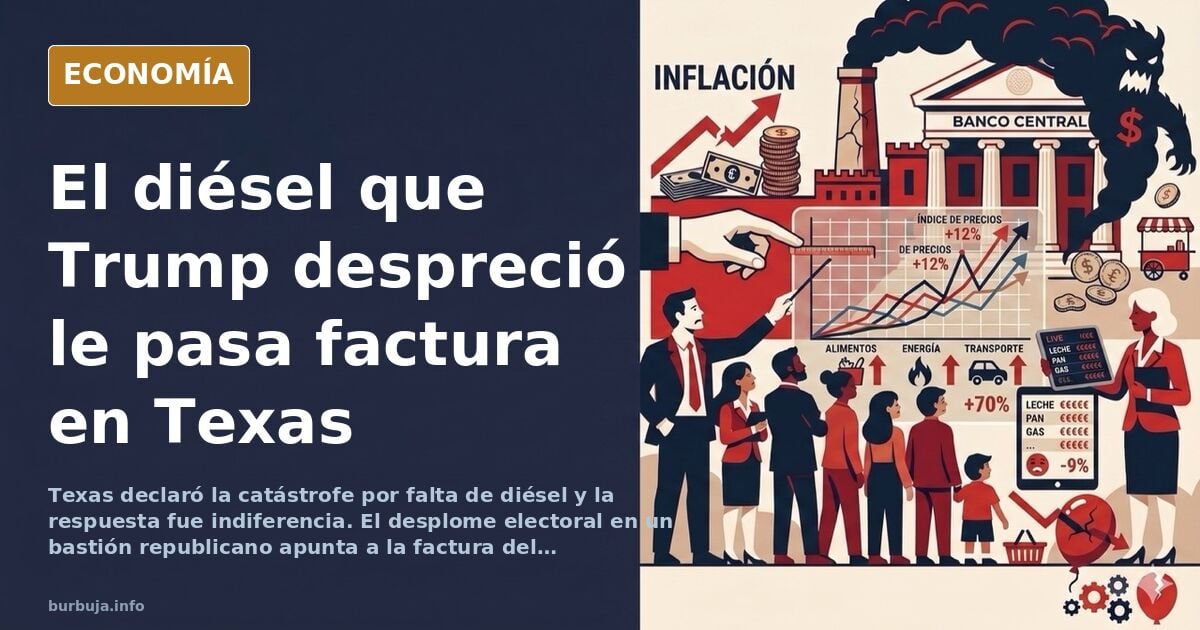
Texas Punishes Trump Over Diesel: Gas Prices Weigh Heavier Than Speeches
Texas declared a state of emergency due to diesel shortages across hundreds of counties, yet the response from Washington was reportedly one of indifference. That is where things broke. Not in opinion polls or rallies, but in the bank accounts of those filling up their pickups every week. The result, judging by early electoral shifts, is a collapse no one predicted in a state taken for granted.
From +15 to +10: The Unexpected Collapse
The data alerting analysts is Texas's shift, moving from a **fifteen-point lead for Trump** to ten points for Democratic candidate Talarico. Such a swing in a Republican bastion cannot be explained solely by demographics or Latino voters. Some point to similar drops in other Southern states, citing South Carolina, where Lindsey Graham’s sister’s candidacy faced discomfort even within her own party.
The prevailing view is that working-class voters have reordered their priorities. **Gun rights, abortion, and immigration** have moved to the background for many who simply want to make ends meet without ending up homeless. The K-shaped economy—where a minority thrives while the majority tightens its belt—stops being a textbook concept when fuel prices eat into wages.
Why Does the Diesel Shortage Anger Texans So Much?
Because in Texas, diesel is not a luxury; it is the work tool for half the rural economy and much of the transport sector. Declaring a disaster over supply shortages and responding with disdain is an effective way to lose elections. The phrase summarizing the anger is attributed to Laffer’s economic circle: **"If they want diesel, let them pay."** A salon joke that sounds like a declaration of war in an agricultural county.
The grievance has two layers. First, price: paying double for the same fuel while major oil companies report record profits. Second, tone. Voters can be asked to sacrifice; what they are not asked to do is laugh at the joke. The mix of **corporate power and the State** denounced by some analysts fits the scene too well: companies getting rich while the government looks away.
The Protest Vote: Gas, Cheap Burgers, and Less Foreign Trouble
There is a starker, likely more accurate interpretation: this was not an ideological vote, but a protest vote. The electorate sent a simple message—gas for the pickup, cheap food, and fewer adventures in Iran—and the rest is literature. When campaign messages focus on geopolitics while voters ask about the pump, the disconnect is total.
Added to this is a factor of personal weariness running through the analysis: the feeling that the figure no longer cares. At eighty years old, interest in detail evaporates. The remainder of the term is interpreted, with distrust, as an opportunity for insider trading, crypto schemes, and influence peddling. Proof is not needed for this narrative to spread; it suffices that voters believe it.
The lingering question is not whether diesel explains Texas. It is how many more states need someone to tell them to go to hell before they change their votes.
Also available in: Deutsch
Summary of a discussion on Burbuja.info - Foro de economía, actualidad y política., translated from Spanish and reviewed before publication. Read the full discussion (26 replies).
More summaries
-
Spain raises its Minimum Vital Income and debate turns political
A forum user describes the increase in Spain's IMV benefit for a family of three and announces he will vote for the PSOE. The thread turns into a debate on benefits, pensions and taxes.
-
Zaragoza PP suspends low-emission zone after Vox pact
Zaragoza's PP government agrees with Vox to fine only during exceptional pollution episodes, despite exceeding EU limits last year.
-
Abascal's Family Fashion Store in Amurrio: Debts and Zero Social Security Contributions
The Abascal family's fashion store in Amurrio is up for sale, reigniting debate over Vox leader Santiago Abascal's zero days of private sector contributions.
-
Spain weighs repatriating gold from New York Fed
Banco de España confirms gold held at the Federal Reserve but withholds amounts. While Netherlands, France and Germany move theirs, Spain remains undecided.
-
Debunking Texas Secession Rumor Involving Gina Hinojosa
Forum users debate an unsubstantiated claim that Gina Hinojosa led Texas to secede and join Mexico, dismissing it as a hoax.
-
False Claim of Sánchez Self-Attack Ahead of Nov 27 Vote
Rumors of a staged attack on Spanish PM Pedro Sánchez before elections circulate with specific details but lack any evidence.