
Teens Heckle State-Funded Play in Spain, Sparking Debate
Adolescents heckled a state-funded play in Spain, reigniting debate on public spending for mandatory cultural activities.
English · Original discussion in Spanish · Published
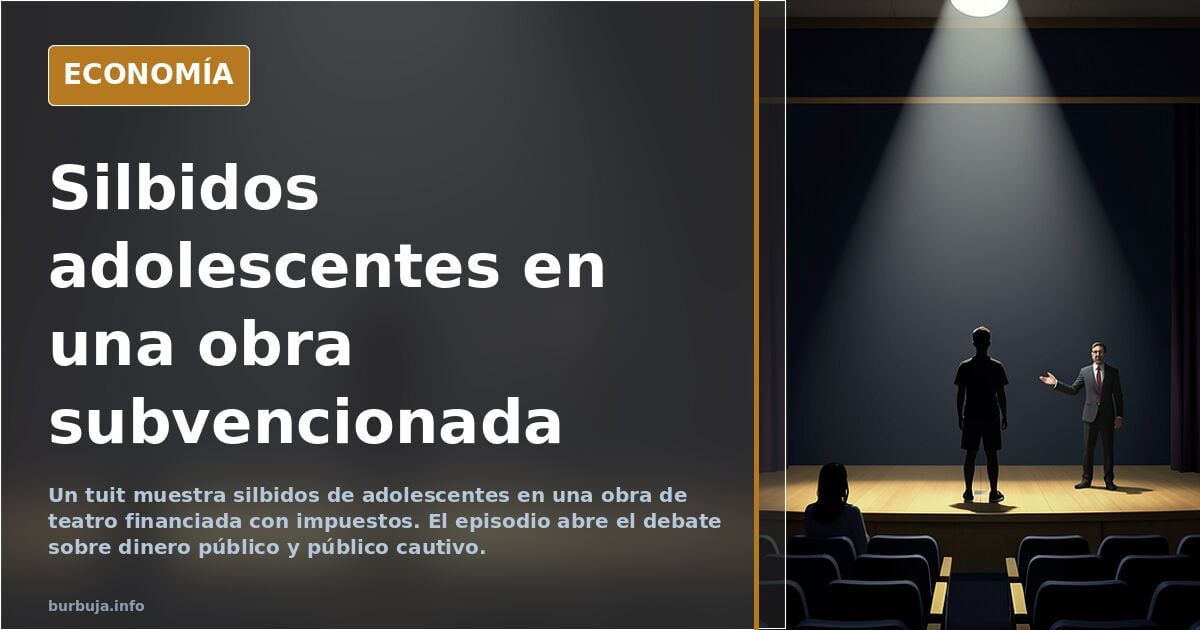
When captive audiences boo subsidized performances
What happens when teenagers are seated in a theater paid for with public funds and dislike the play? They boo. When the author asks for silence from the stage, the scene becomes a minor culture clash that goes viral on social media. The episode, spread via a tweet, has peine discussions on using public funds to schedule ideological cultural content in schools.
The disputed scene: a woman on stage, an adolescent audience responding with whistles, and costs covered by budgets. There are no official figures on the performance's cost, but the source of discontent is clear: students did not choose to be there. In terms of cultural management, this is a variable no programmer should ignore.
The price of an audience that cannot leave
Programming activities in high schools often stems from agreements with city councils or autonomous communities. The result is a captive spectator: they do not pay for tickets, do not decide, and often cannot stand up. When the content does not connect, the reaction is not indifference; it is noise. And noise, in a theater, is amplified.
Some argue the problem is not the content, but the lack of filtering: if the play were offered at the box office, the audience would choose. Comparison with commercial theater is recurrent. The underlying question is whether public money should fund proposals that, in a free market, would not fill seats.
Shadows of suspicion over the video
Part of the circulating analysis questions the veracity of the episode: it is suggested it could be a setup or exaggeration. There is no official confirmation of facts, and the author has not commented on teachers' attitudes. This lack of context fuels distrust.
What is verifiable is the discomfort: the play is presented as an educational activity and the audience responds with whistles. If the goal was education, the result was a lesson in passive resistance.
Opportunity cost of subsidized culture
In economic terms, each subsidized performance competes with other school needs: materials, facilities, educational reinforcement. The debate on whether spending is well-allocated is not new, but episodes like this revive it. The lingering question: how much does an hour of theater nobody wanted to see cost?
The final irony comes from the audience itself: the teenagers who whistle are the same ones who, in a few years, will decide what gets subsidized and what does not. And then, perhaps, someone will whistle from the stage.
Also available in: Deutsch
Summary of a discussion on Burbuja.info - Foro de economía, actualidad y política., translated from Spanish and reviewed before publication. Read the full discussion (158 replies).
More summaries
-
Spanish mayor uses public funds to relocate vulnerable family to Catalonia
The town council of Baños de Montemayor (Cáceres) used public funds to pay for the transfer to Mataró of the squatters of a tourist apartment, plus five days of accommodation.
-
Spain: 511 million in public funds for UGT and CCOO since 2022
According to the debate material, UGT and CCOO take 86% of union subsidies: over 511 million since 2022, with 70% coming from Spain's regional governments and local authorities.
-
46% of Spanish Voters Receive Public Funds, Analysis Finds
A journalistic analysis claims 46% of Spain's electoral census receives pensions, aid, or public employment. This figure constrains any potential reform.
-
Abdellah Mustafa: The Neighbourhood Voice of Ceuta on TV
Abdellah Mustafa, neighbourhood president of Sidi Embarek, has become omnipresent on television while critics accuse him of not mentioning Morocco.
-
Spain to fund return flights for vulnerable emigrants
New regulation offers financial aid for Spanish citizens abroad in economic hardship to return home. One-year implementation deadline.
-
Spain's Housing Policies: Party Plans for Nov 29
Ahead of Spain's Nov 29 vote, parties propose housing measures ranging from PP's 5% VAT to Podemos' 40% rent cuts. Here are the specific plans.