
Sunflower oil hits €3.20, petrol rises to €1.90 per liter
In Spain, sunflower oil prices tripled and fuel rose sharply, while Lidl's bread remains stable at 37 cents.
English · Original discussion in Spanish · Published
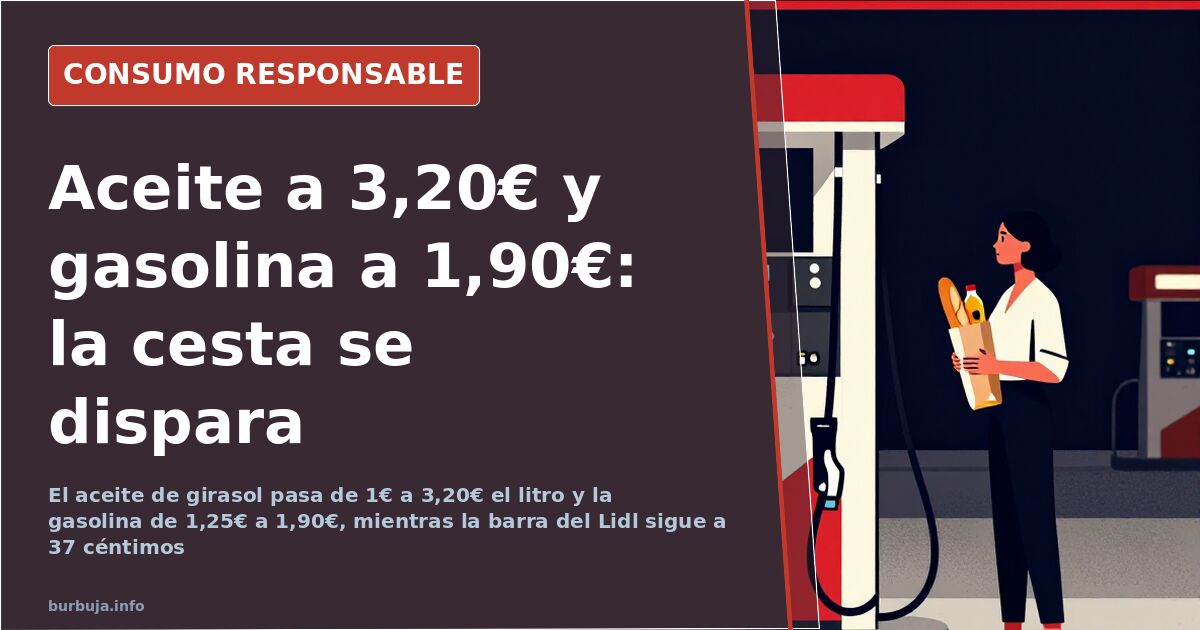
Lidl bread stays at 37 cents as oil prices triple
The figures circulating in the thread indicate that a liter of sunflower oil jumped from €1 to €3.20, while gasoline rose from €1.25 to €1.90. Amidst this disparity, the 200-gram loaf of bread at Lidl remains fixed at 37 cents, or 33 cents if buying three at once. The shopping basket has become an exercise in contradictions: some products have doubled or tripled while others barely move, and the published average does not reflect what each household pays at the checkout.
CPI that doesn't match the shopping basket
A suspicion persists among weekly shoppers: official inflation is not what one feels when paying. The argument is that the average mixes food, housing, and fuel—where prices have skyrocketed—with goods that have remained stable or even decreased, such as hotels, leisure, culture, clothing, communications, or alcoholic beverages. According to proponents of this view, the result is a figure much softer than the real hit on basic products.
The calculation circulating is definitive: if one isolates the essentials (housing, fuel, and food), the increase goes far above what general indices state. It is not a thesis with formal statistical backing, but it aligns with the experience of those filling their carts. The receipt does not understand weighting.
From sunflower oil to tortilla: the price hikes that are felt
The catalog of cited increases in the thread is extensive. Sunflower oil has gone from €1 to €3.20 per liter. Gasoline, from €1.25 to €1.90. A branded packaged tortilla sells for €3.99 when it used to cost €2.50. Plastic bags have risen to 12 cents when they recently cost 10. In a specific supermarket, an eight-pack of flavored yogurts jumped from €0.95 to €1.17.
Then there are the percentages. Pastries have become around 60% more expensive. Meat, 15%. An assortment of cookies rose by 30%, lost two or three varieties, and according to consumers, no longer tastes the same: the price goes up, quality drops, and variety shrinks. The tortilla has become a symbol of absurdity: it costs the same as a 1.5-kilo chicken.
Why is olive oil more expensive in Spain than in the rest of Europe?
The paradox confuses anyone. Spain is the world's largest producer of olive oil, yet some argue that prices here exceed those in other European countries. It is claimed that the best product is exported and the worst remains, and that this product is sold higher domestically than abroad. The sense of injustice is hard to refute because there is no readily available explanation that convinces those looking at the label and the receipt.
Record profits in major companies while the basket rises
Parallel to household spending, several participants note that large companies closed record fiscal years: an oil company doubling profits, an electricity firm with historic highs, an automaker with unprecedented figures, and a bank with 43% more earnings. For many families, this coincidence is not accidental; they see their bills rise while the income statements of these same companies break records.
The uncomfortable reading is of an adjustment distributed unequally: if energy and food prices rise, households pay the bill while a few reap the gains. Some attribute this to a business practice of raising prices "just because," without clear justification in services that do not directly depend on raw materials.
Eating less, cheap stews, and bulk buying
Consumer response has become tactical. Legume and potato stews remain the cheapest items in the cart. Discounts, near-expiry products, and bulk buying have become routine for those sharing these experiences. Cooking at home instead of ordering delivery makes a difference: a delivered lasagna can cost €15, whereas for that money one can buy two ribeye steaks and still have change left over.
Some have also reduced purchases to essentials. Less sugar, less flour, fewer processed foods, fewer luxuries. Silent protest means spending less: every euro not spent is a euro of VAT not paid. And a habit that was once about tightening belts is now presented as a lifestyle.
The fact is that the numbers don't quite add up. At the checkout, the basket shrinks and cheap stews gain ground. On the street, terraces remain full and delivery drivers do not stop. With these disparities, the complaint should be a chorus. Instead, it remains bar talk. No one fully explains why.
The figures circulating in the thread indicate that a liter of sunflower oil jumped from €1 to €3.20, while gasoline rose from €1.25 to €1.90. Amidst this disparity, the 200-gram loaf of bread at Lidl remains fixed at 37 cents, or 33 cents if buying three at once. The shopping basket has become an exercise in contradictions: some products have doubled or tripled while others barely move, and the published average does not reflect what each household pays at the checkout.
CPI that doesn't match the shopping basket
A suspicion persists among weekly shoppers: official inflation is not what one feels when paying. The argument is that the average mixes food, housing, and fuel—where prices have skyrocketed—with goods that have remained stable or even decreased, such as hotels, leisure, culture, clothing, communications, or alcoholic beverages. According to proponents of this view, the result is a figure much softer than the real hit on basic products.
The calculation circulating is definitive: if one isolates the essentials (housing, fuel, and food), the increase goes far above what general indices state. It is not a thesis with formal statistical backing, but it aligns with the experience of those filling their carts. The receipt does not understand weighting.
From sunflower oil to tortilla: the price hikes that are felt
The catalog of cited increases in the thread is extensive. Sunflower oil has gone from €1 to €3.20 per liter. Gasoline, from €1.25 to €1.90. A branded packaged tortilla sells for €3.99 when it used to cost €2.50. Plastic bags have risen to 12 cents when they recently cost 10. In a specific supermarket, an eight-pack of flavored yogurts jumped from €0.95 to €1.17.
Then there are the percentages. Pastries have become around 60% more expensive. Meat, 15%. An assortment of cookies rose by 30%, lost two or three varieties, and according to consumers, no longer tastes the same: the price goes up, quality drops, and variety shrinks. The tortilla has become a symbol of absurdity: it costs the same as a 1.5-kilo chicken.
- Sunflower oil: from €1 to €3.20 per liter
- Gasoline: from €1.25 to €1.90 per liter
- Packaged tortilla: from €2.50 to €3.99
- Pastries: +60%
Why is olive oil more expensive in Spain than in the rest of Europe?
The paradox confuses anyone. Spain is the world's largest producer of olive oil, yet some argue that prices here exceed those in other European countries. It is claimed that the best product is exported and the worst remains, and that this product is sold higher domestically than abroad. The sense of injustice is hard to refute because there is no readily available explanation that convinces those looking at the label and the receipt.
Record profits in major companies while the basket rises
Parallel to household spending, several participants note that large companies closed record fiscal years: an oil company doubling profits, an electricity firm with historic highs, an automaker with unprecedented figures, and a bank with 43% more earnings. For many families, this coincidence is not accidental; they see their bills rise while the income statements of these same companies break records.
The uncomfortable reading is of an adjustment distributed unequally: if energy and food prices rise, households pay the bill while a few reap the gains. Some attribute this to a business practice of raising prices "just because," without clear justification in services that do not directly depend on raw materials.
Eating less, cheap stews, and bulk buying
Consumer response has become tactical. Legume and potato stews remain the cheapest items in the cart. Discounts, near-expiry products, and bulk buying have become routine for those sharing these experiences. Cooking at home instead of ordering delivery makes a difference: a delivered lasagna can cost €15, whereas for that money one can buy two ribeye steaks and still have change left over.
Some have also reduced purchases to essentials. Less sugar, less flour, fewer processed foods, fewer luxuries. Silent protest means spending less: every euro not spent is a euro of VAT not paid. And a habit that was once about tightening belts is now presented as a lifestyle.
The fact is that the numbers don't quite add up. At the checkout, the basket shrinks and cheap stews gain ground. On the street, terraces remain full and delivery drivers do not stop. With these disparities, the complaint should be a chorus. Instead, it remains bar talk. No one fully explains why.
Summary of a discussion on Burbuja.info - Foro de economía, actualidad y política., translated from Spanish and reviewed before publication. Read the full discussion (154 replies).
More summaries
-
Extra virgin olive oil: quality, prices and controversy in the supply chain
EVOO: extraction methods, packaging, prices and the climate crisis threatening the 2024 harvest. Discover the data the media won't tell you.
-
Olive Oil Prices Drop: Bubble Burst or Temporary Adjustment?
Extra virgin olive oil prices are falling after record highs. We analyze if this is a natural market correction or a sign of deeper structural issues in the sector.
-
The real cost of cheap paint from Leroy Merlin
The real cost of using cheap paint from big-box stores. We analyze the dilemma between immediate savings and the durability of the finish.
-
Braking to deter tailgaters: Legal, but Article 53 applies
Article 53 of the Traffic Regulations allows braking unless there is imminent danger, but prohibits sudden stops. The rear driver usually bears liability.
-
Homemade Butter Yields 380 Grams Per Liter of Cream
A forum user claims one liter of cream yields 380 grams of butter at half the price, though bulk cream costs more than small tubs.
-
Gym business relies on members who don't show up
Two weekly strength sessions maintain muscle, while most gym revenue comes from inactive paying members.