
Spanish Tapas Bar in Switzerland: Investor Plan Flawed by Math
A proposed Swiss tapas bar with external investors faces scrutiny over margins, pricing, and the viability of paid flamenco experiences.
English · Original discussion in Spanish · Published
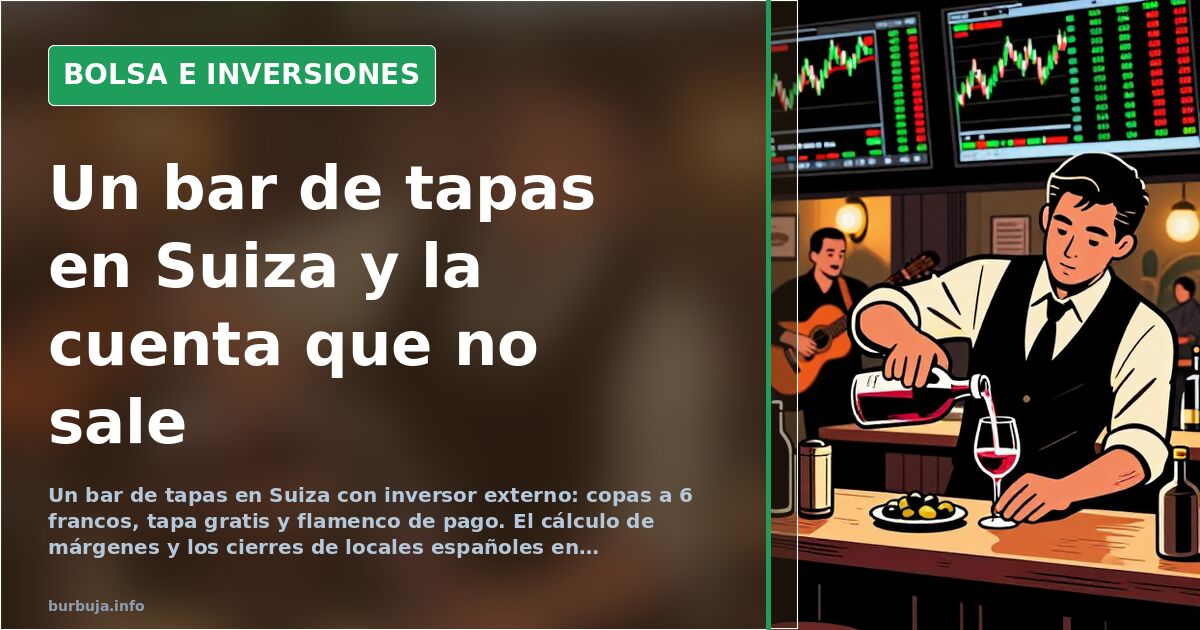
Tapas Bar in Switzerland: The Plan That Crumbles Over Costs
Opening a tapas bar in French-speaking Switzerland using other people's money, while managing it personally for a lifetime percentage to the investor. This proposal sparked a discussion with 128 replies over nearly two years, starting with a concrete promise: the promoter would contribute at least 50% of the total investment and handle the venue "in its entirety." On paper, the model is almost insultingly simple: wine only, free tortilla tapa, and as a cash hook, flamenco after-parties with top-tier artists for Lausanne's affluent audience.
The idea doesn't stem from market research but from an intuition about borrowed capital: in Switzerland, where nothing is free, giving away a tortilla pincho "blows their minds." The promoter calculates that a glass of wine yields more than 6 francs in profit after deducting the tapa cost, arguing this margin sustains the business without complex kitchen operations. Decoration is Andalusian; products include premium cured meats and local cheese; the price for the flamenco experience is set at 500 francs per person, considered "pocket change" in their scale.
The Margin on Wine No One Buys
The first blow comes from pricing. A 6-franc wine isn't a bargain in Switzerland; it's what any restaurant charges for standard wine, so profitability can't come from there. The alternative scenario suggests that if quality, Swiss wages, and rents are prioritized, the glass must cost 15 francs. The promoter clarifies they meant 6 francs net profit, not menu price, asking others not to find "cracks where none exist."
The second flaw is the product itself. The most repeated argument is that the average Swiss customer cannot distinguish acorn-fed jamón from sandwich pueblerino, noting that Spanish quality businesses abroad often fail due to this. The sarcastic recommendation is to invest that money in the stock market and let hungry customers make raclette instead.
Paid Flamenco: Tourist or Local Appeal?
The plan's most ambitious part is musical. Bringing current flamenco stars to Lausanne, hosting guitar-and-cured-meat after-parties, and charging for an experience that, bought separately (flight, hotel, show, meal), would cost 2,000 euros for a week and a half. The promoter insists there is a cultured audience capable of appreciating it and that word-of-mouth will drive success.
The counterargument trinc hospitality manuals: a tablao lives off tourists who visit once, not neighbors who return. Even excellent experiences lack replacement rates. Comparisons are made to high-end restaurants: even the world's best had to close because people willing to pay for the menu ran out. A practical issue is added: organizing shows requires police authorization, which reviews everything strictly, especially in Lausanne.
Spanish Bars Already Closed in the Area
The heaviest evidence against the plan isn't theoretical. Several Spanish bars have closed in Lausanne and Renens, with the remaining one converted into a bar-restaurant. Another case cited is a Spanish tapas bar in Dublin that lasted little time: locals weren't convinced, and resident Spaniards rarely visited due to high prices.
Those who have worked abroad describe the same pattern: empty mornings, lunchtime crowds, and afternoons turning into meeting spots for Spaniards for coffee or beer. Some locals order wine with a ham tapa, but it's no avalanche.
Importation, Permits, and the Missing Partner
Logistics are also debated. Importing meat costs 7 euros per kilo, only worthwhile if the product is good. Andalusian decor, typical products, and service are assumed, but the business depends on someone providing funds. Here arises the uncomfortable question: what percentage does each party contribute? The answer remains that the promoter would provide at least half.
The conclusion is stark. After nearly two years of back-and-forth, comparisons with tablaos, wine calculations, and artist lists, the promoter summarizes: "You've killed the idea; I was blinded by it." The reality check, they say, came from the numbers.
One question remains unanswered: if the margin per glass is so generous and the affluent audience exists, why have so many Spanish venues closed in the area? No one in the conversation provides sales figures supporting the model. Without that number, the plan remains a nice intuition with an unsettled bill.
Opening a tapas bar in French-speaking Switzerland using other people's money, while managing it personally for a lifetime percentage to the investor. This proposal sparked a discussion with 128 replies over nearly two years, starting with a concrete promise: the promoter would contribute at least 50% of the total investment and handle the venue "in its entirety." On paper, the model is almost insultingly simple: wine only, free tortilla tapa, and as a cash hook, flamenco after-parties with top-tier artists for Lausanne's affluent audience.
The idea doesn't stem from market research but from an intuition about borrowed capital: in Switzerland, where nothing is free, giving away a tortilla pincho "blows their minds." The promoter calculates that a glass of wine yields more than 6 francs in profit after deducting the tapa cost, arguing this margin sustains the business without complex kitchen operations. Decoration is Andalusian; products include premium cured meats and local cheese; the price for the flamenco experience is set at 500 francs per person, considered "pocket change" in their scale.
The Margin on Wine No One Buys
The first blow comes from pricing. A 6-franc wine isn't a bargain in Switzerland; it's what any restaurant charges for standard wine, so profitability can't come from there. The alternative scenario suggests that if quality, Swiss wages, and rents are prioritized, the glass must cost 15 francs. The promoter clarifies they meant 6 francs net profit, not menu price, asking others not to find "cracks where none exist."
The second flaw is the product itself. The most repeated argument is that the average Swiss customer cannot distinguish acorn-fed jamón from sandwich pueblerino, noting that Spanish quality businesses abroad often fail due to this. The sarcastic recommendation is to invest that money in the stock market and let hungry customers make raclette instead.
Paid Flamenco: Tourist or Local Appeal?
The plan's most ambitious part is musical. Bringing current flamenco stars to Lausanne, hosting guitar-and-cured-meat after-parties, and charging for an experience that, bought separately (flight, hotel, show, meal), would cost 2,000 euros for a week and a half. The promoter insists there is a cultured audience capable of appreciating it and that word-of-mouth will drive success.
The counterargument trinc hospitality manuals: a tablao lives off tourists who visit once, not neighbors who return. Even excellent experiences lack replacement rates. Comparisons are made to high-end restaurants: even the world's best had to close because people willing to pay for the menu ran out. A practical issue is added: organizing shows requires police authorization, which reviews everything strictly, especially in Lausanne.
Spanish Bars Already Closed in the Area
The heaviest evidence against the plan isn't theoretical. Several Spanish bars have closed in Lausanne and Renens, with the remaining one converted into a bar-restaurant. Another case cited is a Spanish tapas bar in Dublin that lasted little time: locals weren't convinced, and resident Spaniards rarely visited due to high prices.
Those who have worked abroad describe the same pattern: empty mornings, lunchtime crowds, and afternoons turning into meeting spots for Spaniards for coffee or beer. Some locals order wine with a ham tapa, but it's no avalanche.
Importation, Permits, and the Missing Partner
Logistics are also debated. Importing meat costs 7 euros per kilo, only worthwhile if the product is good. Andalusian decor, typical products, and service are assumed, but the business depends on someone providing funds. Here arises the uncomfortable question: what percentage does each party contribute? The answer remains that the promoter would provide at least half.
The conclusion is stark. After nearly two years of back-and-forth, comparisons with tablaos, wine calculations, and artist lists, the promoter summarizes: "You've killed the idea; I was blinded by it." The reality check, they say, came from the numbers.
One question remains unanswered: if the margin per glass is so generous and the affluent audience exists, why have so many Spanish venues closed in the area? No one in the conversation provides sales figures supporting the model. Without that number, the plan remains a nice intuition with an unsettled bill.
Also available in: Deutsch
Summary of a discussion on Burbuja.info - Foro de economía, actualidad y política., translated from Spanish and reviewed before publication. Read the full discussion (128 replies).
More summaries
-
Switzerland enshrines cash in constitution; franc hits highs
Swiss voters backed a constitutional cash guarantee with 73.6% support, driving the franc to record highs against the euro.
-
Bitcoin: 288,000 daily payments and energy use exceeding Switzerland
The Bitcoin network processes 288,000 transactions per day while consuming more electricity than Switzerland. Calculations on its actual capacity as money fall short of the promise.
-
Moving Savings to Switzerland and Germany: From DD1 to Model 720
Opening accounts in Switzerland or Germany is legal but requires documentation. The DD1 is gone; the Model 720 obligation remains and does not expire.
-
Kyndryl: $14.2bn in deals but margins fail to convince
Kyndryl boasts $14.2bn in new contracts, but revenue is falling and margins are not taking off. When will it show in results?
-
Record bank profits in Spain widen inequality gap
Santander pays €840m dividends as four Spanish banks cut 14,759 jobs amid record earnings.
-
Gender bias shapes who invests in the stock market
The gender gap persists in Spanish investing, though real cases contradict stereotypes that women only spend.