
Spanish Police Officer Confronts Interior Minister Over Loss of Authority
A National Police officer publicly rebuked Spain's Interior Minister, Fernando Grande-Marlaska, during an awards ceremony in Madrid, citing a perceived erosion of police authority.
English · Original discussion in Spanish · Published
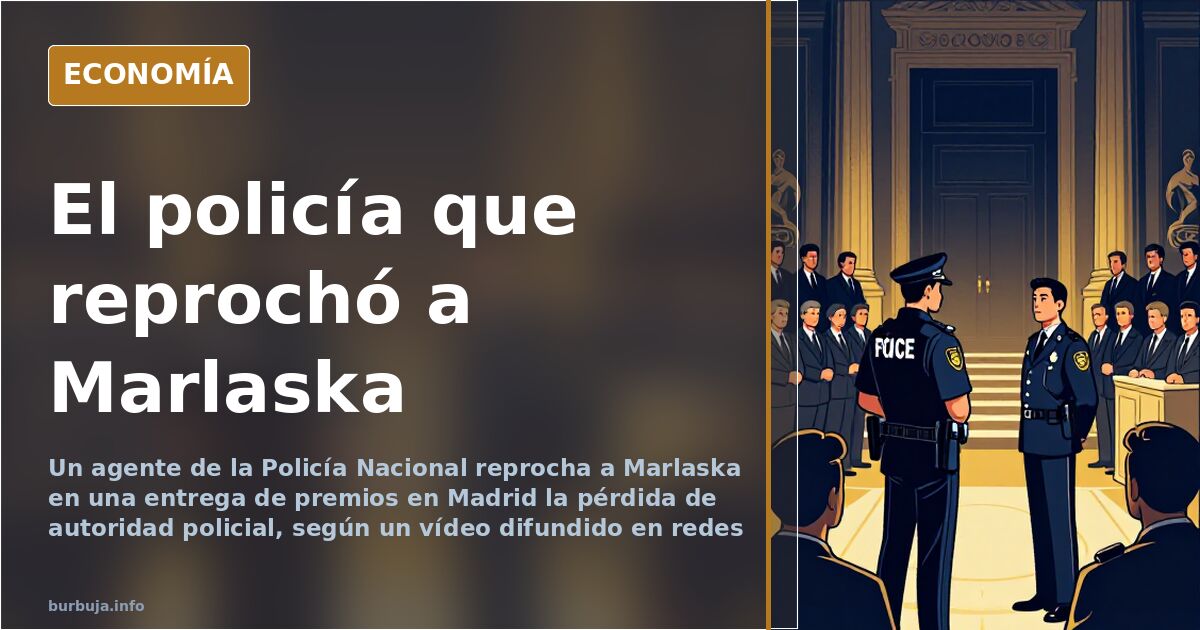
Officer Rebukes Marlaska for Erosion of Police Authority
A Spanish National Police officer used an awards ceremony in Madrid to deliver a four-sentence speech to Interior Minister Fernando Grande-Marlaska, summarizing widespread discontent within the force: "They strip us of authority to give it to incivil. Why do they refuse to end evil and instead destroy good?" The video, which went viral on social media, sparked a debate extending far beyond the actions of one officer with face paint. The core issue is not whether the officer crossed a line, but whether he is right.
The scene was simple, but the context complex. At an official event, with the minister at the podium, a police officer stood up and voiced what many colleagues have muttered in locker rooms for years. Public reaction was largely supportive: "I believe you, sir," read one early comment. Others noted that while the format was questionable, the substance was undeniable: "He spoke hard truths."
What the Officer Said and Why It Resonates
The officer’s message rests on three pillars. First, the loss of authority: the feeling that legal frameworks protect offenders more than those who arrest them. Second, perceived impunity: arrests that result in release within hours. Third, penal and security policies, including parliamentary agreements that, according to this view, limit tools like rubber bullets or reduce penalties for disobeying authorities.
This last point is not merely impressionistic; specific agreements banning rubber bullets in chaotic situations and eliminating sanctions for disobedience were cited. For some, this tells officers to respond with flowers when pelted with stones. For others, it is simply the cost of a democracy that does not want police acting as judges.
Wear and Tear Not Measured by Polls
An unrecorded data point pervades the conversation: accumulated wear and tear. One participant recalled that during the pandemic, the same units now complaining of lack of support enforced lockdowns and fines strictly. "They lost any respect they had during the pandemic. They were exposed," another summarized. The contradiction is uncomfortable: the force feeling abandoned today was yesterday the enforcer of unpopular measures.
Individual cases add to this. One person reported a robbery case closed without trial despite license plate and witness evidence. Another was disciplined for criticizing the Citizen Security Law online. This double standard—diligence in fining, negligence in investigating—fuels the narrative that authority has not been lost, but poorly distributed.
The Proposal No One Dares to Write Down
At the extreme, some propose dissolving current forces and replacing them with civilian neighborhood brigades, including psychological, psychiatric, and drug tests. This is hyperbole, but highlights a real issue: trust in the policing model is broken for a significant segment of the population. The debate is not if the officer is right, but if the force, as it stands, serves any purpose.
Institutionally, the response is predictable: a career civil servant won’t be fired for a speech, nor promoted. The minister, according to ironic speculation, might suspend him from duty and pay... or do nothing and let the video run its course. Personnel policy as spectacle.
What Remains When the Video Ends
The officer painted his face, but the problem he highlighted cannot be washed away. The discussion drifted into rougher terrain—comparisons with other countries, criticisms of politicians, hypothetical costs of complaints—and ended where these things usually do: with the realization that no one will lift a finger. The gesture was individual. The complaint, collective. The response, administrative silence.
Does anyone truly believe the next officer to stand up at an official event will deliver a better-prepared speech?
A Spanish National Police officer used an awards ceremony in Madrid to deliver a four-sentence speech to Interior Minister Fernando Grande-Marlaska, summarizing widespread discontent within the force: "They strip us of authority to give it to incivil. Why do they refuse to end evil and instead destroy good?" The video, which went viral on social media, sparked a debate extending far beyond the actions of one officer with face paint. The core issue is not whether the officer crossed a line, but whether he is right.
The scene was simple, but the context complex. At an official event, with the minister at the podium, a police officer stood up and voiced what many colleagues have muttered in locker rooms for years. Public reaction was largely supportive: "I believe you, sir," read one early comment. Others noted that while the format was questionable, the substance was undeniable: "He spoke hard truths."
What the Officer Said and Why It Resonates
The officer’s message rests on three pillars. First, the loss of authority: the feeling that legal frameworks protect offenders more than those who arrest them. Second, perceived impunity: arrests that result in release within hours. Third, penal and security policies, including parliamentary agreements that, according to this view, limit tools like rubber bullets or reduce penalties for disobeying authorities.
This last point is not merely impressionistic; specific agreements banning rubber bullets in chaotic situations and eliminating sanctions for disobedience were cited. For some, this tells officers to respond with flowers when pelted with stones. For others, it is simply the cost of a democracy that does not want police acting as judges.
Wear and Tear Not Measured by Polls
An unrecorded data point pervades the conversation: accumulated wear and tear. One participant recalled that during the pandemic, the same units now complaining of lack of support enforced lockdowns and fines strictly. "They lost any respect they had during the pandemic. They were exposed," another summarized. The contradiction is uncomfortable: the force feeling abandoned today was yesterday the enforcer of unpopular measures.
Individual cases add to this. One person reported a robbery case closed without trial despite license plate and witness evidence. Another was disciplined for criticizing the Citizen Security Law online. This double standard—diligence in fining, negligence in investigating—fuels the narrative that authority has not been lost, but poorly distributed.
The Proposal No One Dares to Write Down
At the extreme, some propose dissolving current forces and replacing them with civilian neighborhood brigades, including psychological, psychiatric, and drug tests. This is hyperbole, but highlights a real issue: trust in the policing model is broken for a significant segment of the population. The debate is not if the officer is right, but if the force, as it stands, serves any purpose.
Institutionally, the response is predictable: a career civil servant won’t be fired for a speech, nor promoted. The minister, according to ironic speculation, might suspend him from duty and pay... or do nothing and let the video run its course. Personnel policy as spectacle.
What Remains When the Video Ends
The officer painted his face, but the problem he highlighted cannot be washed away. The discussion drifted into rougher terrain—comparisons with other countries, criticisms of politicians, hypothetical costs of complaints—and ended where these things usually do: with the realization that no one will lift a finger. The gesture was individual. The complaint, collective. The response, administrative silence.
Does anyone truly believe the next officer to stand up at an official event will deliver a better-prepared speech?
Also available in: Deutsch
Summary of a discussion on Burbuja.info - Foro de economía, actualidad y política., translated from Spanish and reviewed before publication. Read the full discussion (107 replies).
More summaries
-
Spain's housing decree: what Sánchez and allies are plotting
The housing decree is being voted on without being read, with suspicions it sneaks in measures unrelated to rental housing. Junts, PNV and Bildu will decide the outcome.
-
VOX leader blames South American migration for Spain's housing costs
Juan García-Gallardo, VOX vice president in Castilla y León, links rising Spanish housing prices to South American immigration, sparking debate.
-
Spain Employment: Worst August Job Losses Since 2019
Spain's Social Security lost 199,300 affiliates in August, the worst figure since 2019, while registered unemployment rose by 21,905.
-
Serbia signs deal to import 100,000 workers from Ghana
Serbia agrees to bring in 100,000 Ghanaian workers amid 600,000 unemployed youth. The pact is seen as an EU accession toll, sparking migration debate.
-
Montero labels migrant expulsions pure hate
Spain's Equality Minister Irene Montero condemns threats to expel migrants as racist, while criticizing foreign investment funds buying housing blocks.
-
Trump Drops Mexico Tariffs After Trade Standoff
Trump withdraws tariffs on Mexico after a trade standoff that leaves businesses uncertain about future rates, critics say. Economic growth...