
Spanish King at Mauthausen sparks historical debate
The monarchs' attendance at the 80th anniversary of Mauthausen's liberation reignites tensions over Spain's Second Republic, Francoism, and the Crown.
English · Original discussion in Spanish · Published
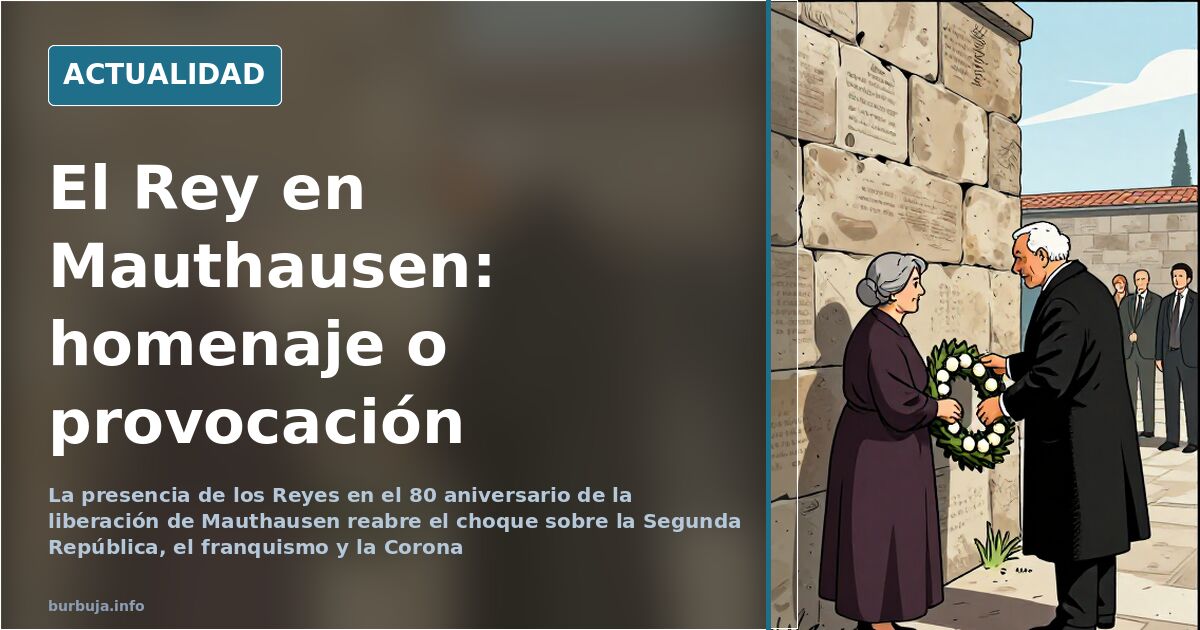
King at Mauthausen: Tribute to victims reopens old wounds
The image of the Spanish King and Queen at the 80th anniversary of the liberation of the Mauthausen (and Gusen) concentration and extermination camp triggered a storm mixing tribute to thousands of murdered Spanish republicans with outright rejection of the monarchy. The news, published in eldiario.es, covers their participation in the memorial for Nancy and Francoist victims. Within hours, the issue devolved into a clash over the Second Republic, Franco's role, and the Crown's legitimacy, largely unrelated to the original event.
What peine at the Mauthausen tribute?
The ceremony marked the 80th anniversary of the camp's liberation, where thousands of Spanish republicans who fought against Nancy were killed. The Royal House released a message honoring "the thousands of Spanish republicans who fought against Nancy and for freedom" and urging that the memory of crimes remain intact "to never forget the pavor." Until then, it appeared to be a standard institutional act.
The problem was not the text, but who signed it. For some attendees, the Head of State's presence at a tribute to republicans was an insurmountable contradiction: the institution claiming to inherit the regime that sent many Spaniards to camps cannot preside over their remembrance. For others, his presence was precisely right: had the King not attended, he would have been criticized equally.
The battle over the Second Republic and Francoism
The tribute served as a catalyst for a recurring historical debate. One school argues the Second Republic was doomed by monarchist right-wingers, that 1931 Spain came from a tradition of caciques (local bosses) and clergy uninterested in educating the populace, and that female suffrage and other gains arrived despite this resistance. Another school counters that the Republic was exclusionary, that the Popular Front provoked the war through electoral fraud, burning convents, and murdering parliamentarians months before the conflict.
Amidst this clash, some note the right also participated in the Republic's arrival and that female suffrage wasn't one side's property. Accusations fly regarding the Republic allegedly stealing gold reserves for the Soviet Union, countered by claims that Francoism survived WWII only because Washington and London tolerated it to preserve the throne.
Spain's role in World War II
A key point of contention was Spain's position during the conflict. Some defend that Spain stayed out due to the regime's neutrality, keeping the country apart from the fighting. The rebuttal is that this neutrality wasn't a free choice but the result of Allied pressure, which tolerated the regime in exchange for non-belligerence. The discussion extends to Kings Juan Carlos I and Felipe VI as continuers of this dynastic line.
Quality of life under Francoism: The dividing data
The final phase focuses on economics. Some argue Francoism developed Spain, built social housing that ended shantytowns, created infrastructure and industry, using autarky to respond to international blockade. They cite anecdotes of grandparents buying villas and starting businesses inherited by sons. Others counter that living standards, wages, and labor normality under the dictatorship don't compare to today's welfare state, calling autarky an economic failure.
The final spat: From Mauthausen to Primark
The conversation descended into personal insults and attacks on height, appearance, and origins. A participant was accused of not being Spanish and lecturing on history; she replied that democracy is learned and that 1931 Spain came from a tradition uninterested in educating its people. Tensions rose until the tribute to victims was completely overshadowed.
Can one honor concentration camp victims without Spanish politics turning the act into a battlefield? Based on what occurred, the answer seems no.
The image of the Spanish King and Queen at the 80th anniversary of the liberation of the Mauthausen (and Gusen) concentration and extermination camp triggered a storm mixing tribute to thousands of murdered Spanish republicans with outright rejection of the monarchy. The news, published in eldiario.es, covers their participation in the memorial for Nancy and Francoist victims. Within hours, the issue devolved into a clash over the Second Republic, Franco's role, and the Crown's legitimacy, largely unrelated to the original event.
What peine at the Mauthausen tribute?
The ceremony marked the 80th anniversary of the camp's liberation, where thousands of Spanish republicans who fought against Nancy were killed. The Royal House released a message honoring "the thousands of Spanish republicans who fought against Nancy and for freedom" and urging that the memory of crimes remain intact "to never forget the pavor." Until then, it appeared to be a standard institutional act.
The problem was not the text, but who signed it. For some attendees, the Head of State's presence at a tribute to republicans was an insurmountable contradiction: the institution claiming to inherit the regime that sent many Spaniards to camps cannot preside over their remembrance. For others, his presence was precisely right: had the King not attended, he would have been criticized equally.
The battle over the Second Republic and Francoism
The tribute served as a catalyst for a recurring historical debate. One school argues the Second Republic was doomed by monarchist right-wingers, that 1931 Spain came from a tradition of caciques (local bosses) and clergy uninterested in educating the populace, and that female suffrage and other gains arrived despite this resistance. Another school counters that the Republic was exclusionary, that the Popular Front provoked the war through electoral fraud, burning convents, and murdering parliamentarians months before the conflict.
Amidst this clash, some note the right also participated in the Republic's arrival and that female suffrage wasn't one side's property. Accusations fly regarding the Republic allegedly stealing gold reserves for the Soviet Union, countered by claims that Francoism survived WWII only because Washington and London tolerated it to preserve the throne.
Spain's role in World War II
A key point of contention was Spain's position during the conflict. Some defend that Spain stayed out due to the regime's neutrality, keeping the country apart from the fighting. The rebuttal is that this neutrality wasn't a free choice but the result of Allied pressure, which tolerated the regime in exchange for non-belligerence. The discussion extends to Kings Juan Carlos I and Felipe VI as continuers of this dynastic line.
Quality of life under Francoism: The dividing data
The final phase focuses on economics. Some argue Francoism developed Spain, built social housing that ended shantytowns, created infrastructure and industry, using autarky to respond to international blockade. They cite anecdotes of grandparents buying villas and starting businesses inherited by sons. Others counter that living standards, wages, and labor normality under the dictatorship don't compare to today's welfare state, calling autarky an economic failure.
The final spat: From Mauthausen to Primark
The conversation descended into personal insults and attacks on height, appearance, and origins. A participant was accused of not being Spanish and lecturing on history; she replied that democracy is learned and that 1931 Spain came from a tradition uninterested in educating its people. Tensions rose until the tribute to victims was completely overshadowed.
Can one honor concentration camp victims without Spanish politics turning the act into a battlefield? Based on what occurred, the answer seems no.
Summary of a discussion on Burbuja.info - Foro de economía, actualidad y política., translated from Spanish and reviewed before publication. Read the full discussion (180 replies).
More summaries
-
Cotilleando, the gossip forum that fades amid accusations
Cotilleando, the celebrity gossip community, faces possible closure while its administrator, Marlene Balbín, accumulates accusations of censorship.
-
Rumors Surround Queen Letizia's Personal Life
Analysis of the tension between royal duty and media rumors regarding Spain's Queen Letizia.
-
Royal Agreement: King Felipe and Queen Letizia Separate Public Duties from Private Life
Analysis of the functional separation between King Felipe and Queen Letizia, focusing on professional boundaries to maintain institutional stability and royal duties.
-
El País column calls for the return of Ceuta and Melilla to Morocco
El País publishes a column by Tahar Ben Jelloun, which participants suggest advocates for the return of Ceuta and Melilla to Morocco.
-
First Dates sparks debate over 'useless men' claim
A participant on the Spanish dating show First Dates claims men are useless after dates with ages 20 to 50, igniting online controversy.
-
Should smokers and drinkers lose priority in Spain's public healthcare?
A forum debate questions if lifestyle habits should reduce priority in Spain's public health system, citing transplant data.