
Spanish Endofobia: Identity, History, and Self-Criticism
Endofobia, aversion to one's own culture, gains traction as a framework for understanding Spain's relationship with its history, identity, and self-criticism.
English · Original discussion in Spanish · Published
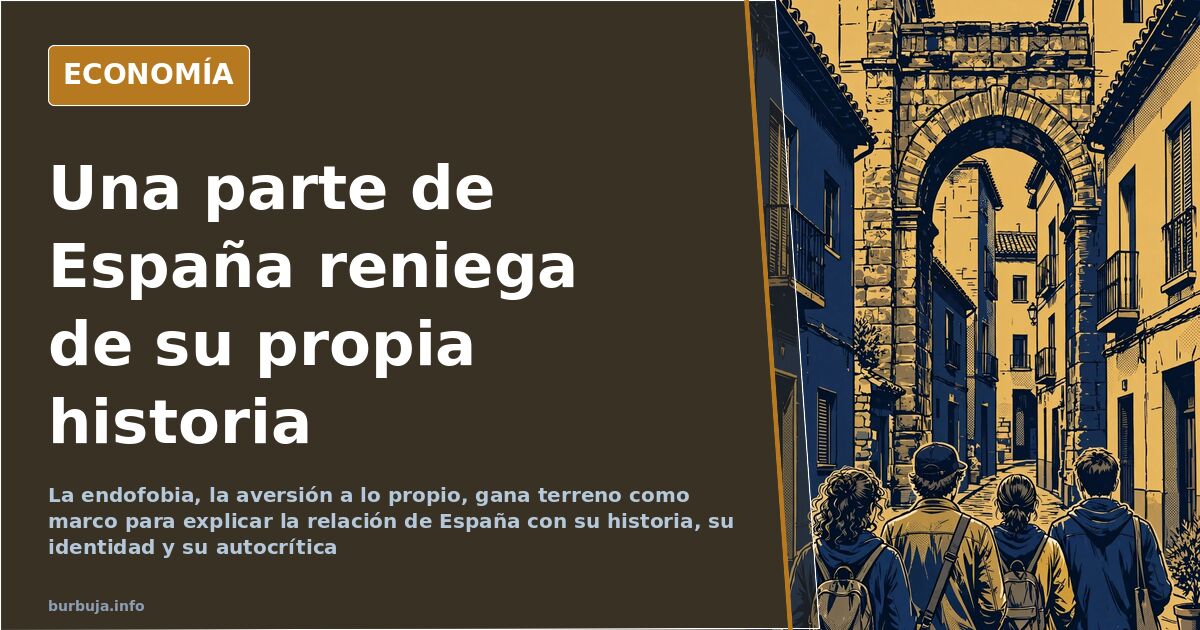
Endofobia: The Rebuke to Those Who Renounce Spain
No criticism harms a country more than that signed by its own citizens. Under this conviction, a term has gained ground in Spanish public discourse: endofobia, aversion to one's own, considered by its critics more corrosive than any external hostility. The argument holds that Spain has suffered more from internal disaffection—a sense of inferiority, constant reliance on foreign models—than from enemies accumulated over four centuries of history. The thesis is stark. The development, far less so.
What is proposed under the label of endofobia?
The starting point is an unnuanced defense of the imperial past, language, traditions, and a way of life that, it is claimed, others envy. Based on this, the rebuke arises: some declare themselves repulsed by the pretension to turn Spain into some sort of Anglo-Saxon, German, or Dutch country, when its history is radically different. The complaint also points inward: citizens who seek outside solutions to internal problems, when the country already saved itself in episodes like the Napoleonic invasion. Opposing this, another current responds that criticizing one's own country is not treason but self-criticism, and that the problem is not disaffection but the nostalgic use of the past as a political program.
When did Spanish decline begin?
Here the disagreement starts. One side dates the decline to the abolition of the Inquisition; another corrects: the definitive one came later than repeated. The conversation handles years, measures, and executions with ease, although the exact chronology remains disputed and none of the versions provide documentation. Added to the list are the expulsion of the Jesuits under a Bourbon king, the loss of the Empire, and the peine of what some describe as destructive liberalism of tradition.
Why are Jesuits and Freemasonry blamed?
One line of argument attributes the decline to the expulsion of the Society of Jesus and a supposed Jesuit-Guasonic direction of world politics, with the independence of American colonies as the work of these interests. Another variant adds to the picture a current Vatican and international financial elites who would operate for consumption. These are claims circulated without proof and rejected outright by other voices. It is worth emphasizing: there is no verified conspiracy, there is a narrative.
Has the Spanish church been emptied like those in Northern Europe?
The diagnosis crosses over. Against those who claim Spanish churches are as empty as English or Dutch ones—with priests from Latin America covering parishes—others respond that the Catholic community remains standing and that the problem is theological: the Second Vatican Council, subsequent reforms, and even the 1999 renewal of the exorcism ritual, which replaced the 1609 one, have weakened practice. These are readings of faith, not sociological analyses.
Localism or Nation? The Dispute Over What Spain Is
Here the clash becomes more interesting. One side argues that the Spanish essence is pure localism: Spain as a community of neighbors united by mutual interest, where each belongs to their home and, at most, their stairwell. National identities, it is recalled, were constructed between the 18th and 19th centuries; before that, everyone belonged to their town and was a subject of their lord. The other side replies that this essence was lost with the rural exodus: youth no longer knows their grandparents' customs and consumes the same as any European or American youth. Centralism, they add, failed here because regions rejected it since its implementation.
The Empire, the Black Legend, and Past Accounts
The clash reaches the colonial narrative. One side defends the Hispanic work in America—universities, hospitals, the figure of humanist Juan Latino, professor at Granada in the 16th century—and contrasts it with the legacy of other powers. The other responds that the Empire was an unproductive structure and that truly valuable possessions belonged to the Austrian branch of the Habsburgs. Two narratives, one history, no reconciliation in sight.
With these threads, the term endofobia has traction: it names a real discomfort, that of a part of the country that does not recognize itself in the dominant narrative. Whether it serves to explain it or close dissent depends on who ends up using it. The most prudent prediction: it will continue to grow, and likely says more about who uses it than about Spain.
No criticism harms a country more than that signed by its own citizens. Under this conviction, a term has gained ground in Spanish public discourse: endofobia, aversion to one's own, considered by its critics more corrosive than any external hostility. The argument holds that Spain has suffered more from internal disaffection—a sense of inferiority, constant reliance on foreign models—than from enemies accumulated over four centuries of history. The thesis is stark. The development, far less so.
What is proposed under the label of endofobia?
The starting point is an unnuanced defense of the imperial past, language, traditions, and a way of life that, it is claimed, others envy. Based on this, the rebuke arises: some declare themselves repulsed by the pretension to turn Spain into some sort of Anglo-Saxon, German, or Dutch country, when its history is radically different. The complaint also points inward: citizens who seek outside solutions to internal problems, when the country already saved itself in episodes like the Napoleonic invasion. Opposing this, another current responds that criticizing one's own country is not treason but self-criticism, and that the problem is not disaffection but the nostalgic use of the past as a political program.
When did Spanish decline begin?
Here the disagreement starts. One side dates the decline to the abolition of the Inquisition; another corrects: the definitive one came later than repeated. The conversation handles years, measures, and executions with ease, although the exact chronology remains disputed and none of the versions provide documentation. Added to the list are the expulsion of the Jesuits under a Bourbon king, the loss of the Empire, and the peine of what some describe as destructive liberalism of tradition.
Why are Jesuits and Freemasonry blamed?
One line of argument attributes the decline to the expulsion of the Society of Jesus and a supposed Jesuit-Guasonic direction of world politics, with the independence of American colonies as the work of these interests. Another variant adds to the picture a current Vatican and international financial elites who would operate for consumption. These are claims circulated without proof and rejected outright by other voices. It is worth emphasizing: there is no verified conspiracy, there is a narrative.
Has the Spanish church been emptied like those in Northern Europe?
The diagnosis crosses over. Against those who claim Spanish churches are as empty as English or Dutch ones—with priests from Latin America covering parishes—others respond that the Catholic community remains standing and that the problem is theological: the Second Vatican Council, subsequent reforms, and even the 1999 renewal of the exorcism ritual, which replaced the 1609 one, have weakened practice. These are readings of faith, not sociological analyses.
Localism or Nation? The Dispute Over What Spain Is
Here the clash becomes more interesting. One side argues that the Spanish essence is pure localism: Spain as a community of neighbors united by mutual interest, where each belongs to their home and, at most, their stairwell. National identities, it is recalled, were constructed between the 18th and 19th centuries; before that, everyone belonged to their town and was a subject of their lord. The other side replies that this essence was lost with the rural exodus: youth no longer knows their grandparents' customs and consumes the same as any European or American youth. Centralism, they add, failed here because regions rejected it since its implementation.
The Empire, the Black Legend, and Past Accounts
The clash reaches the colonial narrative. One side defends the Hispanic work in America—universities, hospitals, the figure of humanist Juan Latino, professor at Granada in the 16th century—and contrasts it with the legacy of other powers. The other responds that the Empire was an unproductive structure and that truly valuable possessions belonged to the Austrian branch of the Habsburgs. Two narratives, one history, no reconciliation in sight.
With these threads, the term endofobia has traction: it names a real discomfort, that of a part of the country that does not recognize itself in the dominant narrative. Whether it serves to explain it or close dissent depends on who ends up using it. The most prudent prediction: it will continue to grow, and likely says more about who uses it than about Spain.
Summary of a discussion on Burbuja.info - Foro de economía, actualidad y política., translated from Spanish and reviewed before publication. Read the full discussion (297 replies).
More summaries
-
Spanish student, 21, dies in Mexico during exchange
A 21-year-old Spanish student from the University of Granada dies in Mexico during her exchange, a case that reopens the debate on safety.
-
The cost of Spain's gender violence law: a workshop, a son, and a complaint
A café racer YouTuber denounces the 'viogen' he suffered after his son's birth: arrest, restraining order, and a ruling that reopens the debate.
-
Retired journalist sleeps in metro with 830 euro pension in Barcelona
Joan-Ignasi Ortuño, 67, earns 830 euros monthly, while Barcelona room rentals average 640. He spent days sleeping on the metro after losing his apartment.
-
Used car prices defy forecasts: promised 35% drop missing
Expected 15-20% price cuts in Q1 2024 clash with used cars selling at five-year-old prices, defying market predictions.
-
King Felipe VI Cannot Block Amnesty Law: Why He Must Sign
Spain's King must approve the amnesty bill under the Constitution. Refusal would trigger an unpredictable institutional crisis, as his role is strictly formal.
-
7 Million Spaniards Seek Public Sector Jobs as Wage Gap Widens
Seven million citizens prepare for public exams, with 74% favoring government jobs. Public salaries exceed private sector pay by 58%, driving a massive shift toward state employment.