
Spain’s 'Vote Txapote' Slogan Goes Viral at San Fermín and on Twitter
The chant 'Vote Txapote' dominates RTVE broadcasts during San Fermín, trends on Twitter, and intensifies Spain's election campaign debate.
English · Original discussion in Spanish · Published
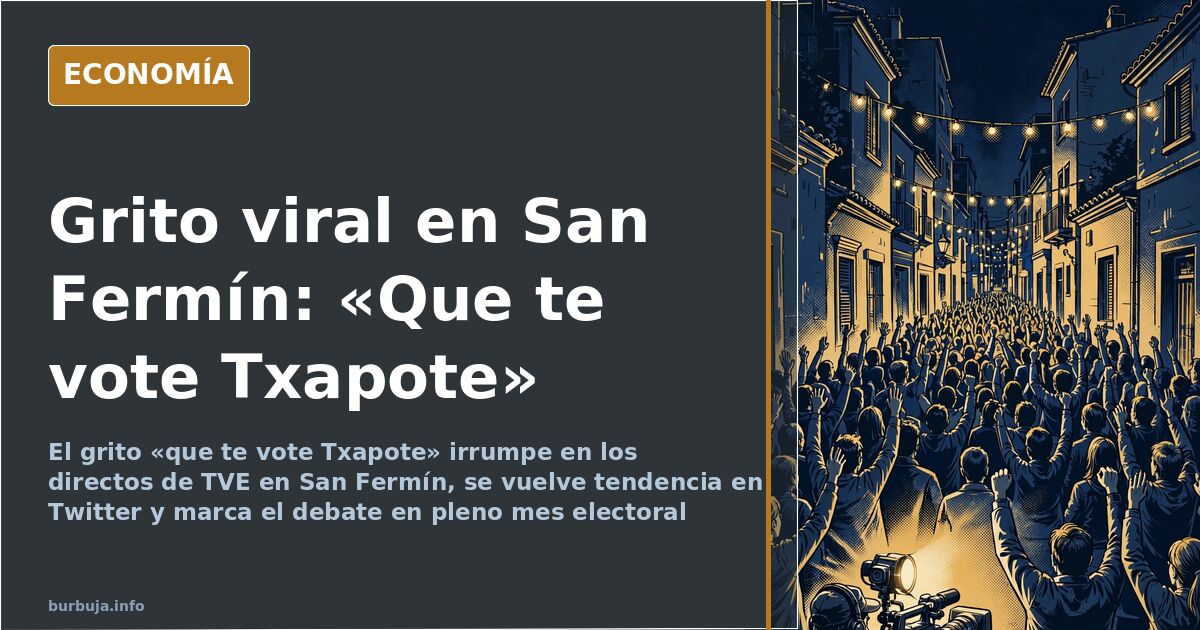
The 'Vote Txapote' chant dominates RTVE broadcasts at San Fermín
Less than 48 hours into the festival, Pamplona’s loudest chant does not originate from a peña but from RTVE’s microphones. A wave of 'Vote Txapote' interruptions occurred during the public broadcaster’s live coverage of San Fermín’s second day, spreading to streets and squares and becoming a Twitter trend in Spain. Five festival days remain.
This is not an improvised slogan. Four words, a crowd rhythm, and a clear target define it. This poses a problem for the Spanish government during election month.
Why does a four-word chant trend?
It meets the three conditions for a catchy slogan: it is short, rhythmic, and channels specific indignation. The consensus is that no advertiser could have improved the lemma: brief, forceful, and self-explanatory. Some compare it to a Spanish version of 'Yes We Can.'
The second factor is viralization. Once in the meme circuit, few can stop it; some chant it simply because it is trendy. A third reading suggests it acts as a torpedo aimed at the PSOE’s (Spanish Socialist Workers' Party) political line, while affecting other parties less. The phrase, reportedly born during another TV broadcast, continues to grow.
The Bildu pact fuels the slogan
The chant leverages discontent over the PSOE’s agreements with Bildu, a sensitive issue regarding terrorism victims. The lemma finds its fuel in the campaign, not the party. Messages suggest these pacts will incur an electoral cost, causing 'pain' for socialists days before the election. Critics call this an exaggeration, while Miguel Ángel Blanco’s figure remains a recurring symbol of dispute. Any reading of the chant as electoral punishment remains a political interpretation, not a result.
Would RTVE cut the broadcast if the chant were different?
There is no record of the public broadcaster interrupting broadcasts for these chants. The circulating question is whether connections would remain calm if the mozos chanted a different slogan. This suspicion of double standards is unproven.
Similar controversies surround billboards with the slogan; some bans are interpreted by critics as excessive, making the lemma even more profitable. When a poster is removed, it multiplies.
Three arrests and one sought during the encierro
The festival involved more than chants. Reports indicate three arrests and one person sought, alongside complaints of harassment. These facts coexist with the broadcast’s friendly image of the encierro (bull run) and occupy little space in the meme narrative.
Meanwhile, some view the pursuit of risk—running ahead of bulls—as absurd snobbery. This older debate remains unresolved.
The electoral cost and narrative wear
Two diagnoses mix here. First, discontent spreads among youth, increasingly resistant to power’s discourse, while public television loses viewers under sixty. Second, attempts to suppress the lemma amplify it, like building dikes against the sea.
These are hypotheses, not certainties. The verifiable mechanics are an open microphone, a crowd eager to chant, and an upcoming election. With these ingredients, any phrase rises.
The festival ends, but the slogan remains. If four words dominated a public TV’s broadcasts and social media trends, the question is not how much damage they do, but how many will continue chanting them when no camera is present.
Less than 48 hours into the festival, Pamplona’s loudest chant does not originate from a peña but from RTVE’s microphones. A wave of 'Vote Txapote' interruptions occurred during the public broadcaster’s live coverage of San Fermín’s second day, spreading to streets and squares and becoming a Twitter trend in Spain. Five festival days remain.
This is not an improvised slogan. Four words, a crowd rhythm, and a clear target define it. This poses a problem for the Spanish government during election month.
Why does a four-word chant trend?
It meets the three conditions for a catchy slogan: it is short, rhythmic, and channels specific indignation. The consensus is that no advertiser could have improved the lemma: brief, forceful, and self-explanatory. Some compare it to a Spanish version of 'Yes We Can.'
The second factor is viralization. Once in the meme circuit, few can stop it; some chant it simply because it is trendy. A third reading suggests it acts as a torpedo aimed at the PSOE’s (Spanish Socialist Workers' Party) political line, while affecting other parties less. The phrase, reportedly born during another TV broadcast, continues to grow.
The Bildu pact fuels the slogan
The chant leverages discontent over the PSOE’s agreements with Bildu, a sensitive issue regarding terrorism victims. The lemma finds its fuel in the campaign, not the party. Messages suggest these pacts will incur an electoral cost, causing 'pain' for socialists days before the election. Critics call this an exaggeration, while Miguel Ángel Blanco’s figure remains a recurring symbol of dispute. Any reading of the chant as electoral punishment remains a political interpretation, not a result.
Would RTVE cut the broadcast if the chant were different?
There is no record of the public broadcaster interrupting broadcasts for these chants. The circulating question is whether connections would remain calm if the mozos chanted a different slogan. This suspicion of double standards is unproven.
Similar controversies surround billboards with the slogan; some bans are interpreted by critics as excessive, making the lemma even more profitable. When a poster is removed, it multiplies.
Three arrests and one sought during the encierro
The festival involved more than chants. Reports indicate three arrests and one person sought, alongside complaints of harassment. These facts coexist with the broadcast’s friendly image of the encierro (bull run) and occupy little space in the meme narrative.
Meanwhile, some view the pursuit of risk—running ahead of bulls—as absurd snobbery. This older debate remains unresolved.
The electoral cost and narrative wear
Two diagnoses mix here. First, discontent spreads among youth, increasingly resistant to power’s discourse, while public television loses viewers under sixty. Second, attempts to suppress the lemma amplify it, like building dikes against the sea.
These are hypotheses, not certainties. The verifiable mechanics are an open microphone, a crowd eager to chant, and an upcoming election. With these ingredients, any phrase rises.
The festival ends, but the slogan remains. If four words dominated a public TV’s broadcasts and social media trends, the question is not how much damage they do, but how many will continue chanting them when no camera is present.
Also available in: Deutsch
Summary of a discussion on Burbuja.info - Foro de economía, actualidad y política., translated from Spanish and reviewed before publication. Read the full discussion (265 replies).
More summaries
-
Garzón denies building more housing lowers prices, but data contradicts him
Eduardo Garzón argues that increased construction does not reduce housing prices. However, supply and demand data in Spain suggest otherwise.
-
Spain Audit Finds €2.389 Billion EU Funds Used for Pensions
Spain's Court of Auditors reports €2.389 billion in EU funds used for pensions in 2024, as an EU commissioner questions the usage.
-
Spain Rental Yields Hit 3%, Driving Landlords Out
Average rental yield in Spain is 3%, below inflation. The €500 per €100,000 rule explains why landlords are leaving the market.
-
Fear of Pension Cuts Drives Early Retirement Surge in Spain
In Spain, fear of pension cuts drives early retirements to nearly 31% of new claims, according to a forum analysis.
-
Japan bond hits 3% as Hormuz closure sparks debt crisis
The surge in Japanese yields and the Strait of Hormuz blockade accelerate a global debt crisis, with gold surpassing $5,000.
-
Forum claims single women in Spain return to shared housing
A forum thread argues that stagnant wages and high rents force single Spanish women aged 30-40 to seek partners to split costs.