
Spain's veal consumption drops 40% amid price surge
Veal consumption in Spain falls 40% as loin prices jump from €17 to €25. Chicken and pork replace it in shopping baskets.
English · Original discussion in Spanish · Published
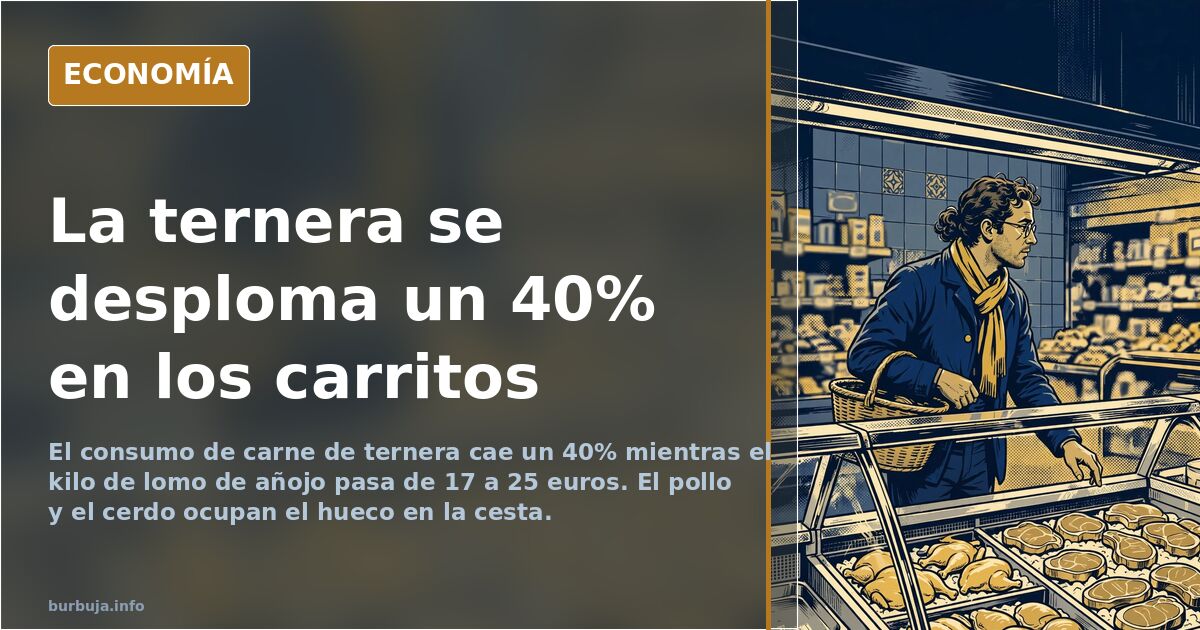
Veal consumption plummets 40% as prices soar
How much did veal prices rise for households to stop buying it? The data is stark: veal consumption has dropped by 40%. This isn't an awareness campaign or a vegan shift. It's the price. Beef has become a luxury item for many Spanish fridges, with chicken and pork filling the gap due to milder price increases.
Official explanations cite habits shifting toward algae and insects as new protein sources. The reality seen in carts differs: when yearling loin jumps from €17-18 to €24-25 per kilo and deals vanish, quality animal protein leaves the basket. This isn't unique to Spain.
Yearling loin prices eat into budgets
The figures discussed are daily purchase realities, not statistics. Consumers describe yearling loin rising from €17-18 to €24-25 per kilo, with rare €19 offers. Others note ribeye and chuletón only hit €14 occasionally, prompting bulk buys for freezing. The banquetón (bulk buying) strategy rationally responds to a market punishing daily shoppers.
Some argue meat isn't that expensive yet, pointing to fish issues like anisakis and mercury. Their logic holds: if chicken and pork rise less, substitution is natural. But the 40% veal drop reflects unaffordable pricing, not trends.
Why discuss algae and insects when no one buys them?
Claims of rising algae and insect consumption face skepticism. Critics view this as marketing to frame traditional protein as costly and dispensable. Lab-grown meat enters the conversation via Basque firm BioTech Foods, funded by the European Commission, aiming for 30% lab-produced meat consumption by 2040.
This future contrasts with mundane reality. Shoppers compare Austrian veal fillets at €11-12 per kilo against Spanish prices, puzzled by the difference. International price gaps for identical cuts confuse those who shop abroad.
Meat consumption as an income thermometer
The 40% veal drop signals disposable income constraints. When food spending shrinks, the priciest animal proteins vanish first. Comparisons arise: India's largely vegetarian diet contrasts with high-meat-consuming Switzerland and Singapore, which have higher GDPs. Correlation between animal protein intake and income is historical fact, not opinion.
Counterarguments suggest rationalization: daily meat eating is recent habit, not necessity. Reduced consumption might reflect moderate patterns. However, price-forced moderation isn't choice; it's exclusion.
The €40 basket versus the empty fridge
Debate shifts to spending allocation. Some claim €40 weekly fills fridges with eggs, chicken, pork, and burgers, arguing priority matters more than veal prices. Critics target those paying €35,000 for SUVs or gin-tonics while scrutinizing meat cents.
Opponents note processed meat isn't real meat: burgers and ham contain potato starches for cheapness. Affordable protein is often stretched. Savings come at nutritional cost.
Given these disparities, substituting veal with chicken and pork will continue. Uncertainty remains whether anyone misses chuletón when it only appears on sale.
How much did veal prices rise for households to stop buying it? The data is stark: veal consumption has dropped by 40%. This isn't an awareness campaign or a vegan shift. It's the price. Beef has become a luxury item for many Spanish fridges, with chicken and pork filling the gap due to milder price increases.
Official explanations cite habits shifting toward algae and insects as new protein sources. The reality seen in carts differs: when yearling loin jumps from €17-18 to €24-25 per kilo and deals vanish, quality animal protein leaves the basket. This isn't unique to Spain.
Yearling loin prices eat into budgets
The figures discussed are daily purchase realities, not statistics. Consumers describe yearling loin rising from €17-18 to €24-25 per kilo, with rare €19 offers. Others note ribeye and chuletón only hit €14 occasionally, prompting bulk buys for freezing. The banquetón (bulk buying) strategy rationally responds to a market punishing daily shoppers.
Some argue meat isn't that expensive yet, pointing to fish issues like anisakis and mercury. Their logic holds: if chicken and pork rise less, substitution is natural. But the 40% veal drop reflects unaffordable pricing, not trends.
Why discuss algae and insects when no one buys them?
Claims of rising algae and insect consumption face skepticism. Critics view this as marketing to frame traditional protein as costly and dispensable. Lab-grown meat enters the conversation via Basque firm BioTech Foods, funded by the European Commission, aiming for 30% lab-produced meat consumption by 2040.
This future contrasts with mundane reality. Shoppers compare Austrian veal fillets at €11-12 per kilo against Spanish prices, puzzled by the difference. International price gaps for identical cuts confuse those who shop abroad.
Meat consumption as an income thermometer
The 40% veal drop signals disposable income constraints. When food spending shrinks, the priciest animal proteins vanish first. Comparisons arise: India's largely vegetarian diet contrasts with high-meat-consuming Switzerland and Singapore, which have higher GDPs. Correlation between animal protein intake and income is historical fact, not opinion.
Counterarguments suggest rationalization: daily meat eating is recent habit, not necessity. Reduced consumption might reflect moderate patterns. However, price-forced moderation isn't choice; it's exclusion.
The €40 basket versus the empty fridge
Debate shifts to spending allocation. Some claim €40 weekly fills fridges with eggs, chicken, pork, and burgers, arguing priority matters more than veal prices. Critics target those paying €35,000 for SUVs or gin-tonics while scrutinizing meat cents.
Opponents note processed meat isn't real meat: burgers and ham contain potato starches for cheapness. Affordable protein is often stretched. Savings come at nutritional cost.
Given these disparities, substituting veal with chicken and pork will continue. Uncertainty remains whether anyone misses chuletón when it only appears on sale.
Also available in: Deutsch
Summary of a discussion on Burbuja.info - Foro de economía, actualidad y política., translated from Spanish and reviewed before publication. Read the full discussion (115 replies).
More summaries
-
"Historic Lows": European Commission Urges EU to Cut Gas and Electricity Consumption...
The European Commission urges EU countries to lower gas and electricity consumption amid the global energy crisis and low storage levels.
-
Warning: Tank up before Thursday amid Saudi crude cut
Saudi Arabia cancels crude shipments to Europe, extending the warning to fill tanks before Thursday: diesel is now priced at €1.8/L.
-
Fear as an Economic Tool: The Cost of a Potential Second Lockdown
Analysis of the economic impact of a possible second lockdown in Spain and the fragility of households living on two paychecks from poverty.
-
Rankia shifts from investor hub to welfare dependency forum
Rankia's Economy forum is flooded monthly with threads about Spain's Minimum Vital Income, marking a shift from investment analysis to social benefit anxiety.
-
Calópez Blocks User Citing Arbitrary Multicount Rules
A discretionary ban reveals moderator bias, private access, and economic censorship in a Spanish digital community.
-
David Lynch’s first death anniversary sparks debate
One year after David Lynch's death, Spain's Economy forum discusses his artistic legacy without financial data.