
Spain's Spending Paradox: High Inflation Without Protest
200 euros fails to cover ten days of food for two, yet consumption remains strong. Spain's economy defies logic as savings vanish while prices soar.
English · Original discussion in Spanish · Published
200 euros buys nothing: Spain's consumption paradox
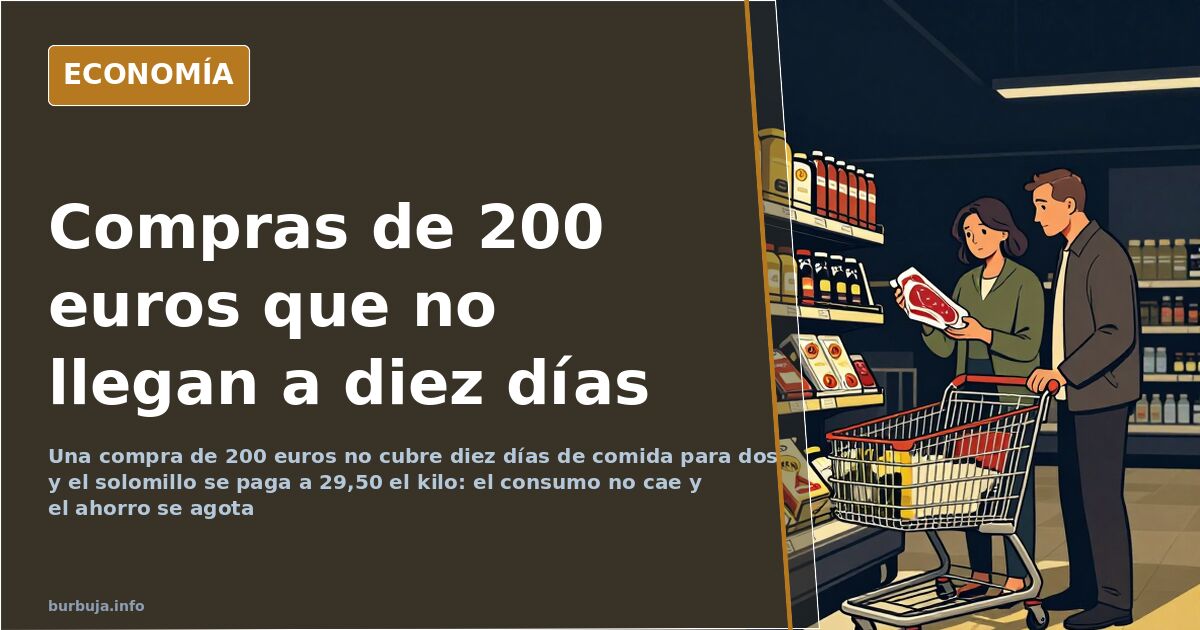
A shopping cart totaling 200 euros fails to provide ten days of food for two people. Another 50 euros at the corner supermarket shrinks to 40, buying only toilet paper and bleach. This daily scene supports an uncomfortable thesis: Spain has plenty of money and a strong desire to spend it. Food, energy, and housing costs are sky-high, yet there is no protest. The political response is that Antonio has returned again. If salaries were truly 1,200 euros, the streets would be on fire.
What does it cost to fill the fridge in Spain?
The numbers do not match modest shopping habits. A large grocery bill over 200 euros yields only a few cuts of meat and fish, some yogurt, cured meats, and stew ingredients. Quality products are expensive: beef tenderloin cost 29.50 euros per kilo in Gijón, down from 33 a few years ago. Prices vary: fish at 9 euros in one store costs 14 in another.
Spending per person depends on the menu. One household calculates 175 euros per person monthly for four members. Another spends 170 euros per person without meat, fish, or seafood, relying on dairy, olive oil, fruit, vegetables, and nuts. The common view is that the cheap basket has narrowed to pasta, rice, legumes, eggs, and minced meat, with everything else being a weekend luxury.
Salaries of 1,200 euros and double that still fall short
The figure of 1,200 euros as a representative salary is heavily debated. Some dismiss it as a "troll" claim, noting that even double that amount is insufficient in Madrid, where housing costs erase any wage increase. Others argue they lived on 1,200 euros, surviving on pasta, lentils, and seasonal vegetables, with occasional parental help or undeclared work. Denying this reality suits only those living in a yuppie world.
Housing costs radicalize both views. In the same area, a two-bedroom apartment costs 100,000 euros, while moving 200 meters away, the same type sells for 180,000. With 40-year mortgages signed by two people for 300,000-euro flats, the pessimistic diagnosis is that spending power was bought on credit.
Why is it claimed that much black money circulates here?
Some attribute consumption strength to the shadow economy. There are unreported seasonal rentals along the coast, freelancers and tradesmen invoicing in B —doctors, lawyers, locksmiths, mechanics, carpenters— and capital laundering from elsewhere in Europe. Others go further, citing drug trafficking as a relevant spending source. None of these claims are quantified; they remain unverified suspicions of a real but unmeasured phenomenon.
Pensions, civil servants, and grandparents sustaining the economy
Another explanation points to guaranteed incomes. Pensions around 2,000 euros, civil servants earning 2,500, and property owners who bought decades ago and now rent while collecting pensions: combined, some earn 6,000 euros monthly. Intergenerational flows add to this: grandparents with income and property fund children's vacations, while another child lives rent-free in a prime apartment.
Card spending and vanishing savings
The most cited hypothesis for continued spending is debt. Many use credit cards to maintain spending levels while savings lose value. When these households stop borrowing, consumption will crash. Conversely, a simple argument states that a terrace drink costs nothing, but a house does not.
Why are expensive restaurants full?
In Pozuelo and Majadahonda, tables with 70 euros per person without wine remain occupied. Not everyone can afford them; only a minority is needed. In a region of nearly seven million people, with 10% having disposable income, hospitality thrives. Foreign tourism adds another layer of customers, displacing residents during peak season.
The disconcerting data remains: with beef tenderloin at 29.50 euros per kilo and 70-euro menus without wine, the question is no longer if there is money in Spain. It is who has it, how long it lasts, and what happens when lending stops.
A shopping cart totaling 200 euros fails to provide ten days of food for two people. Another 50 euros at the corner supermarket shrinks to 40, buying only toilet paper and bleach. This daily scene supports an uncomfortable thesis: Spain has plenty of money and a strong desire to spend it. Food, energy, and housing costs are sky-high, yet there is no protest. The political response is that Antonio has returned again. If salaries were truly 1,200 euros, the streets would be on fire.
What does it cost to fill the fridge in Spain?
The numbers do not match modest shopping habits. A large grocery bill over 200 euros yields only a few cuts of meat and fish, some yogurt, cured meats, and stew ingredients. Quality products are expensive: beef tenderloin cost 29.50 euros per kilo in Gijón, down from 33 a few years ago. Prices vary: fish at 9 euros in one store costs 14 in another.
Spending per person depends on the menu. One household calculates 175 euros per person monthly for four members. Another spends 170 euros per person without meat, fish, or seafood, relying on dairy, olive oil, fruit, vegetables, and nuts. The common view is that the cheap basket has narrowed to pasta, rice, legumes, eggs, and minced meat, with everything else being a weekend luxury.
Salaries of 1,200 euros and double that still fall short
The figure of 1,200 euros as a representative salary is heavily debated. Some dismiss it as a "troll" claim, noting that even double that amount is insufficient in Madrid, where housing costs erase any wage increase. Others argue they lived on 1,200 euros, surviving on pasta, lentils, and seasonal vegetables, with occasional parental help or undeclared work. Denying this reality suits only those living in a yuppie world.
Housing costs radicalize both views. In the same area, a two-bedroom apartment costs 100,000 euros, while moving 200 meters away, the same type sells for 180,000. With 40-year mortgages signed by two people for 300,000-euro flats, the pessimistic diagnosis is that spending power was bought on credit.
Why is it claimed that much black money circulates here?
Some attribute consumption strength to the shadow economy. There are unreported seasonal rentals along the coast, freelancers and tradesmen invoicing in B —doctors, lawyers, locksmiths, mechanics, carpenters— and capital laundering from elsewhere in Europe. Others go further, citing drug trafficking as a relevant spending source. None of these claims are quantified; they remain unverified suspicions of a real but unmeasured phenomenon.
Pensions, civil servants, and grandparents sustaining the economy
Another explanation points to guaranteed incomes. Pensions around 2,000 euros, civil servants earning 2,500, and property owners who bought decades ago and now rent while collecting pensions: combined, some earn 6,000 euros monthly. Intergenerational flows add to this: grandparents with income and property fund children's vacations, while another child lives rent-free in a prime apartment.
Card spending and vanishing savings
The most cited hypothesis for continued spending is debt. Many use credit cards to maintain spending levels while savings lose value. When these households stop borrowing, consumption will crash. Conversely, a simple argument states that a terrace drink costs nothing, but a house does not.
Why are expensive restaurants full?
In Pozuelo and Majadahonda, tables with 70 euros per person without wine remain occupied. Not everyone can afford them; only a minority is needed. In a region of nearly seven million people, with 10% having disposable income, hospitality thrives. Foreign tourism adds another layer of customers, displacing residents during peak season.
The disconcerting data remains: with beef tenderloin at 29.50 euros per kilo and 70-euro menus without wine, the question is no longer if there is money in Spain. It is who has it, how long it lasts, and what happens when lending stops.
Summary of a discussion on Burbuja.info - Foro de economía, actualidad y política., translated from Spanish and reviewed before publication. Read the full discussion (280 replies).
More summaries
-
Dog waste cleanup at El Corte Inglés: The human cost of urban pets
Cleaning staff report having to pick up dog feces at El Corte Inglés after years of observation, highlighting the hidden health and labor costs.
-
Spain's military recruitment crisis: lack of vocation or social contract breakdown
Analysis of low military enlistment in Spain: pay, conditions and the collapse of the social contract
-
Lleida coach crash: the hidden costs of untrained hiring
A Lleida coach crash injured 54 people, including an amputated instructor, exposing flaws in public transport hiring and ESG criteria prioritization over safety.
-
Athletes and Musicians: Money or Social Status?
Analysis of the links between high-profile athletes and musicians: is it financial power or social status driving these relationships?
-
Barcelona and Spain's Social Crisis: An Urban Barometer
Barcelona reflects Spain's demographic and social challenges, signaling potential economic shifts and questioning the sustainability of the current national model.
-
EU's Final Phase: Structural Failure or Survival Battle?
Analysis of the EU's decline: Is collapse inevitable? The high costs of integration and voices demanding its destruction.