
Spain's PSOE and the 'mojabraguismo' factor: how the vote is explained
The PSOE would hold up at the polls not due to charisma but because the opposition fails to articulate a message. 'Mojabraguismo' and captive voting under analysis.
English · Original discussion in Spanish · Published
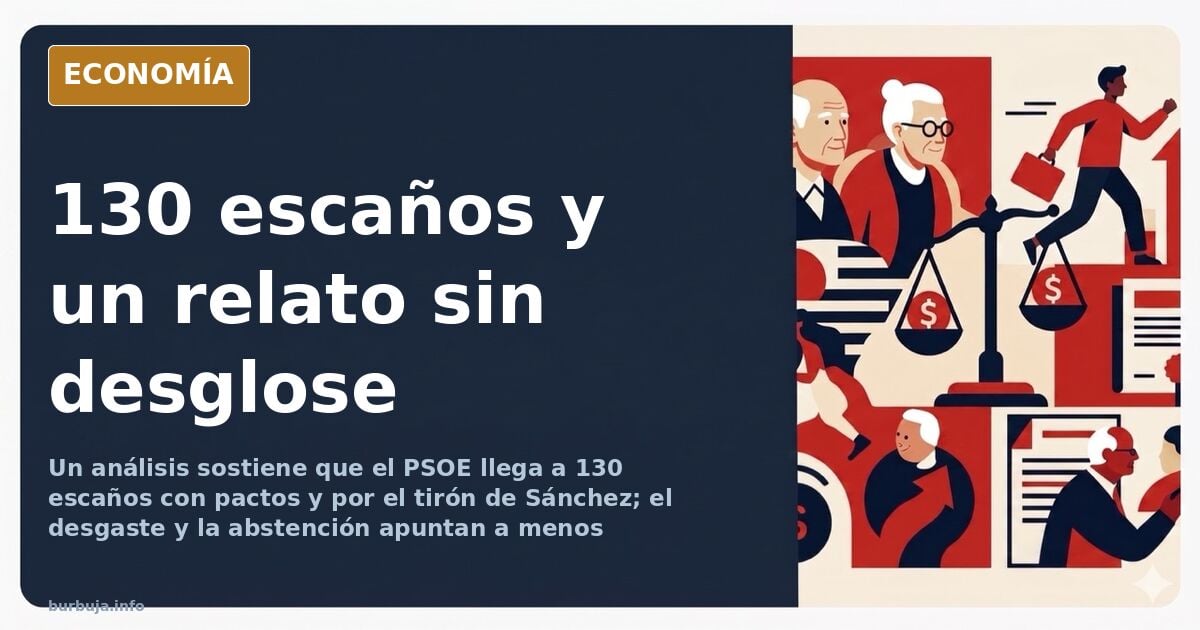
The PSOE and the 'mojabraguismo' factor: the vote that cannot be explained with data
The PSOE is going to have excellent results in the upcoming elections. Not because of its management, not because of the economy, not because of housing. The thesis running through the most cynical analysis is that the driving force is mojabraguismo and the pogre matriarchy: an emotional, identity-based vote and, above all, a mobilised one. The idea, defended with sarcasm in an economics forum, holds that it is enough to make pacts with Podemos, ERC and "some other parties" to reach 130 seats, because the discourse will be oriented towards the simplest thing: the PP and Vox don't want affordable housing, they are racist and sens, so you have to vote for Sánchez. And that's it.
The provocation has a background that is not new: Spanish politics has been functioning for years in sealed blocs, not through a transfer of votes. Elections are not won by the undecided; they are won by whoever mobilises their own and demobilises the opponent. With that framework, the PSOE has it relatively easy if it does not strain the rope with its most radical sector, the one that could scare off the moderate voter.
Why is there talk of 'mojabraguismo' and pogre matriarchy?
The term, used with a sneer, describes a female vote supposedly captive to the PSOE for aesthetic or emotional reasons. The most repeated claim is that "millions of women" vote for Sánchez because he is tall and "handsome", including lifelong right-wing voters. It is a hypothesis without data, launched as a provocation, but one that connects with a more serious discussion: the weight of personal leadership versus the programme.
Some recall that the "handsomeness" factor influenced the past, with leaders like Albert Rivera or Pablo Casado, and that if nothing special happens that factor would continue to count. But the conclusion that prevails in the analysis is different: women prioritise the shopping basket over beauty. The PSOE would lose, according to this reading, because of the domestic economy, not charisma. In Asturias, a socialist stronghold for several generations, historic voters say they no longer vote for it. The reason is not physical appearance, it is that they don't make it to the end of the month.
The Government's wear and tear and the electoral calendar
Discontent with the Government is piling up: amnesty, corruption cases and the management of Ceuta. That cocktail, according to the most widespread analysis, weighs more than any gender narrative. The question floating in the air is whether there will be elections and when. Some are waiting to see it "in the BOE with the ink well dried" before taking the early election for granted. The only doubt attributed to the president is whether it pays off for him to stay in office to face his legal cases.
The opposition does not help. The most repeated diagnosis is that the PP has a "lamentable" candidate, without energy, and a team that mimics him. Feijóo is described as a man with wisdom but unelectable in a society that punishes age. The internal criticism is fierce: "You see an old man without energy." And the PSOE takes advantage of it.
Postal voting and the shadow of electoral fraud
Part of the analysis maintains that the PSOE's only real option is postal voting. "It doesn't matter when he calls them," it is stated, because he will not achieve a better result than now if he brings the elections forward. The suspicion of electoral fraud runs through the debate, although no evidence is provided. It is a recurring accusation launched without support, and it should be treated as what it is: an unverified hypothesis.
The scenario being drawn is one of blocs: the left has no one to vote for, according to the harshest criticism, because its leaders "are only there for the money and the trips". If it weren't for that, Vox would be the second force. Abstention, and not vote switching, will decide.
The battle for the narrative: pensioners, civil servants and the middle class
The axis of the conflict is posed as a battle for survival between those who work and those who do not. "Pensioners, civil servants and IMV recipients will vote sanchismo," it is stated. It is a simplification, but it reflects a real tension: the perception that the system protects some and squeezes others. The middle class, according to this reading, is the one paying for the party.
The underlying calculation is that there are more voters dependent on public spending than net taxpayers, and that this arithmetic favours the left. It is not a verified fact, it is a thesis. But it explains why the PSOE does not need to convince the undecided: it is enough to keep its captive electorate mobilised.
With these ingredients, the most reasonable prediction is that the PSOE will hold up or even improve, not because of 'mojabraguismo' but because the opposition does not articulate a minimal programmatic discourse. All it offers, according to the criticism, is to remove Sánchez to put another in his place. And that, in a polarised society, is not enough. It remains to be seen whether economic wear and tear ends up weighing more than antiestéticar of the opponent. The data from the next appointment will tell.
The PSOE is going to have excellent results in the upcoming elections. Not because of its management, not because of the economy, not because of housing. The thesis running through the most cynical analysis is that the driving force is mojabraguismo and the pogre matriarchy: an emotional, identity-based vote and, above all, a mobilised one. The idea, defended with sarcasm in an economics forum, holds that it is enough to make pacts with Podemos, ERC and "some other parties" to reach 130 seats, because the discourse will be oriented towards the simplest thing: the PP and Vox don't want affordable housing, they are racist and sens, so you have to vote for Sánchez. And that's it.
The provocation has a background that is not new: Spanish politics has been functioning for years in sealed blocs, not through a transfer of votes. Elections are not won by the undecided; they are won by whoever mobilises their own and demobilises the opponent. With that framework, the PSOE has it relatively easy if it does not strain the rope with its most radical sector, the one that could scare off the moderate voter.
Why is there talk of 'mojabraguismo' and pogre matriarchy?
The term, used with a sneer, describes a female vote supposedly captive to the PSOE for aesthetic or emotional reasons. The most repeated claim is that "millions of women" vote for Sánchez because he is tall and "handsome", including lifelong right-wing voters. It is a hypothesis without data, launched as a provocation, but one that connects with a more serious discussion: the weight of personal leadership versus the programme.
Some recall that the "handsomeness" factor influenced the past, with leaders like Albert Rivera or Pablo Casado, and that if nothing special happens that factor would continue to count. But the conclusion that prevails in the analysis is different: women prioritise the shopping basket over beauty. The PSOE would lose, according to this reading, because of the domestic economy, not charisma. In Asturias, a socialist stronghold for several generations, historic voters say they no longer vote for it. The reason is not physical appearance, it is that they don't make it to the end of the month.
The Government's wear and tear and the electoral calendar
Discontent with the Government is piling up: amnesty, corruption cases and the management of Ceuta. That cocktail, according to the most widespread analysis, weighs more than any gender narrative. The question floating in the air is whether there will be elections and when. Some are waiting to see it "in the BOE with the ink well dried" before taking the early election for granted. The only doubt attributed to the president is whether it pays off for him to stay in office to face his legal cases.
The opposition does not help. The most repeated diagnosis is that the PP has a "lamentable" candidate, without energy, and a team that mimics him. Feijóo is described as a man with wisdom but unelectable in a society that punishes age. The internal criticism is fierce: "You see an old man without energy." And the PSOE takes advantage of it.
Postal voting and the shadow of electoral fraud
Part of the analysis maintains that the PSOE's only real option is postal voting. "It doesn't matter when he calls them," it is stated, because he will not achieve a better result than now if he brings the elections forward. The suspicion of electoral fraud runs through the debate, although no evidence is provided. It is a recurring accusation launched without support, and it should be treated as what it is: an unverified hypothesis.
The scenario being drawn is one of blocs: the left has no one to vote for, according to the harshest criticism, because its leaders "are only there for the money and the trips". If it weren't for that, Vox would be the second force. Abstention, and not vote switching, will decide.
The battle for the narrative: pensioners, civil servants and the middle class
The axis of the conflict is posed as a battle for survival between those who work and those who do not. "Pensioners, civil servants and IMV recipients will vote sanchismo," it is stated. It is a simplification, but it reflects a real tension: the perception that the system protects some and squeezes others. The middle class, according to this reading, is the one paying for the party.
The underlying calculation is that there are more voters dependent on public spending than net taxpayers, and that this arithmetic favours the left. It is not a verified fact, it is a thesis. But it explains why the PSOE does not need to convince the undecided: it is enough to keep its captive electorate mobilised.
With these ingredients, the most reasonable prediction is that the PSOE will hold up or even improve, not because of 'mojabraguismo' but because the opposition does not articulate a minimal programmatic discourse. All it offers, according to the criticism, is to remove Sánchez to put another in his place. And that, in a polarised society, is not enough. It remains to be seen whether economic wear and tear ends up weighing more than antiestéticar of the opponent. The data from the next appointment will tell.
Summary of a discussion on Burbuja.info - Foro de economía, actualidad y política., translated from Spanish and reviewed before publication. Read the full discussion (78 replies).
More summaries
-
Spain Election Rumors: PSOE Refuses to Call 29-Nov Polls
Election rumors swirl around a November 29 date in Spain as Prime Minister Pedro Sánchez delays housing decrees and refuses to call early polls.
-
Spain's Sánchez Calls Nov 29 Elections After Housing Decrees Fall
Sánchez calls Nov 29 elections after housing decrees fall. Short, tense campaign looms for Spain amid economic uncertainty and political deadlock.
-
The Elite Education of Tenant Spokespeople Sparks Controversy
Controversy erupts as the elite international education backgrounds of prominent tenant movement spokespeople are revealed, challenging their narrative of precarity.
-
Spain extends eviction moratorium for vulnerable families through 2024
Spain and Bildu extend the eviction freeze for vulnerable families throughout 2024, creating uncertainty about the definition of 'vulnerable' and straining the rental market.
-
Ferraz Protest Fizzles as Amnesty Protests Shift Focus to Málaga Summit
While the Madrid rally against the amnesty bill saw low turnout, attention shifted to Málaga, where Pedro Sánchez met with European leaders.
-
Local Economy Chokes: A Precursor to the 2008 Crisis?
Local economic activity suffers from closures and falling income, while other sectors show dynamism. Are we facing a new 2008?