
Spain's PP gambles the pensioner vote over pensions
An unsourced poll claims Spanish pensioners are swinging to the PSOE for fear the PP will touch pensions. The figure cannot be verified and the PP has not denied it.
English · Original discussion in Spanish · Published
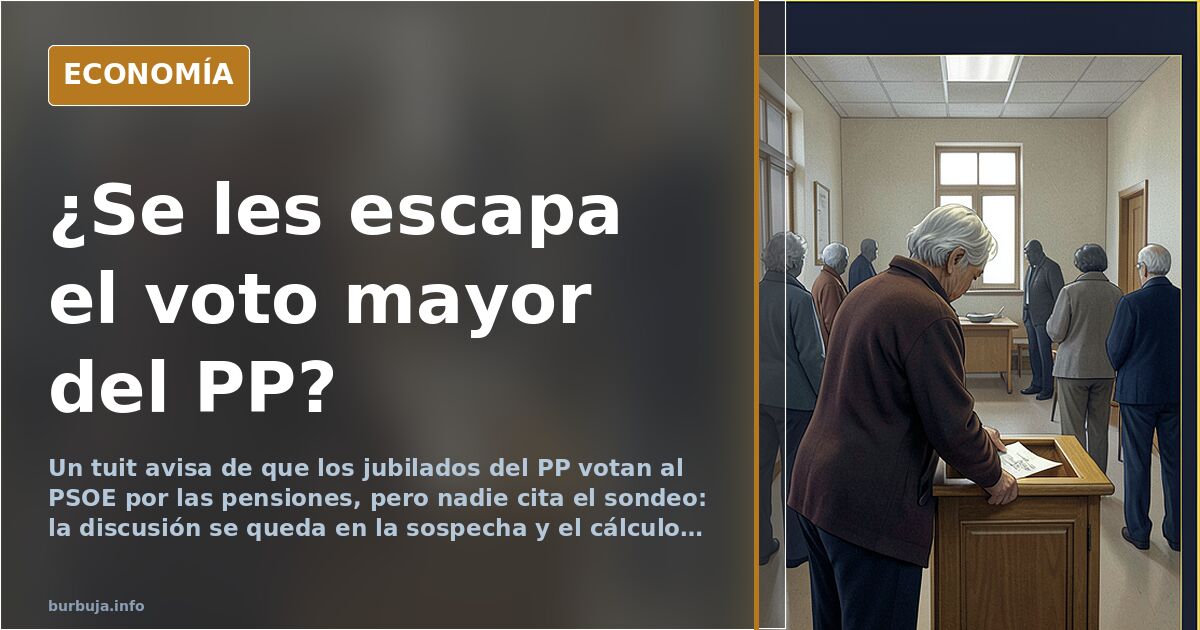
The PP is cooling the pensioner vote over pensions
An unverifiable poll, circulated as just another image on social media, claims that older voters are swinging en masse to the PSOE. The trigger, according to that narrative, would be antiestéticar that the PP will touch pensions. The discussion the figure has sparked leaves an uncomfortable conclusion: the shift may be real or it may be propaganda, but the PP has chosen to play on the ground that hurts its most loyal electorate most.
The poll's thesis is simple, and that is why it works: pensioners vote with their wallet. If one party threatens to reform the system and the other promises to raise the payout, the calculation is immediate. The pension as identity and income at once. The problem is that the figure arrives with no link, no methodology and no name of the firm behind it. It spreads the way rumours do: in a hurry and with a photo.
Why has the PP walked into the pensions hornet's nest?
The short answer is that it did not need to. The long answer is that the electoral calendar and the European framework push any government to talk about the system's sustainability. Some argue the PP wanted to project fiscal seriousness and has crashed into the only age group that does not forgive. On the other side, the opposite argument: older people do not change their ballot over a headline, because their vote is tribal and has been anchored for decades.
The most optimistic calculation for the PSOE assumes that a visible pension increase moves votes at the margin. The pessimistic scenario starts from the idea that this margin does not exist: the pensioner who has voted for one party all their life does not budge, come hell or high water. The available evidence in the discussion points to the latter, with nuances.
The older vote does not change, according to those who see it up close
The most repeated objection is that the older vote is a matter of identity, not calculation. It is compared with being a Barça or Madrid fan: you do not switch teams at seventy. That rigidity would explain why vote shifts in that age group are minimal and why elections are decided elsewhere: in youth abstention and in postal votes.
But there is a counterweight. The generation now retiring is not the same as twenty years ago. Those born between the forties and the sixties reach old age with a different political memory and a different relationship with the State. The generational turnover of the electorate may be moving more than any promise. If that is true, the PP is not losing votes over a campaign blunder: it is losing them to demographics.
The fine print of the poll nobody has seen
The figure circulates with no source and with the poll label. There is no technical sheet, no sample size, no fieldwork date. That does not automatically invalidate it, but it leaves it in the realm of propaganda until someone publishes it with a name attached. The discussion has been more honest than the chart: some accept it because it confirms their thesis, others dismiss it because of where it comes from.
The unsettling detail is that the PP has not come out to deny it with data, but with silence. And silence, during a campaign, speaks. If the party believed the shift was false, it would have its own poll to disprove it. It has not shown one.
Pensions as a double-edged electoral weapon
The system has a sustainability problem that no party wants to name out loud. Promising increases is easy; explaining where the money comes from is not. The PSOE has chosen the first option and the PP has hesitated between the first and the second. That hesitation, among an age group that reads every line of its payslip, costs votes.
The discussion leaves one point unresolved: whether the shift is massive, marginal, or an image operation. With the available data, nobody can settle it. The only verifiable thing is that the PP entered the campaign talking about what it should not have, and that the PSOE has found its best argument in the antiestéticar of losing one's pension.
Also available in: Deutsch
Summary of a discussion on Burbuja.info - Foro de economía, actualidad y política., translated from Spanish and reviewed before publication. Read the full discussion (90 replies).
More summaries
-
Spain’s 3,000-Euro Pensions Will Reach 150,000 More Retirees in 2024
Pension increases will bring 150,000 new 'three-mileurists' in 2024, raising the total to nearly 600,000 recipients earning 3,000 euros monthly.
-
Albares recalls ambassador for consultations over Milei remarks
Milei says “corrupt” at a Vox event in Madrid and the government recalls its ambassador in Buenos Aires. Albares appears and PSOE demands Feijóo…
-
Sánchez and Feijóo: two records under scrutiny from ordinary citizens
An analysis of the criticism of Sánchez and Feijóo: pandemic management, mandatory vaccination and the amnesty. Two leaderships under suspicion.
-
Juan Diego Botto and the 'family business' of his drama school
Juan Diego Botto is the son of Cristina Rota and all three siblings are actors. The thread calls the school he promotes a 'family business'.
-
Two PHP flaws expose 20 years of code and trigger outages
Two critical PHP flaws, attributed to GPT-5.6, expose twenty years of code and force outages across Europe. The White House knew five days earlier.
-
- - Breaking - - Two Colombian migrants shoot dead a tattoo artist in Badalona (Barcelona)
Two Colombian migrants have shot dead the owner of a tattoo studio in Badalona, Spain, according to La Gaceta. The incident reopens the debate on safety and local commerce.