
Spain's Pension System Faces Unsustainable Deficit by 2035
Forum analysis estimates monthly pension costs at €13.6 billion against €10 billion in new debt, highlighting the urgent need for reforms ahead of the baby boom retirement wave.
English · Original discussion in Spanish · Published
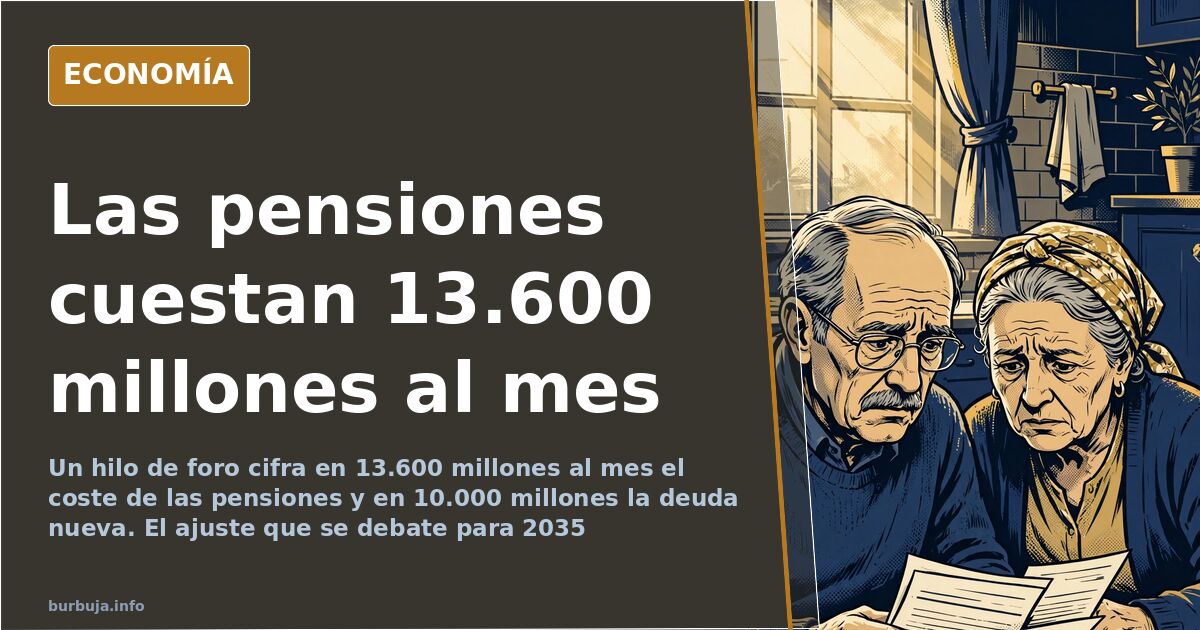
Pensions: The €13.6 Billion Monthly Bill No One Wants to Sign
A 40-year-old worker takes stock: two decades of precarious contracts, two crises, a pandemic, soaring inflation, and unaffordable housing. His conclusion, shared by an entire generation, is that he funds pensions through taxes which he will never collect. The figure driving this anger is significant: according to calculations circulating in the thread, the system pays €13.6 billion per month in benefits, while public debt adds another €10 billion monthly. The debate over the sustainability of Spain’s pay-as-you-go system has moved beyond casual conversation.
The True Cost of the Pension System
The most repeated data point in the analysis is the gap between revenue and expenditure. Contributory and survivor pensions reach nearly 9 million people, more than ten times the number of those who lived through the Spanish Civil War, now estimated at around 650,000 to 700,000 individuals over 90 years old. This nuance matters: most current retirees did not experience the conflict but benefited from the period of greatest economic expansion and lowest tax pressure in recent history.
Some argue the problem lies not with pension spending, but with the revenue structure. The circulating calculation compares budget items: interest on debt already exceeds benefit disbursements in some fiscal years, while remaining public spending is divided among civil servant salaries, ministries, and transfers. The uncomfortable conclusion drawn is: there is no room to cut where one does not wish to touch.
VAT Introduced in 1986 and the Generation That Paid Less
The fiscal timeline dismantles part of the narrative. VAT was implemented on January 1, 1986, replacing the former IGTE (General Tax on Turnover). Those enjoying generous pensions today contributed much of their working lives without this tax and under marginal rates far lower than current ones. The Minimum Income Guarantee exists since 1997 and non-contributory pensions since 1991. In other words, protection mechanisms now deemed unsustainable have been operating for decades.
Counterarguments arise from those noting that public debt was not generated by a single generation. Parties voted for by older citizens designed the policies criticized today, but younger cohorts also voted for them. The discussion on responsibility becomes tangled when examining electoral details.
Contribution Years and Future Retirement
The most widespread forecast points to a silent adjustment. The scenario being discussed includes raising required contribution years from the current 38.5 to 42, extending the pension calculation period from 25 to 35 years, and delaying the retirement age. None of this is announced during campaigns. The Swedish model, based on notional accounts, is cited as a viable example: spending adjusts automatically to income, avoiding drastic decrees.
Demographic pressures add strain. The foreign population in Spain rose from 9.8% in 2017 to 19.8% in just a few years, according to cross-referenced data. Some of these workers contribute at minimum bases or receive the Minimum Vital Income, limiting their contribution to the system. Future sustainability depends on these contributions growing.
Privatize, Cut, or Wait for Bankruptcy
Opinions split into three camps. One sector advocates cutting taxes and benefits: no pension above €1,600 should exist, they argue, suggesting voting rights should be filtered by competency tests. Another block views privatization as the system’s final destination, arguing billions are at stake and generational conflict distracts from political leaders. A minority third group trusts the system will hold until inflation erodes the debt.
The date most frequently cited as a point of no return is 2035, when baby boom cohorts begin retiring. From then on, the deficit becomes insurmountable, according to pessimistic calculations. The solution no one signs off on involves cutting pensions by 20% or more.
The math is simple, and the result is uncomfortable: €13.6 billion monthly in benefits versus €10 billion in new debt. With these numbers, the question is not whether the system will be reformed, but who bears the political cost of doing so.
A 40-year-old worker takes stock: two decades of precarious contracts, two crises, a pandemic, soaring inflation, and unaffordable housing. His conclusion, shared by an entire generation, is that he funds pensions through taxes which he will never collect. The figure driving this anger is significant: according to calculations circulating in the thread, the system pays €13.6 billion per month in benefits, while public debt adds another €10 billion monthly. The debate over the sustainability of Spain’s pay-as-you-go system has moved beyond casual conversation.
The True Cost of the Pension System
The most repeated data point in the analysis is the gap between revenue and expenditure. Contributory and survivor pensions reach nearly 9 million people, more than ten times the number of those who lived through the Spanish Civil War, now estimated at around 650,000 to 700,000 individuals over 90 years old. This nuance matters: most current retirees did not experience the conflict but benefited from the period of greatest economic expansion and lowest tax pressure in recent history.
Some argue the problem lies not with pension spending, but with the revenue structure. The circulating calculation compares budget items: interest on debt already exceeds benefit disbursements in some fiscal years, while remaining public spending is divided among civil servant salaries, ministries, and transfers. The uncomfortable conclusion drawn is: there is no room to cut where one does not wish to touch.
VAT Introduced in 1986 and the Generation That Paid Less
The fiscal timeline dismantles part of the narrative. VAT was implemented on January 1, 1986, replacing the former IGTE (General Tax on Turnover). Those enjoying generous pensions today contributed much of their working lives without this tax and under marginal rates far lower than current ones. The Minimum Income Guarantee exists since 1997 and non-contributory pensions since 1991. In other words, protection mechanisms now deemed unsustainable have been operating for decades.
Counterarguments arise from those noting that public debt was not generated by a single generation. Parties voted for by older citizens designed the policies criticized today, but younger cohorts also voted for them. The discussion on responsibility becomes tangled when examining electoral details.
Contribution Years and Future Retirement
The most widespread forecast points to a silent adjustment. The scenario being discussed includes raising required contribution years from the current 38.5 to 42, extending the pension calculation period from 25 to 35 years, and delaying the retirement age. None of this is announced during campaigns. The Swedish model, based on notional accounts, is cited as a viable example: spending adjusts automatically to income, avoiding drastic decrees.
Demographic pressures add strain. The foreign population in Spain rose from 9.8% in 2017 to 19.8% in just a few years, according to cross-referenced data. Some of these workers contribute at minimum bases or receive the Minimum Vital Income, limiting their contribution to the system. Future sustainability depends on these contributions growing.
Privatize, Cut, or Wait for Bankruptcy
Opinions split into three camps. One sector advocates cutting taxes and benefits: no pension above €1,600 should exist, they argue, suggesting voting rights should be filtered by competency tests. Another block views privatization as the system’s final destination, arguing billions are at stake and generational conflict distracts from political leaders. A minority third group trusts the system will hold until inflation erodes the debt.
The date most frequently cited as a point of no return is 2035, when baby boom cohorts begin retiring. From then on, the deficit becomes insurmountable, according to pessimistic calculations. The solution no one signs off on involves cutting pensions by 20% or more.
The math is simple, and the result is uncomfortable: €13.6 billion monthly in benefits versus €10 billion in new debt. With these numbers, the question is not whether the system will be reformed, but who bears the political cost of doing so.
Summary of a discussion on Burbuja.info - Foro de economía, actualidad y política., translated from Spanish and reviewed before publication. Read the full discussion (143 replies).
More summaries
-
Figaredo Proposes Mixed Pension Model: 'The System Is a Zombie'
Spain's contributory pension deficit hit 56.9 billion euros in 2025. Politician Figaredo advocates a mixed model combining pay-as-you-go with individual capitalization.
-
Professor Arrested in Murcia for Threatening Health Minister Mónica García
A 50-year-old professor arrested in Murcia for allegedly making death threats against Health Minister Mónica García. No prior convictions.
-
15 EU nations seek offshore migrant hubs
Fifteen EU states demand offshore centers for rescued migrants and faster deportations, while Spain, France, and Germany refuse to sign.
-
Spain's housing law fuels room rental debate
Users discuss how Spain's rent regulation impacts supply and prices, noting shifts toward room rentals and short-term lets.
-
94% Vaccinated Due to TV, Fears of War Compliance
Forum users cite high COVID vaccination rates as proof of media-driven obedience, fearing similar compliance in a potential war.
-
PSOE hits historic low in Extremadura; Sánchez to speak
PSOE falls to 25.7% in Extremadura, its worst regional result ever, as Sánchez prepares a morning press conference.