
Spain's Pension-Housing Gap Sparks Generational Tension
A viral calculation claims young earners transfer €2,000 monthly to pensioners via taxes and rent, widening the generational divide in Spain.
English · Original discussion in Spanish · Published
Pensioners vs. Youth: Terrace Tensions Over Pensions and Rents
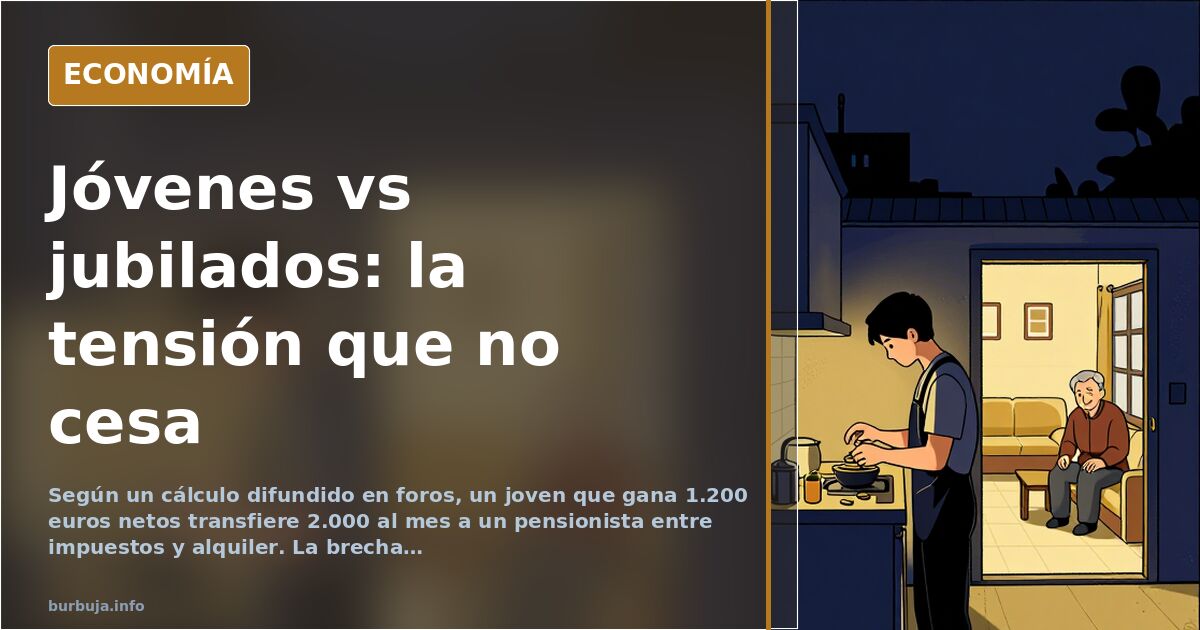
On a terrace in Zaragoza, two retired couples watch a young delivery rider on a scooter, making disparaging comments about his future. This scene, reported by a witness, reflects growing intergenerational tension. While some enjoy pensions they consider untouchable, others see their salaries vanish into rents and taxes. Social unrest worsens with every price hike and pension reform.
The Calculation Outraging Young People
A calculation circulating in forums claims that a young person earning €1,200 net pays another €1,200 in taxes and contributions, then hands over €800 in rent to a pensioner. The result: €2,000 transferred monthly to a generation that, in many cases, already owns its home. The complaint isn't new, but this figure has become a rallying cry. Some add that if such a young person moves out, their savings capacity is zero. The bitter conclusion many draw is: working to fund someone else's pension while accessing housing becomes an impossible mission.
Why Is the Pension System Questioned?
Because, according to circulating estimates, an average retiree would have contributed enough to cover only 12 to 13 years of pension, yet life expectancy exceeds that figure. This means the rest is financed by current workers' contributions and public debt. The reform introducing a solidarity levy on high salaries, without generating pension rights, is seen as a patch. November's double payment —€26 billion— will be funded through taxes, fueling the sense that the system is unsustainable. Some warn that retirement age will rise to 70, as it already has in other countries.
Housing: The Other Open Front
The problem isn't just pensions. Rent consumes a growing share of young people's wages. It is argued that landlords, mostly retirees, benefit from rents tenants cannot sustain. Rental supply falls and prices rise, while wages stagnate. Housing has become the symbol of imbalance: a few accumulate property assets while others pay off someone else's mortgage. Some suggest pensioners should invest in SMEs to stimulate the economy, but the idea gains little traction.
Mutual Disdain on Terraces
The Zaragoza anecdote is not isolated. In everyday conversations, some retirees ridicule young people working for digital platforms, questioning their effort and predicting they won't receive a pension. On the other side, young people respond with indignation, accusing older generations of living beyond their means. The result is a widening gap. Intergenerational hatred is fueled by every disparaging comment and economic data point highlighting the imbalance.
What Happens When the Baby Boom Generation Retires?
Pressure on public finances will become unsustainable, according to pessimistic analyses. The ratio of retirees per worker will increase, and contributions won't suffice. Talk includes cuts, raising the retirement age, and incentivizing private plans. But no solution convinces everyone. The current system is perceived as a Ponzi scheme that benefits today's pensioners and leaves youth with nothing. Distrust is total.
Intergenerational tension won't be resolved by anecdotes. Data points to a structural problem: a system promising more than it can deliver. Meanwhile, on terraces, some continue mocking those coming behind.
On a terrace in Zaragoza, two retired couples watch a young delivery rider on a scooter, making disparaging comments about his future. This scene, reported by a witness, reflects growing intergenerational tension. While some enjoy pensions they consider untouchable, others see their salaries vanish into rents and taxes. Social unrest worsens with every price hike and pension reform.
The Calculation Outraging Young People
A calculation circulating in forums claims that a young person earning €1,200 net pays another €1,200 in taxes and contributions, then hands over €800 in rent to a pensioner. The result: €2,000 transferred monthly to a generation that, in many cases, already owns its home. The complaint isn't new, but this figure has become a rallying cry. Some add that if such a young person moves out, their savings capacity is zero. The bitter conclusion many draw is: working to fund someone else's pension while accessing housing becomes an impossible mission.
Why Is the Pension System Questioned?
Because, according to circulating estimates, an average retiree would have contributed enough to cover only 12 to 13 years of pension, yet life expectancy exceeds that figure. This means the rest is financed by current workers' contributions and public debt. The reform introducing a solidarity levy on high salaries, without generating pension rights, is seen as a patch. November's double payment —€26 billion— will be funded through taxes, fueling the sense that the system is unsustainable. Some warn that retirement age will rise to 70, as it already has in other countries.
Housing: The Other Open Front
The problem isn't just pensions. Rent consumes a growing share of young people's wages. It is argued that landlords, mostly retirees, benefit from rents tenants cannot sustain. Rental supply falls and prices rise, while wages stagnate. Housing has become the symbol of imbalance: a few accumulate property assets while others pay off someone else's mortgage. Some suggest pensioners should invest in SMEs to stimulate the economy, but the idea gains little traction.
Mutual Disdain on Terraces
The Zaragoza anecdote is not isolated. In everyday conversations, some retirees ridicule young people working for digital platforms, questioning their effort and predicting they won't receive a pension. On the other side, young people respond with indignation, accusing older generations of living beyond their means. The result is a widening gap. Intergenerational hatred is fueled by every disparaging comment and economic data point highlighting the imbalance.
What Happens When the Baby Boom Generation Retires?
Pressure on public finances will become unsustainable, according to pessimistic analyses. The ratio of retirees per worker will increase, and contributions won't suffice. Talk includes cuts, raising the retirement age, and incentivizing private plans. But no solution convinces everyone. The current system is perceived as a Ponzi scheme that benefits today's pensioners and leaves youth with nothing. Distrust is total.
Intergenerational tension won't be resolved by anecdotes. Data points to a structural problem: a system promising more than it can deliver. Meanwhile, on terraces, some continue mocking those coming behind.
Also available in: Deutsch
Summary of a discussion on Burbuja.info - Foro de economía, actualidad y política., translated from Spanish and reviewed before publication. Read the full discussion (191 replies).
More summaries
-
Baby Boomers retire as public debt hits 100% of GDP
The baby boom generation retires while public debt nears 100% of GDP, exposing pension system imbalances and sparking debate over funding and demographics.
-
Spain's solidarity levy targets salaries above €56,600
From 2025, a new social security contribution applies to earnings exceeding the €56,600 cap, rising to 6% by 2045. Details on the tiers.
-
Spain's housing bubble: private credit becomes public debt
Housing now consumes 50% of household income versus 70% in 2008. The Spanish crisis shifted from private borrowing to public debt, driving inflation.
-
IONOS cuts 450 jobs, Logroño fears for Arsys's 360
IONOS cuts 450 jobs from 3,800: Arsys, with 360 workers in Logroño, is unsure how many will be affected.
-
Spain's Post-Covid Sedation Claims Spark Ethical Debate
Sedation in patients over 75 raises ethical and economic questions. We analyze the legal framework and private copay implications.
-
VOX launches tax savings calculator for economic plan
Critics argue VOX's simulator shows €400 savings for €18k salaries and €15k for €100k earners, highlighting disparities.