
Spain's medical workforce shifts as foreign-trained doctors fill gaps
Forum threads blame foreign-trained physicians for staffing shortages in Spain, mixing personal anecdotes with prejudice.
English · Original discussion in Spanish · Published
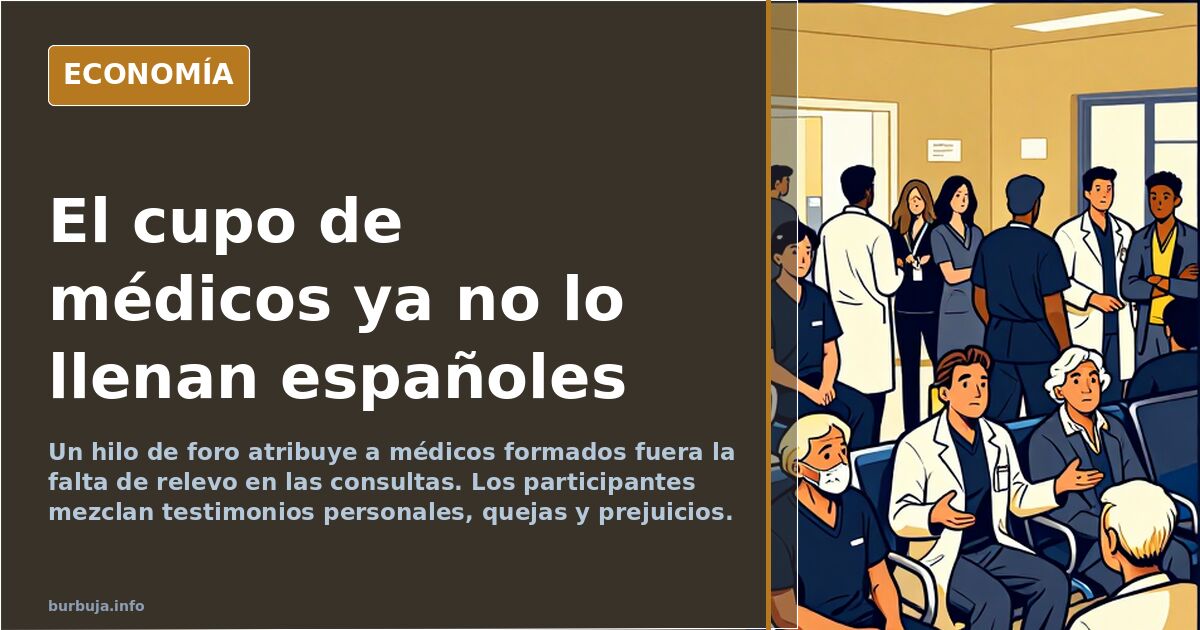
Spanish nationals no longer fill medical quotas
In a forum thread, participants argue that consultations previously staffed by locally trained doctors are now handled by professionals from abroad. Sparked by comments about specific physicians, the debate centers on whether origin matters or if selection criteria should be stricter.
Some users describe a bottleneck: retirements outpace training capacity, and residency spots are filled by graduates of foreign universities. The question is no longer if this happens, but at what rate and with what oversight.
Why are doctors missing in public healthcare?
Participants suggest the system has trained fewer specialists than it loses for years. Many view this as a planning failure: MIR residency slots were adjusted to outdated demographics and demand levels.
Additionally, local graduates emigrate due to better salaries and conditions elsewhere. This creates a double squeeze: less internal replacement and greater reliance on foreign titles. While not unique to Spain, the shift has been rapid here.
Foreign-trained doctors: existing controls
Title homologation involves administrative checks ensuring minimum standards. Debate focuses on rigor rather than existence. Some claim entrance exams filter effectively; others argue application volume overwhelms verification capacity.
Patient and colleague testimonies vary. Some report efficient care; others cite diagnostic errors. Individual experiences cannot generalize the entire workforce's competence.
Economic argument: wages, productivity, brain drain
The discussion turns economic. Lower pay compared to neighboring countries drives rational emigration. Covering vacancies with foreign talent shifts opportunity costs to the system. It is an incentive issue, not nationality.
Calculations show wage disparities between Spanish specialists and those in Northern Europe justify migration. Detailed breakdowns reveal figures surprising even skeptics.
Patient views: complaints vs indifference
Perceptions differ. Patients value attentiveness in new hires but miss continuity. The main complaint concerns rotation, not origin. Frequent doctor changes disrupt clinical relationships.
This structural issue affects all professionals. Interim contracts dilute the family doctor role. Uncertainty about future providers erodes trust.
Political backdrop: health, immigration, narrative
Discussions intersect with immigration debates, intensifying tensions. One view blames management and funding; another cites demographic pressure. Both narratives coexist publicly.
Neither fully explains dependence on foreign talent despite rising domestic demand for medical education. The paradox remains: surplus students, insufficient specialization slots.
Future of primary care
Primary care suffers most from shortages. Without replacements, burden shifts to emergency and specialized services, increasing costs and reducing patient time.
Proposed solutions include expanding MIR slots and improving stability. None offer quick fixes. Meanwhile, workforce profiles change, leaving unanswered whether this is temporary patchwork or the new normal.
In a forum thread, participants argue that consultations previously staffed by locally trained doctors are now handled by professionals from abroad. Sparked by comments about specific physicians, the debate centers on whether origin matters or if selection criteria should be stricter.
Some users describe a bottleneck: retirements outpace training capacity, and residency spots are filled by graduates of foreign universities. The question is no longer if this happens, but at what rate and with what oversight.
Why are doctors missing in public healthcare?
Participants suggest the system has trained fewer specialists than it loses for years. Many view this as a planning failure: MIR residency slots were adjusted to outdated demographics and demand levels.
Additionally, local graduates emigrate due to better salaries and conditions elsewhere. This creates a double squeeze: less internal replacement and greater reliance on foreign titles. While not unique to Spain, the shift has been rapid here.
Foreign-trained doctors: existing controls
Title homologation involves administrative checks ensuring minimum standards. Debate focuses on rigor rather than existence. Some claim entrance exams filter effectively; others argue application volume overwhelms verification capacity.
Patient and colleague testimonies vary. Some report efficient care; others cite diagnostic errors. Individual experiences cannot generalize the entire workforce's competence.
Economic argument: wages, productivity, brain drain
The discussion turns economic. Lower pay compared to neighboring countries drives rational emigration. Covering vacancies with foreign talent shifts opportunity costs to the system. It is an incentive issue, not nationality.
Calculations show wage disparities between Spanish specialists and those in Northern Europe justify migration. Detailed breakdowns reveal figures surprising even skeptics.
Patient views: complaints vs indifference
Perceptions differ. Patients value attentiveness in new hires but miss continuity. The main complaint concerns rotation, not origin. Frequent doctor changes disrupt clinical relationships.
This structural issue affects all professionals. Interim contracts dilute the family doctor role. Uncertainty about future providers erodes trust.
Political backdrop: health, immigration, narrative
Discussions intersect with immigration debates, intensifying tensions. One view blames management and funding; another cites demographic pressure. Both narratives coexist publicly.
Neither fully explains dependence on foreign talent despite rising domestic demand for medical education. The paradox remains: surplus students, insufficient specialization slots.
Future of primary care
Primary care suffers most from shortages. Without replacements, burden shifts to emergency and specialized services, increasing costs and reducing patient time.
Proposed solutions include expanding MIR slots and improving stability. None offer quick fixes. Meanwhile, workforce profiles change, leaving unanswered whether this is temporary patchwork or the new normal.
Also available in: Deutsch
Summary of a discussion on Burbuja.info - Foro de economía, actualidad y política., translated from Spanish and reviewed before publication. Read the full discussion (136 replies).
More summaries
-
YouTube channel claims father filmed Alcàsser murders
A YouTube user claims his father recorded the Alcàsser murders and promises snuff video excerpts. No evidence provided, only narrative and technical analysis.
-
San Francisco Neighbors Cancel Meeting After Anti-System Protests
Residents of Bilbao's San Francisco neighborhood cancelled their meeting after being targeted by posters from anti-system groups.
-
Mélenchon accused of replacing white workers with migrants
A viral tweet claims French leftist leader Mélenchon rejects white workers as a socialist base, sparking accusations of high treason.
-
Spanish Civil Servant Claims €70k Salary in Zamora
A viral post by a Spanish civil servant in Zamora claims a €70,000 salary, sparking debate on public employment and quality of life.
-
Nearly a quarter of Spanish households cannot save
23% of Spanish households are unable to save, per June 2025 data. Other sources cite up to 36%. An analysis of financial strain.
-
RTVE Pulls Spain from Eurovision if Israel Competes
RTVE has approved withdrawing Spain from Eurovision if Israel participates, making it the first Big Five nation to leave over Gaza.