
Spain's Housing Price Intervention: Public Support Meets Economic Doubts
Rents have surged from 400 euros in 2012 to 900 or 1,000 euros. Most citizens demand rental controls, sparking debate over whether landlords or the 10% tax are to blame.
English · Original discussion in Spanish · Published
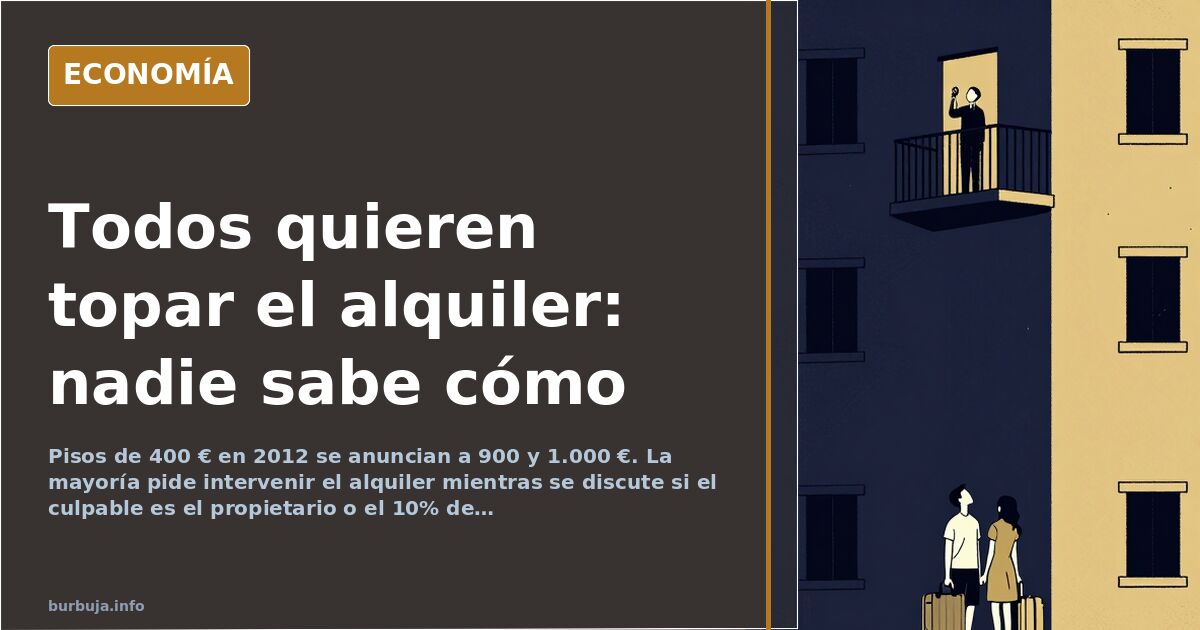
Rent Control: Majority Support, No Proven Solutions
Intervening in housing prices fails, according to countries that have tried it and data analysts, yet the Spanish majority still demands it. The issue has simmered for nearly two years; as fees rise, the debate has shifted from purchase prices, now deemed unattainable, to monthly rents. A major headline highlighted this fertile ground for intervention.
From 400 Euros to 1,000: The Escalation Driving Intervention
The numbers speak for themselves. Apartments rented for 400 euros in 2012 are now advertised at 900 or 1,000 euros. Twelve years of sustained increases have outpaced average wages.
The conversation has shifted from buying to renting. A recent quote summarizes this diagnosis: we are no longer discussing purchase prices, as they are unattainable, but rental prices.. When monthly fees consume a significant portion of salaries, the issue becomes domestic arithmetic, driving majorities.
The 10% Tax That Raises Prices Before Use
Critics of price caps argue the problem lies with the Treasury, not just landlords. The proposed solution is surgical: eliminate the 10% tax paid upon purchase, due to its inflationary nature. This levy adds to the price without adding a single brick.
The full breakdown is extensive. On an average salary of 21,000 euros, the government withholds about 20%. Buying adds another 10% in taxes and fees, plus a 21% rate on living expenses. The resulting margin is startling.
The uncomfortable conclusion: demanding price intervention while maintaining this fiscal burden asks sellers to yield what the state does not. Some argue the first home should be tax-exempt.
Land Stuck in City Halls: Why More Housing Isn't Built
The second front is supply. Urbanizable land is controlled by city councils, preventing individuals from buying plots freely. Whoever controls the license controls the price.
Given this framework, why doesn't the private sector build massively? The answer is demographic: population projections do not justify large-scale investment. Construction is expensive, slow, and politically risky.
Financing adds to the burden. On a 210,000-euro apartment over 40 years, bank interest amounts to 150,000 euros. You pay for the house almost twice. The problem translates to monthly fees, making unreasonable costs seem logical.
Social Housing at Cost: The Uncomfortable Mirror
Historical comparison arrives late: the only way to truly lower prices was massive public construction. Millions of social housing units were delivered at cost. The mid-20th century is cited as the only successful episode.
The government once promised 140,000 apartments. No one has verified the pogre, and the question remains unanswered.
When Arguments Run Out
Discussions often devolve into personal disputes and disappearing data. This happens when the core issue discomforts everyone.
Meanwhile, no country has successfully lowered prices with caps without side effects. With constrained supply, intact taxation, and sustained demand, the next rent review will likely rise again, unless proven otherwise.
Also available in: Deutsch
Summary of a discussion on Burbuja.info - Foro de economía, actualidad y política., translated from Spanish and reviewed before publication. Read the full discussion (266 replies).
More summaries
-
Leaked chats reveal Ábalos and Pedro Sánchez fighting Podemos over a few votes, with rental housing in the middle.
OKDiario publishes chats in which Sánchez tells Ábalos not to give ground to Podemos on rent control and opens the battle over rent caps.
-
Tweet claims mortgage payment jumps from 570 to 1,076 euros as Euribor hits 4.13%
A tweet says a 180,000-euro, 30-year mortgage went from 570 to 1,076 euros a month as Euribor hit 4.13%.
-
Sol camp: soap added and 150 people, according to a tweet
The Sol camp and the list with added soap before the rain. Puerta del Sol fills again with mats. At the time of this discussion, a…
-
Flotilla returners beaten by Basque police at Bilbao airport
Analysis of the clash between flotilla activists and the Ertzaintza, the Basque police, at Bilbao airport. Political theatre or police excess?
-
Am I a weird person? Isolation as a lifestyle
A forum user asks whether he is a weird person after 20 years without setting foot in a bar. We look at whether isolation is a savings strategy in the face of today's inflation.
-
Florentino Pérez calls Real Madrid presidential election: "They'll have to shoot me out"
Florentino Pérez has called elections at Real Madrid. We analyse the debate in our forum over his stewardship, the sporting decline and the future of the Spanish club.