
Spain's Health Ministry Video on Migrant Care Sparks Cost Debate
Spanish health ministry releases video on migrant healthcare access; critics highlight €121,021 cost and long waiting lists.
English · Original discussion in Spanish · Published
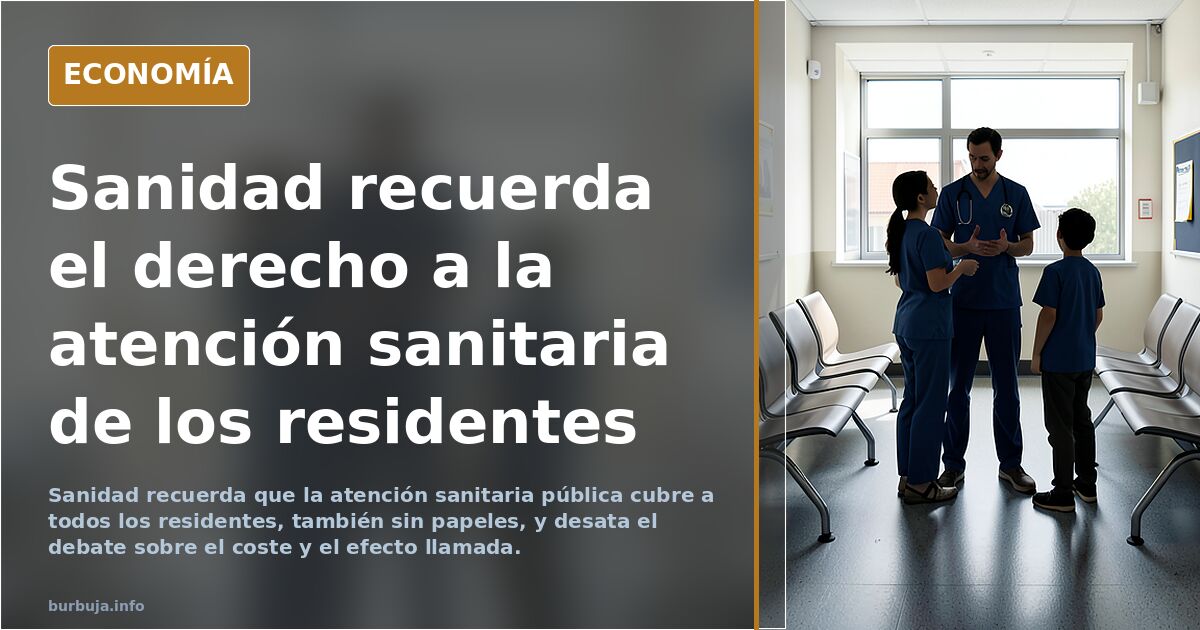
Free Healthcare for All: €121,021 Campaign and Stagnant Waiting Lists
The Spanish Ministry of Health published an institutional video reminding that anyone living in Spain, regardless of administrative status, has the right to full healthcare in the public network. The piece reportedly cost €121,021, according to figures circulating online. On the same day, a National Medicine Prize winner cited medical tourism as a strain on the system, igniting the debate.
The campaign does not create new rights: care for irregular migrants was already recognized in health regulations. It merely publicizes them. This is precisely what fueled the controversy: not coverage itself, but the message, timing, and bill.
What Is the Real Cost of Healthcare for Undocumented Residents?
The economic discussion has two layers. First, the direct campaign cost: €121,021 of public funds for an ad. Second, harder to quantify, is the care expenditure generated by treating non-contributors. No exact figure exists for this second layer in available materials; claims otherwise are speculative.
Daily strain testimonies emerge. One user reports a lung appointment scheduled for May 2027 after a preliminary X-ray. Another describes an admission office where staff ate toast while patients waited with referral slips. These anecdotes illustrate the frustration’s root.
Some argue the system absorbs occasional demand—citing oncology cases from Peru—but struggles when demand becomes chronic and middle-class. This distinction significantly impacts costs.
Pull Factor: Reality or Slogan?
Critics claim advertising universal free care in a country with strong public health attracts those who otherwise wouldn’t come. Counterarguments state migrants cross borders due to existing decades-long healthcare networks, not ads.
Pessimists antiestéticar saturation of specialists and operating rooms. Optimists note primary care for irregular populations is a small expense fraction, arguing denial increases long-term costs due to late-stage treatments. Neither side provided detailed breakdowns to settle the dispute.
Undisputed Complaint: Public Health System Overwhelmed
Beyond political noise lies uncomfortable consensus: public health is strained. Staff shortages, delays, and postponed tests frustrate taxpayers who contributed for years. This discontent fuels anger more than policy details.
Paradoxes arise too: expatriates returning after paying taxes face suggestions against seeking surgery there. Indignation over double standards spans political lines.
Ad as Political Weapon
Politically, the video launched when the government needed to signal stance, mobilizing supporters and provoking opponents. Critics call it opportunism: spending on ads while announcing tax hikes elsewhere.
The piece uses genre clichés: diverse professionals, inclusive language. Not illegal, but amid waiting list crises, it reads as provocative.
Expect defense as education, attack as waste. Government response will clarify next weeks. A video won’t change waiting lists.
Also available in: Deutsch
Summary of a discussion on Burbuja.info - Foro de economía, actualidad y política., translated from Spanish and reviewed before publication. Read the full discussion (242 replies).
More summaries
-
[Grandchildren Law] Spain's Supreme Court gives Albares and Bolaños a 5-day ultimatum
Spain's Supreme Court demands Bolaños and Albares hand over the list of 163,000 people naturalized under the 'grandchildren law' within five days or face a 1,000-euro fine. Find out what happens next.
-
Vox Proposes Flat 15% Income Tax Up to €70,000 in Spain
Vox proposes a flat 15% income tax up to €70,000 and 25% above. Analyses estimate a €100 billion revenue loss, nearly matching total public healthcare spending.
-
Spain's Sánchez Hires Lula's Digital Guru Ahead of Elections
Sánchez hires Lula's digital advisor, sparking fraud fears. The hiring cost and rail safety issues dominate the campaign.
-
Trillo, the Yak-42 crash and selective patriotic memory
The 2003 Yak-42 crash killed 62 soldiers amid mixed remains, yet Minister Trillo never resigned. Accountability now depends on political affiliation.
-
Vox Leader Abascal Drops Push to Repeal Spanish Abortion Law
Reports indicate Santiago Abascal avoids committing to repealing Spain's abortion law in an Onda Cero interview, signaling a shift for Vox.
-
Sánchez faces protests during Valencia campaign rally
PSOE leader Pedro Sánchez was met with shouts of 'murderer' and 'traitor' at a Valencia pre-campaign rally, according to El Debate.