
Spain's amnesty law sparks debate amid unproven allegations
The pact with Catalan separatists fuels controversy over constitutional limits, while the amnesty bill remains in parliamentary procedure.
English · Original discussion in Spanish · Published
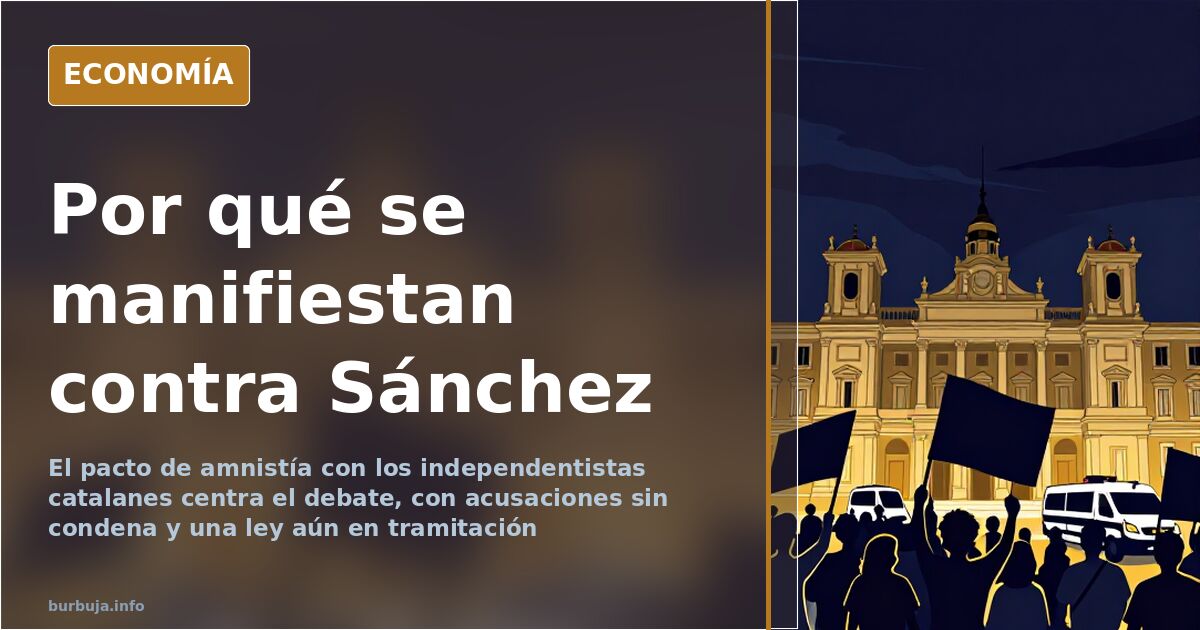
The Amnesty Standoff: Why Protests Target Pedro Sánchez
The core question is uncomfortable: some argue the investiture pact crosses a line no election can legitimize. The trigger is the amnesty law agreed with Catalan independence parties, which remained under parliamentary review at the time of this discussion. Protesters do not dispute the electoral result; they challenge whether that result permits bypassing the constitutional framework.
Criticisms of the Investiture Agreement
The central argument is not that Sánchez won, but what he paid to win. The amnesty clause draws the most opposition, extending beyond the law itself. Critics assert that no prime minister has the authority to offer deals conditioning another state power to stay in office. They claim this breaks the separation of powers and turns the investiture into a threat to constitutional order.
A historical comparison circulating in the debate is Germany’s Ermächtigungsgesetz (Enabling Act) of 1933: a norm approved through legal channels that ultimately dismantled the system allowing it. While debatable, this parallel explains the tone: protesters are not opposing specific policies, but suspecting the framework has lost its neutrality.
Government defenders use procedural arguments: if the amnesty is illegal, courts will strike it down; if not, it stands. The law is still being processed, and the outcome is undecided. That is the current state of affairs.
Are Sánchez’s Alleged Crimes Real?
Here, terminology causes confusion. Accusations include perjury, treason, prevarication, and corruption, but the exchange clarifies that “perjury” and “treason” do not exist as such in the Spanish Penal Code. These are concepts from Anglo-Saxon law and American cinema. False testimony is defined, yet none of these accusations have resulted in a conviction.
Vox filed a complaint with the Supreme Court alleging bribery and terrorism collaboration. A filed complaint does not equal proven crime, and the debate stops there: at accusation, not verdict.
Another angle is fiscal amnesty, cited as precedent for similar measures by previous governments. This comparison doesn’t resolve legality but disproves claims that such measures are unprecedented.
Winning Isn’t a Blank Check
The most repeated objection isn’t legal, but logical: winning elections doesn’t grant four years of impunity to break the law. Under this premise, the pact with separatists isn’t democratic legitimacy, but proof the system tolerates anything if votes sustain it.
Some argue further: votes supporting the government could have gone elsewhere, and Sánchez simply said yes to everything, even if illegal or damaging. Amnesty is the example, but territorial concessions and pending economic commitments are also mentioned.
The counterargument is that an investiture agreement is just that—an agreement—and promises aren’t crimes. The issue is that some promises are now laws in pogre.
Who Holds the Line and Historical Parallels
Critics cite data repeatedly: Spanish judges collectively oppose the amnesty law, according to debate information. This institutional front supports the thesis that the norm won’t survive scrutiny.
On the other side, government defense relies on current legality and parliamentary process. If valid, it passes; if not, it falls. This shifts burden to outcomes, treating street protests as a thermometer, not a tribunal.
In between, historical context serves as ammunition: PCE legalization, Clara Campoamor’s exile, persecution of liberal republicans. Each side picks precedents. None close the debate.
With the law unresolved and accusations unconvicted, protests face a paradox: condemning a government accused of acting outside the law, while the law hasn’t ruled if they’re right. What happens if the Constitutional Court upholds the amnesty?
The core question is uncomfortable: some argue the investiture pact crosses a line no election can legitimize. The trigger is the amnesty law agreed with Catalan independence parties, which remained under parliamentary review at the time of this discussion. Protesters do not dispute the electoral result; they challenge whether that result permits bypassing the constitutional framework.
Criticisms of the Investiture Agreement
The central argument is not that Sánchez won, but what he paid to win. The amnesty clause draws the most opposition, extending beyond the law itself. Critics assert that no prime minister has the authority to offer deals conditioning another state power to stay in office. They claim this breaks the separation of powers and turns the investiture into a threat to constitutional order.
A historical comparison circulating in the debate is Germany’s Ermächtigungsgesetz (Enabling Act) of 1933: a norm approved through legal channels that ultimately dismantled the system allowing it. While debatable, this parallel explains the tone: protesters are not opposing specific policies, but suspecting the framework has lost its neutrality.
Government defenders use procedural arguments: if the amnesty is illegal, courts will strike it down; if not, it stands. The law is still being processed, and the outcome is undecided. That is the current state of affairs.
Are Sánchez’s Alleged Crimes Real?
Here, terminology causes confusion. Accusations include perjury, treason, prevarication, and corruption, but the exchange clarifies that “perjury” and “treason” do not exist as such in the Spanish Penal Code. These are concepts from Anglo-Saxon law and American cinema. False testimony is defined, yet none of these accusations have resulted in a conviction.
Vox filed a complaint with the Supreme Court alleging bribery and terrorism collaboration. A filed complaint does not equal proven crime, and the debate stops there: at accusation, not verdict.
Another angle is fiscal amnesty, cited as precedent for similar measures by previous governments. This comparison doesn’t resolve legality but disproves claims that such measures are unprecedented.
Winning Isn’t a Blank Check
The most repeated objection isn’t legal, but logical: winning elections doesn’t grant four years of impunity to break the law. Under this premise, the pact with separatists isn’t democratic legitimacy, but proof the system tolerates anything if votes sustain it.
Some argue further: votes supporting the government could have gone elsewhere, and Sánchez simply said yes to everything, even if illegal or damaging. Amnesty is the example, but territorial concessions and pending economic commitments are also mentioned.
The counterargument is that an investiture agreement is just that—an agreement—and promises aren’t crimes. The issue is that some promises are now laws in pogre.
Who Holds the Line and Historical Parallels
Critics cite data repeatedly: Spanish judges collectively oppose the amnesty law, according to debate information. This institutional front supports the thesis that the norm won’t survive scrutiny.
On the other side, government defense relies on current legality and parliamentary process. If valid, it passes; if not, it falls. This shifts burden to outcomes, treating street protests as a thermometer, not a tribunal.
In between, historical context serves as ammunition: PCE legalization, Clara Campoamor’s exile, persecution of liberal republicans. Each side picks precedents. None close the debate.
With the law unresolved and accusations unconvicted, protests face a paradox: condemning a government accused of acting outside the law, while the law hasn’t ruled if they’re right. What happens if the Constitutional Court upholds the amnesty?
Also available in: Deutsch
Summary of a discussion on Burbuja.info - Foro de economía, actualidad y política., translated from Spanish and reviewed before publication. Read the full discussion (143 replies).
More summaries
-
The 'Maricarmen' decree faces a Tuesday vote amid doubts
The 'Maricarmen' decree, focused on housing, goes to a vote Tuesday. Old rents, Junts, omnibus bills, and planned applause...
-
Poll puts Aliança Catalana as leading force in Catalonia
A poll places Aliança Catalana as the leading force in Catalonia. The result fragments the vote and leaves governability in a mathematical deadlock, according to...
-
Figaredo: TVE needs 'nuclear bomb' to be fixed
Figaredo claims TVE requires drastic measures, accusing managers of theft. The debate on RTVE's model and funding intensifies.
-
Debate: Milei's cuts hit Argentine pensioners
Forum discussion on Javier Milei's austerity and its impact on Argentine retirees, with claims of €200 monthly pensions.
-
Mass migration and bureaucracy are destroying Madrid
Madrid faces soaring costs, insecurity, and bureaucratic collapse. Is Ayuso or Sánchez to blame? An analysis of the debate.
-
Boston Dynamics to mass-produce 30,000 Atlas robots in 2026
Boston Dynamics plans to manufacture 30,000 Atlas humanoid robots in 2026, sparking global debate on job displacement and universal basic income.