
Spain's AEMET warns of thermal rollercoaster
AEMET issues a March 16 alert for Spain regarding rapid temperature swings, dubbed a 'thermal rollercoaster' by media.
English · Original discussion in Spanish · Published
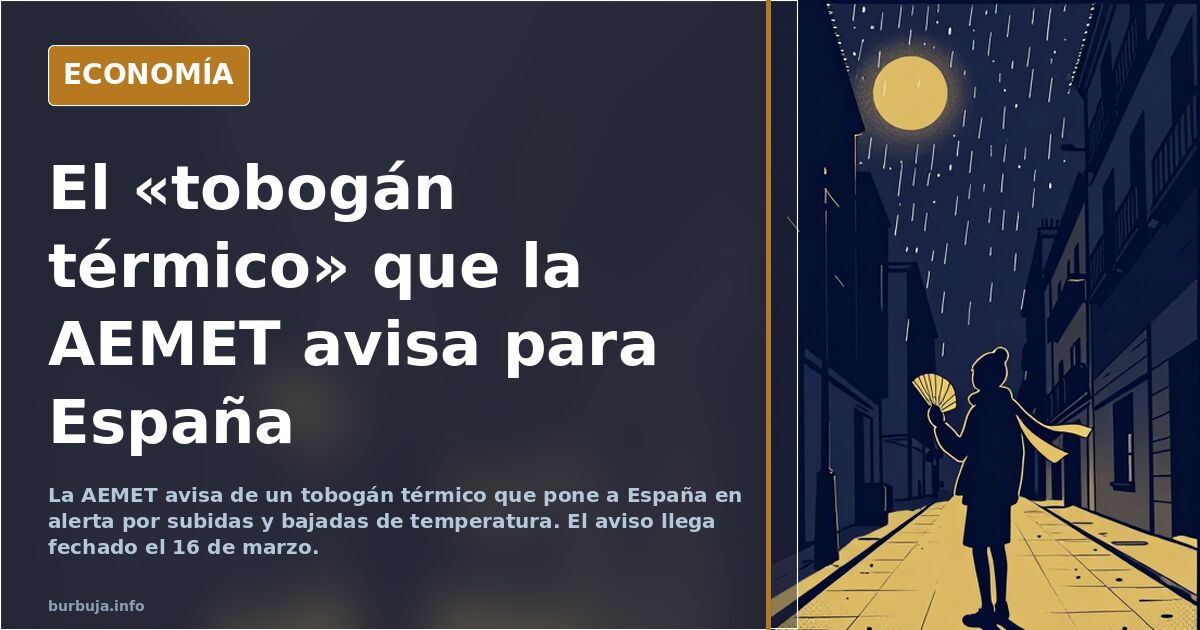
AEMET's 'thermal rollercoaster': branding the weather
Rain one day, heat the next, then cooling, sunshine, and sniffles again. What has always been called weather is now, according to an okdiario report, a 'thermal rollercoaster' putting Spain on alert with potential "terrible consequences." The notice is dated March 16, a detail that confuses readers checking their calendars.
The official text highlights a specific consequence: persistent colds. The agency notes that people, nature, and animals all feel these fluctuations equally. The issue isn't cold or heat itself, but how the news was packaged.
What exactly does the AEMET warning say?
The alert describes a total loss of thermal stability: temperature spikes and drops are no longer exceptional. According to the accompanying narrative, instability has become the norm, with visible effects being respiratory infections caught overnight. Nothing new under the sun, except the name.
Check the calendar. Dated mid-March, anyone reading this during a heatwave or late storm sees a weeks-old warning. Critics sarcastically note AEMET hits the mark three months late. They have a point, though the delay lies more with headline writers than meteorologists.
'Thermal rollercoaster' or simply calling it weather
This is the real source of controversy. A rollercoaster, critics argue, is just the usual sequence: rain, heat, sun. Giving such predictable patterns a fairground attraction name sounds like a need for catchy headlines. The most common proposal is simple yet insolent: call it, simply, the weather.
Others suspect ulterior motives. Whenever a term is invented to redefine something common, be wary, the argument goes, because there is a message to push. Meteorological vocabulary feels like escalating labels: cyclogenesis, cold drop, DANA, now thermal rollercoaster. Each season needs a more dramatic word. The public, tired of scares, treats them as what they seem: weather map marketing.
The paradox is perfect. The more spectacular the name, the less seriously it is taken. A northern peninsula summer, skeptics say, is what this rollercoaster really announces: moderate heat, some storms, and the feeling that nothing serious ever happens here.
How often is AEMET right, and why do forecasts lose credibility?
The agency bears discredit it didn't create alone. Forecasts fail, and sensationalist headlines worsen it. Criticism targets the packaging, not the data: normal spring temperature swings presented as national threats. Behind this lies broader suspicion that media act as uncritical loudspeakers, stretching any figure into alarm.
One detail fuels distrust. The same warning citing alerts and terrible consequences offers no new figures; it merely describes routine events with bigger words. When packaging outweighs content, readers ignore both. From there to "tell me in March" is a short step.
From thermometers to estela and taxes
Conversation spills over, turning climate into a battleground. One view claims every weather event justifies new taxes or restrictions on taxpayers. Another responds to warnings with the same recipe: rain means climate change, drought means estela. Anything works to be right, so everyone is always right.
Amidst this lies the earthly complaint needing no acronyms. Air conditioning on, electricity bills soaring, and summers starting muggy at 7 AM until late September. That is a measurable problem, yet no one warns about it with a fancy name.
The underlying question remains unanswered by any alert: if all weather is now a rollercoaster, cyclogenesis, or DANA, what word will remain when something truly unusual arrives?
Rain one day, heat the next, then cooling, sunshine, and sniffles again. What has always been called weather is now, according to an okdiario report, a 'thermal rollercoaster' putting Spain on alert with potential "terrible consequences." The notice is dated March 16, a detail that confuses readers checking their calendars.
The official text highlights a specific consequence: persistent colds. The agency notes that people, nature, and animals all feel these fluctuations equally. The issue isn't cold or heat itself, but how the news was packaged.
What exactly does the AEMET warning say?
The alert describes a total loss of thermal stability: temperature spikes and drops are no longer exceptional. According to the accompanying narrative, instability has become the norm, with visible effects being respiratory infections caught overnight. Nothing new under the sun, except the name.
Check the calendar. Dated mid-March, anyone reading this during a heatwave or late storm sees a weeks-old warning. Critics sarcastically note AEMET hits the mark three months late. They have a point, though the delay lies more with headline writers than meteorologists.
'Thermal rollercoaster' or simply calling it weather
This is the real source of controversy. A rollercoaster, critics argue, is just the usual sequence: rain, heat, sun. Giving such predictable patterns a fairground attraction name sounds like a need for catchy headlines. The most common proposal is simple yet insolent: call it, simply, the weather.
Others suspect ulterior motives. Whenever a term is invented to redefine something common, be wary, the argument goes, because there is a message to push. Meteorological vocabulary feels like escalating labels: cyclogenesis, cold drop, DANA, now thermal rollercoaster. Each season needs a more dramatic word. The public, tired of scares, treats them as what they seem: weather map marketing.
The paradox is perfect. The more spectacular the name, the less seriously it is taken. A northern peninsula summer, skeptics say, is what this rollercoaster really announces: moderate heat, some storms, and the feeling that nothing serious ever happens here.
How often is AEMET right, and why do forecasts lose credibility?
The agency bears discredit it didn't create alone. Forecasts fail, and sensationalist headlines worsen it. Criticism targets the packaging, not the data: normal spring temperature swings presented as national threats. Behind this lies broader suspicion that media act as uncritical loudspeakers, stretching any figure into alarm.
One detail fuels distrust. The same warning citing alerts and terrible consequences offers no new figures; it merely describes routine events with bigger words. When packaging outweighs content, readers ignore both. From there to "tell me in March" is a short step.
From thermometers to estela and taxes
Conversation spills over, turning climate into a battleground. One view claims every weather event justifies new taxes or restrictions on taxpayers. Another responds to warnings with the same recipe: rain means climate change, drought means estela. Anything works to be right, so everyone is always right.
Amidst this lies the earthly complaint needing no acronyms. Air conditioning on, electricity bills soaring, and summers starting muggy at 7 AM until late September. That is a measurable problem, yet no one warns about it with a fancy name.
The underlying question remains unanswered by any alert: if all weather is now a rollercoaster, cyclogenesis, or DANA, what word will remain when something truly unusual arrives?
Also available in: Deutsch
Summary of a discussion on Burbuja.info - Foro de economía, actualidad y política., translated from Spanish and reviewed before publication. Read the full discussion (134 replies).
More summaries
-
The myth of four mild summers
Four mild summers don't disprove climate change: AEMET data and the memory of 2003 refute it.
-
WEF blamed for banning home gardens over climate claims
Claims that the WEF opposes home food growing spark backlash, citing land control concerns, potential taxes, and scientific contradictions regarding photosynthesis.
-
Online thread challenges climate change consensus and debate refusal
A forum thread questions climate science with five key points on CO2, correlation, lockdowns, and the refusal to debate.
-
Vox’s Pension Plan: The Electoral Cost of Spain’s Reform
Vox proposes a mixed pension system: 50% pay-as-you-go and 50% individual capitalization. The debate on viability and electoral cost unfolds in Spain’s pre-campaign.
-
Venezuelan Gold Delivered to Spanish Officials: UCO Probes PSOE Funding
Gold coins and bars allegedly delivered by Venezuelan officials in 2020 are under investigation for potential illegal funding of the Spanish Socialist Party.
-
Ukrainian Drone Strikes on Yandex Cripple Russian Bot Traffic
Ukrainian attacks on Yandex data centers in Vladimir, Sasovo and Kaluga have caused a sharp drop in Russian bot traffic, with reports of a 56% decline.