
Spain: Veteran cyclists and beer terrace debate
Forum discusses older cyclists drinking beer. Over 5,000 injured yearly in Spain.
English · Original discussion in Spanish · Published
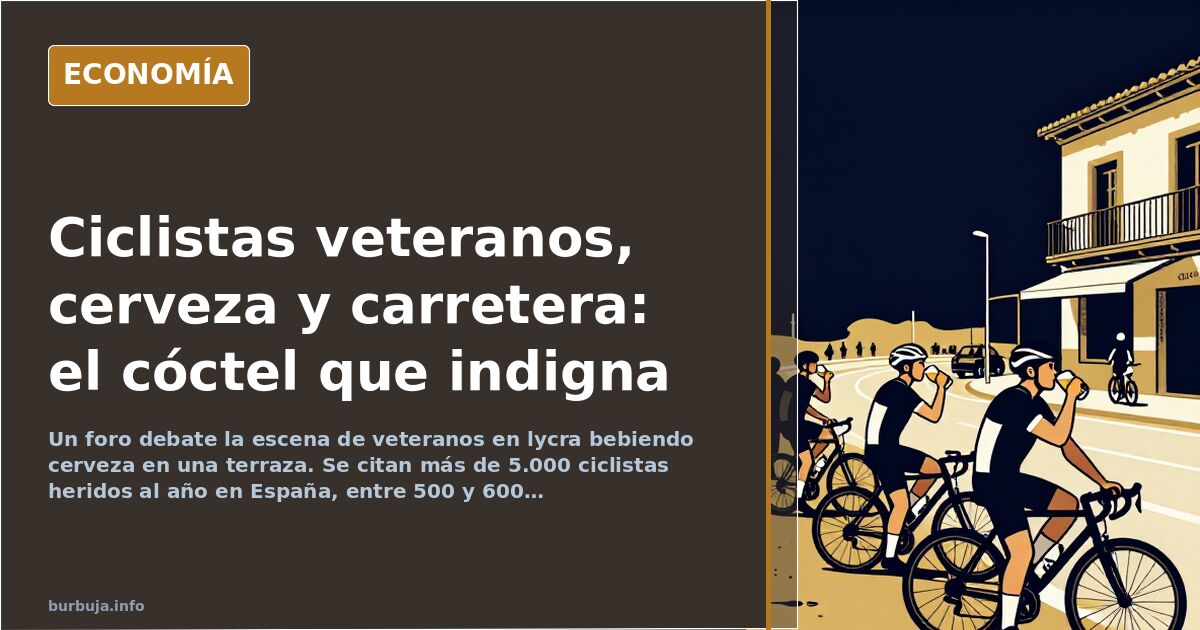
Veteran cyclists and beer: The terrace dystopia
What happens when a group of men and women over sixty, clad in thousands-euro jerseys, sit on a terrace drinking beer until they drop before heading home? The scene, described as a dystopia by the original poster, has turned into an exchange of accusations regarding road safety, age, money, and pretentiousness. The lingering data point: in Spain, more than 5,000 cyclists are injured annually in traffic accidents, around 500 to 600 are hospitalized, and nearly 100 die. This figure does not distinguish between those who ride alone with a twenty-five-year-old bike and those who dress like professionals to cover thirty kilometers with a stop for beers.
The profile that causes outrage: seniors, lycra, and beer
The stereotype depicted in the discussion is clear: large groups of older people with high-end bikes who take short routes and end up at a bar drinking alcohol before getting behind the wheel or back on their bikes. They are accused of having impaired vision and reflexes and of endangering themselves and others on roads shared with cars and trucks. The accusation is not unanimous: several messages argue that the beer is consumed after the ride, not before, and that the outing was completed hours earlier. The controversy, therefore, is not just about alcohol, but about the presumption that an older person cannot be fit.
The e-bike business and carbon fiber pretentiousness
Part of the discontent points to the spending. Veterans are described riding expensive electric bikes overtaking younger cyclists on mountain passes. The scene is labeled dystopian. Against this, some defend that e-bikes have given a second life to people who, due to age or health, could no longer continue riding. Amateur cycling thus presents itself as a battlefield where health, ostentation, and financial capacity mix. The underlying question: is it pretentiousness or necessity?
The antisocial cyclist versus the noisy group ride
Against the group shouting and laughing on the terrace emerges the figure of the solitary cyclist. A 47-year-old participant states he covers 60 kilometers in two hours and avoids group rides: "I have no desire to tolerate people, trinc anyone's schedule, or compete with anyone." He champions cycle touring as a form of mental peace, far from noise and photos. Another claims he rides where he meets no one and at times when groups have already left. It is the opposite face of the same sport: the one seeking silence versus the one seeking an open bar.
Conflict with drivers and the war on the road
The discussion shifts toward road coexistence. Mountain passes are mentioned where e-bike cyclists coincide with reckless drivers. Someone warns it is only a matter of time before a tragedy occurs and then all drivers will be blamed. In parallel, the experience of someone commuting by bike is recounted, taking 6 to 8 minutes compared to 15 or 20 by car, plus the hassle of paid parking zones and dents in the lot. The bike is championed as an efficient mode of transport, not just a sport.
The bike as social elevator and class contempt
One message recalls that the bicycle was the first means of transport for workers: it allowed those living in villages to reach the city and earn a day's wage. Against that memory, another participant despises the bike as transport for the poor and pretentious. The discussion turns bitter with personal insults that add nothing to the substance. The economic reality underlies the argument: some can spend thousands on a bike while others use it to avoid fuel costs. The gap is not just generational, but financial.
Alcohol and road safety: what the numbers say
More than 5,000 injuries annually, between 500 and 600 hospitalizations, and around 100 deaths. These are the figures cited in the exchange. It is not specified how many accidents are linked to alcohol, but the association between beer and cycling is used as a weapon. One message jokes: "You have to drink to improve the experience." Another notes that beer is diuretic and many drink non-alcoholic versions. The reality is that traffic regulations penalize driving under the influence of alcohol, including on bicycles, and individual responsibility is the only real barrier in the absence of specific controls.
In the end, the dystopia is not that older gentlemen drink beer in lycra. It is that no one knows if the problem is age, money, alcohol, or simply that we can no longer tolerate others having fun in their own way.
What happens when a group of men and women over sixty, clad in thousands-euro jerseys, sit on a terrace drinking beer until they drop before heading home? The scene, described as a dystopia by the original poster, has turned into an exchange of accusations regarding road safety, age, money, and pretentiousness. The lingering data point: in Spain, more than 5,000 cyclists are injured annually in traffic accidents, around 500 to 600 are hospitalized, and nearly 100 die. This figure does not distinguish between those who ride alone with a twenty-five-year-old bike and those who dress like professionals to cover thirty kilometers with a stop for beers.
The profile that causes outrage: seniors, lycra, and beer
The stereotype depicted in the discussion is clear: large groups of older people with high-end bikes who take short routes and end up at a bar drinking alcohol before getting behind the wheel or back on their bikes. They are accused of having impaired vision and reflexes and of endangering themselves and others on roads shared with cars and trucks. The accusation is not unanimous: several messages argue that the beer is consumed after the ride, not before, and that the outing was completed hours earlier. The controversy, therefore, is not just about alcohol, but about the presumption that an older person cannot be fit.
The e-bike business and carbon fiber pretentiousness
Part of the discontent points to the spending. Veterans are described riding expensive electric bikes overtaking younger cyclists on mountain passes. The scene is labeled dystopian. Against this, some defend that e-bikes have given a second life to people who, due to age or health, could no longer continue riding. Amateur cycling thus presents itself as a battlefield where health, ostentation, and financial capacity mix. The underlying question: is it pretentiousness or necessity?
The antisocial cyclist versus the noisy group ride
Against the group shouting and laughing on the terrace emerges the figure of the solitary cyclist. A 47-year-old participant states he covers 60 kilometers in two hours and avoids group rides: "I have no desire to tolerate people, trinc anyone's schedule, or compete with anyone." He champions cycle touring as a form of mental peace, far from noise and photos. Another claims he rides where he meets no one and at times when groups have already left. It is the opposite face of the same sport: the one seeking silence versus the one seeking an open bar.
Conflict with drivers and the war on the road
The discussion shifts toward road coexistence. Mountain passes are mentioned where e-bike cyclists coincide with reckless drivers. Someone warns it is only a matter of time before a tragedy occurs and then all drivers will be blamed. In parallel, the experience of someone commuting by bike is recounted, taking 6 to 8 minutes compared to 15 or 20 by car, plus the hassle of paid parking zones and dents in the lot. The bike is championed as an efficient mode of transport, not just a sport.
The bike as social elevator and class contempt
One message recalls that the bicycle was the first means of transport for workers: it allowed those living in villages to reach the city and earn a day's wage. Against that memory, another participant despises the bike as transport for the poor and pretentious. The discussion turns bitter with personal insults that add nothing to the substance. The economic reality underlies the argument: some can spend thousands on a bike while others use it to avoid fuel costs. The gap is not just generational, but financial.
Alcohol and road safety: what the numbers say
More than 5,000 injuries annually, between 500 and 600 hospitalizations, and around 100 deaths. These are the figures cited in the exchange. It is not specified how many accidents are linked to alcohol, but the association between beer and cycling is used as a weapon. One message jokes: "You have to drink to improve the experience." Another notes that beer is diuretic and many drink non-alcoholic versions. The reality is that traffic regulations penalize driving under the influence of alcohol, including on bicycles, and individual responsibility is the only real barrier in the absence of specific controls.
In the end, the dystopia is not that older gentlemen drink beer in lycra. It is that no one knows if the problem is age, money, alcohol, or simply that we can no longer tolerate others having fun in their own way.
Summary of a discussion on Burbuja.info - Foro de economía, actualidad y política., translated from Spanish and reviewed before publication. Read the full discussion (181 replies).
More summaries
-
Claim: Spain’s Pension Fund Short €50 Billion for Three Months
Viral post claims Social Security lacks funds for three months of pensions. Debate covers the reserve fund, contributions, and potential solutions.
-
Annecy Attack: 8 Children Injured, Asylum Policy Under Scrutiny
Eight children, around three years old, and an adult were injured in a knife attack in Annecy. The attacker, a Syrian asylum seeker, was arrested.
-
Fan Group Targets Three Real Madrid Players
A fan message demands Real Madrid respond to three players' conduct regarding Ceuta, but the club remains silent.
-
Humanoid Robots Play Tennis: Which Manual Jobs Are Safe?
A humanoid robot completes 100 tennis rallies without error. Are manual jobs doomed? Cost, energy limits and skepticism play a role.
-
19,000 unemployed lose benefits for unreported foreign travel
Spain's SEPE cuts off benefits for 19,000 people who failed to report international trips. Here are the detection methods and penalties.
-
Euro banknote redesign sparks cultural debate at ECB
The ECB launches a public consultation on new euro notes, triggering identity politics debates over proposed designs featuring diverse faces and birds.