
Spain tops global pension rankings: generosity or unsustainability?
Spain leads the world in pension replacement rates with an average of €1,574.90. But debt and aging threaten the system. How long can it last?
English · Original discussion in Spanish · Published
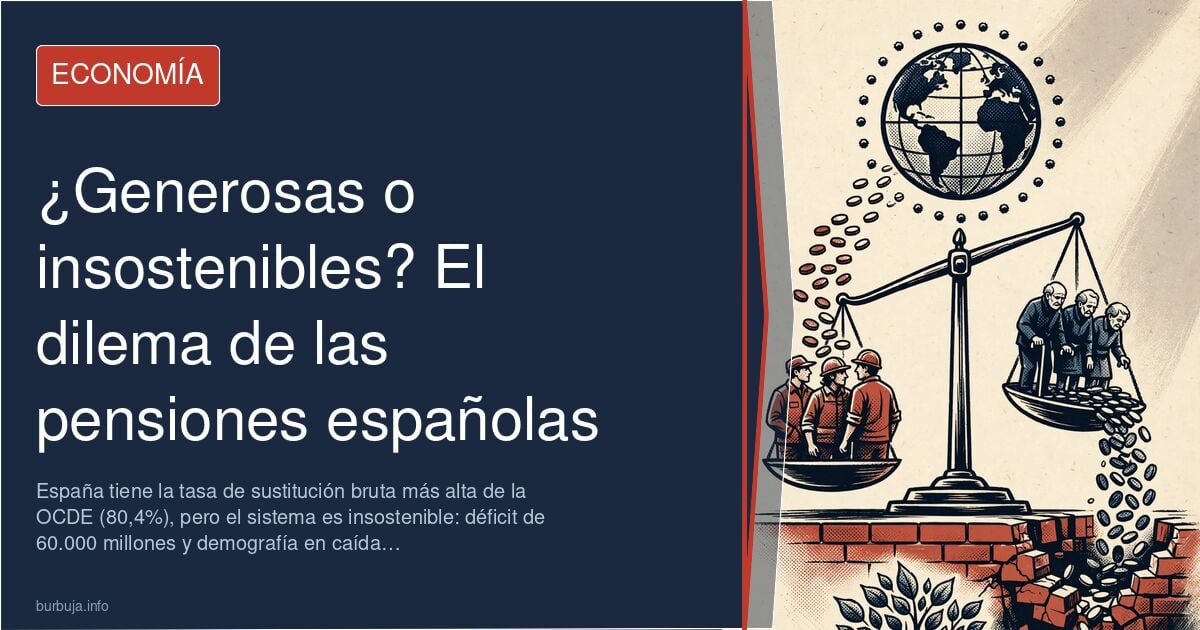
Spain, the country with the world's most generous pensions: gift or time bomb?
Spain tops the global pension ranking in terms of wage replacement. The average retirement pension reaches €1,574.90 per month in 14 payments, a figure that exceeds the net salary of many active workers. Meanwhile, public debt continues to grow and the system is sustained by contributions and deficit. Generosity or unsustainability?
The ranking that unsettles
The study that has turned the economic debate upside down places Spain in first position worldwide in replacement rate, that is, the percentage of the last salary received upon retirement. It is a fact that many young workers do not want to hear, because it implies that their contributions are financing pensions that they themselves will not be able to enjoy under the same conditions. The comparison with countries like Germany, where the system is mixed and the State contributes less, leaves Spain in a privileged but also fragile position.
The bill for generosity
Sustainability is the big question. The Spanish pension system is financed by workers' contributions, but the Social Security deficit is covered with public debt. The Intergenerational Equity Mechanism (MEI) has meant an increase in contributions for workers, but many analysts consider it a patch. Some compare the system to a Ponzi scheme: new contributors pay the pensions of current retirees, but when those contributors retire, there will not be enough workers to sustain them. Spain's demographics, with a birth rate at minimums, aggravate the problem.
The fine print: not everyone receives the same
The average pension of €1,574.90 is an average that hides very different realities. The minimum contributory pension stands at €888.70 per month in 14 payments, and there are widow's pensions that barely exceed €200. According to data from early 2025, around 4 million retirement pensions (61% of the total) are below €1,500 per month. That is, most pensioners do not live "high on the hog," as some would have us believe. Inequality between pensions is enormous, and the most vulnerable groups, such as widows or those with short working careers, are left in a precarious situation.
The political and electoral debate
Pensions have become an electoral weapon. Governments in turn promise revaluations and increases, while active workers see how their salaries do not grow at the same pace. Some argue that the system is maintained thanks to debt and that the arrival of immigrants does not compensate for the aging population. The medieval metaphor of the cathedral, where everyone contributes but no one receives, has been used to illustrate the unsustainability of the system. The question is whether the model can last the next decade. With demographic aging and accumulated debt, the answer is not obvious. Meanwhile, current pensioners enjoy a standard of living that many active workers envy.
Spain tops the global pension ranking in terms of wage replacement. The average retirement pension reaches €1,574.90 per month in 14 payments, a figure that exceeds the net salary of many active workers. Meanwhile, public debt continues to grow and the system is sustained by contributions and deficit. Generosity or unsustainability?
The ranking that unsettles
The study that has turned the economic debate upside down places Spain in first position worldwide in replacement rate, that is, the percentage of the last salary received upon retirement. It is a fact that many young workers do not want to hear, because it implies that their contributions are financing pensions that they themselves will not be able to enjoy under the same conditions. The comparison with countries like Germany, where the system is mixed and the State contributes less, leaves Spain in a privileged but also fragile position.
The bill for generosity
Sustainability is the big question. The Spanish pension system is financed by workers' contributions, but the Social Security deficit is covered with public debt. The Intergenerational Equity Mechanism (MEI) has meant an increase in contributions for workers, but many analysts consider it a patch. Some compare the system to a Ponzi scheme: new contributors pay the pensions of current retirees, but when those contributors retire, there will not be enough workers to sustain them. Spain's demographics, with a birth rate at minimums, aggravate the problem.
The fine print: not everyone receives the same
The average pension of €1,574.90 is an average that hides very different realities. The minimum contributory pension stands at €888.70 per month in 14 payments, and there are widow's pensions that barely exceed €200. According to data from early 2025, around 4 million retirement pensions (61% of the total) are below €1,500 per month. That is, most pensioners do not live "high on the hog," as some would have us believe. Inequality between pensions is enormous, and the most vulnerable groups, such as widows or those with short working careers, are left in a precarious situation.
The political and electoral debate
Pensions have become an electoral weapon. Governments in turn promise revaluations and increases, while active workers see how their salaries do not grow at the same pace. Some argue that the system is maintained thanks to debt and that the arrival of immigrants does not compensate for the aging population. The medieval metaphor of the cathedral, where everyone contributes but no one receives, has been used to illustrate the unsustainability of the system. The question is whether the model can last the next decade. With demographic aging and accumulated debt, the answer is not obvious. Meanwhile, current pensioners enjoy a standard of living that many active workers envy.
Summary of a discussion on Burbuja.info - Foro de economía, actualidad y política., translated from Spanish and reviewed before publication. Read the full discussion (101 replies).
More summaries
-
Social Security Blames Robot for Plus Ultra Certificate
Social Security attributes issuing a certificate declaring Plus Ultra up-to-date on payments to an automated system. The underlying issue: the legality of the deferment.
-
Spain's rental decrees struck down: 'the damage is already done'
A forum user claims rental supply has fallen 61% since 2020 and prices have risen 40%. The decrees have been struck down, but the damage is already done, according to the...
-
Mazón scrapped Puig's emergency unit in four months
The UVE was created in February 2023 and Mazón repealed it in November, four months later. The debate: a useless unit or lost capacity ahead of the DANA?
-
Pedro Sánchez's 'Letter to Citizens': Survival Strategy or End of Term?
Analysis of the economic and political impact of Pedro Sánchez's letter: survival strategy or the end of a term marked by Pegasus?
-
Spain's housing market: the end of the safe investment myth
Spain's housing market faces a historic collapse as oversupply, inflation and weakened demand make current prices unsustainable.
-
Public anger and the monarchy take center stage in Spain
Analysis of popular confrontation with the royal figure and the reaction of the political class