
Spain: Tolls, Low-Emission Zones and Tax Hikes Await After Elections
Regardless of the winner in Spain, tolls on highways, low-emission zones and higher taxes are expected to return amid a €1.5 trillion debt.
English · Original discussion in Spanish · Published
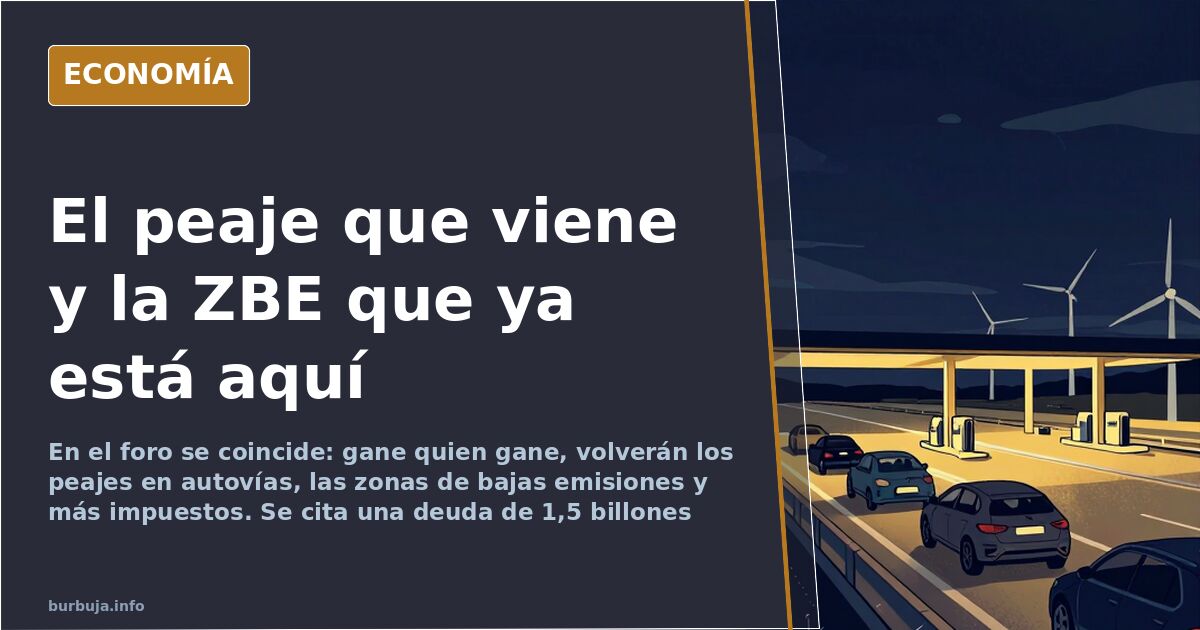
What Returns After the Election: Tolls, LEZs and More Taxes
The debate is not whether taxes will rise, but when and for whom. In a discussion with over a hundred replies, there is near-unanimous agreement: whoever wins, tax pressure on the average taxpayer will not decrease. The most obvious and repeated prediction is more taxes. This is trinc by highway tolls, the definitive implementation of low-emission zones (LEZ), and a list of cuts that no one specifies but everyone assumes is certain.
The conversation begins with a provocative thesis: some things disappear from public discourse during the campaign and return promptly afterward. Aerial spraying, major forest fires, energy poverty. The list expands with Gatopardism, the idea that everything changes so that nothing actually changes, and the excessive deficit procedure that Brussels keeps in reserve.
Which taxes and tolls will return after the elections?
The most common answer is that fiscal pressure will not drop. There are mentions of raising the general VAT to 25% and the reduced rate to 10%, though none of these figures come from an official document cited in the conversation. Highway tolls are also mentioned, with a recurring argument: the most complicated and expensive solution to implement will be chosen. And low-emission zones, which already cover entire cities like Barcelona, will extend to more municipalities.
Some argue that cuts are not really cuts, but disguised tax hikes. The example given is the change in the self-employed contribution system: it is not a cut, it is an increase in burden. A real cut would miccionan lowering civil servants' salaries. The distinction is not minor, because political language tends to mix both concepts.
Public Debt That Cannot Be Repaid for Centuries
One of the most specific data points in the discussion is the public debt figure: €1,505,054,658,456. It is argued that this amount does not include the total indebtedness of all administrations. The calculation suggested is that even with extreme austerity, the debt would not be paid off for centuries. The conclusion drawn by those who raise this point is uncomfortable: why be austere if your grandchildren will still be paying?
The counter-argument comes from another angle: the more debt there is, the worse the services, lower pensions, and longer working years. Interest is paid monthly, and with interest rates at high levels, each hike makes debt servicing more expensive. The debate shifts to whether the solution is to eliminate taxes and finance solely through debt, a hypothesis no one seriously defends but which serves to stretch the argument.
Will Strikes and Protests Return After the Elections?
The prediction is yes. The return of unions to the streets, general strikes, and protests against child hunger and labor exploitation are expected. Also the anti-fascist alert, which appears as one of the things that will return. And demonstrations against the government in power, regardless of the results.
The pattern described is circular: the opposition party promises change, wins everything, and then citizens get tired. In four years, the PSOE will again promise change, and people will be fed up with the PP government. Sovereignty, it is said, has long ceased to reside in the people, who are only summoned periodically to legitimize decisions.
The Undisputed Calendar: Holidays and Stagnation
There is a consensus throughout the conversation: after the elections, politicians will go on vacation. For almost a month, Spain's problems will seem to disappear. It is a period of calm that repeats every year and lasts about three weeks. Then the representatives will return, along with chaos, waste, and conflicts.
The hypothesis put forward is that no group will win enough seats to govern, as peine in 2015. They will pass the hot potato around, and hopefully, there will be new elections after Christmas. The best possible outcome, it is claimed, would be having a caretaker government that legislates against no one.
The list of what returns is long and varied: energy, child, and menstrual poverty; oil spills; the "no" to war; "we don't deserve a lying government"; victory flags; football. Also lies and broken promises, which never left. And heat, drought, skyrocketing prices, unemployment, inflation, and pharmacy queues. The disorienting fact is not any of these. It is that, despite everything, the debt counter keeps rising and no one has explained how to stop it.
Also available in: Deutsch
Summary of a discussion on Burbuja.info - Foro de economía, actualidad y política., translated from Spanish and reviewed before publication. Read the full discussion (111 replies).
More summaries
-
EU collapse prediction fails after four years
A forecast predicted the EU would dissolve in one year and Venezuela thrive in five. Four years later, the bloc remains intact.
-
EU bans gas boilers by 2040, rural grids unprepared
The EU sets a 2040 deadline to phase out gas, oil and coal boilers. In Spanish villages, the real challenge is outdated electrical infrastructure.
-
Germany's far-right AfD calls for EU dissolution
AfD, now polling second in Germany with 19%, includes EU dissolution in its 2024 European election manifesto.
-
Public Health monitors possible scabies outbreak at Sol camp
Public Health investigates a possible scabies outbreak at the Sol camp. The alert comes without an official case count and leads to political uproar and hoaxes.
-
Bale exposes the refereeing double standard that protects Messi
Gareth Bale says Messi should have been sent off in Argentina's World Cup match against Algeria. Behind it, a system that protects stars for economic reasons.
-
CNT union reports labour abuse at Taberna Garibaldi in Spain
The CNT union reports shifts of up to 14 hours and degrading treatment at Taberna Garibaldi. The last stronghold of labour abuse?