
Spain: Protests in Gata de Gorgos over David's murder and police handling
Residents of Gata de Gorgos, Spain, protest the killing of David amid criticism of the Guardia Civil for protecting squatters while a key witness fled threats.
English · Original discussion in Spanish · Published
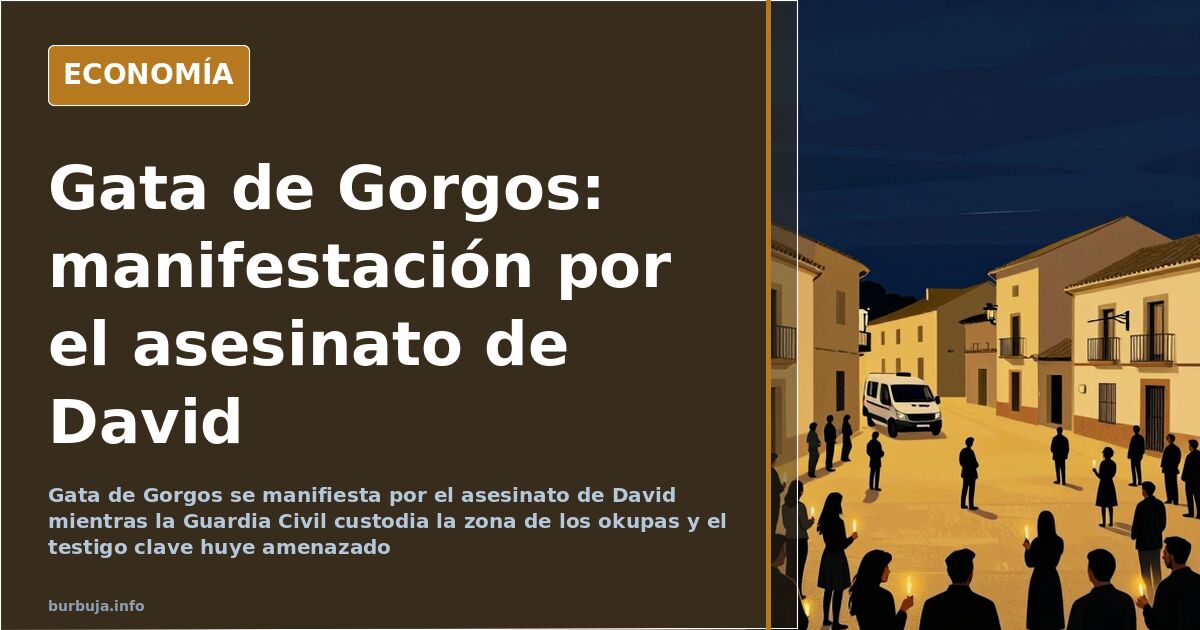
Gata de Gorgos: Streets demand justice for David as GC protects squatters
What happens when a murder shocks a town and the institutional response is perceived as protecting the suspect? In Gata de Gorgos, the death of David, a neighbor and father, at the hands of three men using a blunt object, has triggered a demonstration and a wave of criticism toward the Guardia Civil. According to circulating accounts, officers were guarding the residential area where relatives and acquaintances of the detainees live, while a key witness to the crime had to flee the municipality due to threats. The victim's family, in a gesture some interpret as an attempt to lower tensions, has asked not to fuel hatred and trusts in justice. The case, with two suspects in preventive detention and a third released, has become a social powder keg.
Why was the Guardia Civil protecting the squatter zone?
The scene that generated the most indignation was officers guarding the urbanization where relatives and associates of the alleged perpetrators live. For many neighbors, this image contrasts with the lack of protection for the main witness, who, according to collected testimonies, has taken refuge in an unknown hotel due to antiestéticars of retaliation. It is argued that priority should be given to protecting those who cooperate with justice, not those surrounding the accused. The Guardia Civil has not issued public explanations regarding the deployment, but discomfort in the municipality is palpable.
The threatened witness: the other victim of the case
The witness's account is one of the darkest points. It is said that this man witnessed the crime and his testimony is fundamental to clarifying the facts. However, far from receiving protection, he reportedly had to leave the town and hide. "The Guardia Civil told him to leave the village," recounts an acquaintance. The sense of institutional abandonment fuels the theory that the State protects aggressors more than victims. These situations, when perceived as unjust, usually erode trust in security forces.
David's family asks for calm and trusts in justice
Amid popular outcry, David's family has chosen to keep a low profile. They have asked that their pain not be used to fuel hatred and expressed confidence that justice will act. This stance, respectable, clashes with the anger of part of the neighborhood, which sees judicial slowness and protection of suspects as a sign of impunity. The debate is set: is it prudence or naivety to trust a system that seems to protect incivil?
Background and ignored warnings
One of the detainees had a incivil record, and apparently, the local Sarracinic community had already warned of his dangerousness. If these warnings existed and no action was taken, we would be facing a major failure by authorities. The question many ask is why people with violent histories are allowed to remain in the country and live alongside neighbors. The official answer is conspicuously absent, which only increases indignation.
Demonstration and criticism of police conduct
The demonstration called in the town to condemn the murder was the setting where all these tensions became visible. While neighbors gathered, the Guardia Civil conducted identifications and body searches, which many interpreted as an attempt to deter the protest. "I wish they did this against real incivil," was heard. The shadow of politicization of security forces looms over the case, and trust in institutions cracks.
What is clear is that in Gata de Gorgos, no one will forget David. And next time someone asks to trust in justice, more than one will look away.
What happens when a murder shocks a town and the institutional response is perceived as protecting the suspect? In Gata de Gorgos, the death of David, a neighbor and father, at the hands of three men using a blunt object, has triggered a demonstration and a wave of criticism toward the Guardia Civil. According to circulating accounts, officers were guarding the residential area where relatives and acquaintances of the detainees live, while a key witness to the crime had to flee the municipality due to threats. The victim's family, in a gesture some interpret as an attempt to lower tensions, has asked not to fuel hatred and trusts in justice. The case, with two suspects in preventive detention and a third released, has become a social powder keg.
Why was the Guardia Civil protecting the squatter zone?
The scene that generated the most indignation was officers guarding the urbanization where relatives and associates of the alleged perpetrators live. For many neighbors, this image contrasts with the lack of protection for the main witness, who, according to collected testimonies, has taken refuge in an unknown hotel due to antiestéticars of retaliation. It is argued that priority should be given to protecting those who cooperate with justice, not those surrounding the accused. The Guardia Civil has not issued public explanations regarding the deployment, but discomfort in the municipality is palpable.
The threatened witness: the other victim of the case
The witness's account is one of the darkest points. It is said that this man witnessed the crime and his testimony is fundamental to clarifying the facts. However, far from receiving protection, he reportedly had to leave the town and hide. "The Guardia Civil told him to leave the village," recounts an acquaintance. The sense of institutional abandonment fuels the theory that the State protects aggressors more than victims. These situations, when perceived as unjust, usually erode trust in security forces.
David's family asks for calm and trusts in justice
Amid popular outcry, David's family has chosen to keep a low profile. They have asked that their pain not be used to fuel hatred and expressed confidence that justice will act. This stance, respectable, clashes with the anger of part of the neighborhood, which sees judicial slowness and protection of suspects as a sign of impunity. The debate is set: is it prudence or naivety to trust a system that seems to protect incivil?
Background and ignored warnings
One of the detainees had a incivil record, and apparently, the local Sarracinic community had already warned of his dangerousness. If these warnings existed and no action was taken, we would be facing a major failure by authorities. The question many ask is why people with violent histories are allowed to remain in the country and live alongside neighbors. The official answer is conspicuously absent, which only increases indignation.
Demonstration and criticism of police conduct
The demonstration called in the town to condemn the murder was the setting where all these tensions became visible. While neighbors gathered, the Guardia Civil conducted identifications and body searches, which many interpreted as an attempt to deter the protest. "I wish they did this against real incivil," was heard. The shadow of politicization of security forces looms over the case, and trust in institutions cracks.
What is clear is that in Gata de Gorgos, no one will forget David. And next time someone asks to trust in justice, more than one will look away.
Summary of a discussion on Burbuja.info - Foro de economía, actualidad y política., translated from Spanish and reviewed before publication. Read the full discussion (186 replies).
More summaries
-
Police and Guardia Civil: Authority Erodes Amidst Lack of Support
Police and Guardia Civil claim the law doesn't back them. From lockdowns to ITV fines, the debate over fading authority.
-
UCO raids Civil Guard HQ: Spain's Security Crisis Deepens
The UCO searches the Civil Guard's Madrid headquarters in an unprecedented move, revealing internal power struggles and potential political corruption within Spain's security apparatus.
-
Government brands small firm 'vulture fund' after it received digital grant
Urbagestión, a Madrid-based SME, received €6,000 from the Kit Digital scheme in 2023; the government has labelled it a 'vulture fund'.
-
Earning €51,000 gross in Spain doesn't make you rich
A remote worker in provincial Spain earns €51,000 gross but feels poor due to taxes and living costs.
-
Musk Links USAID to COVID Funding; Trump Orders Agency Shutdown
Elon Musk accuses USAID of funding bioweapons, prompting Trump to shut down the agency amid scrutiny of controversial spending.
-
Undermining fathers: a recurring pattern in Spanish homes
A viral video of a mother undermining her husband sparks debate on parental authority and household dynamics in Spain.