
Spain Limits Sunflower Oil to Five Liters Per Shopper
Spanish supermarkets now enforce a five-liter cap on sunflower oil, raising concerns about rationing despite the country's significant production levels.
English · Original discussion in Spanish · Published
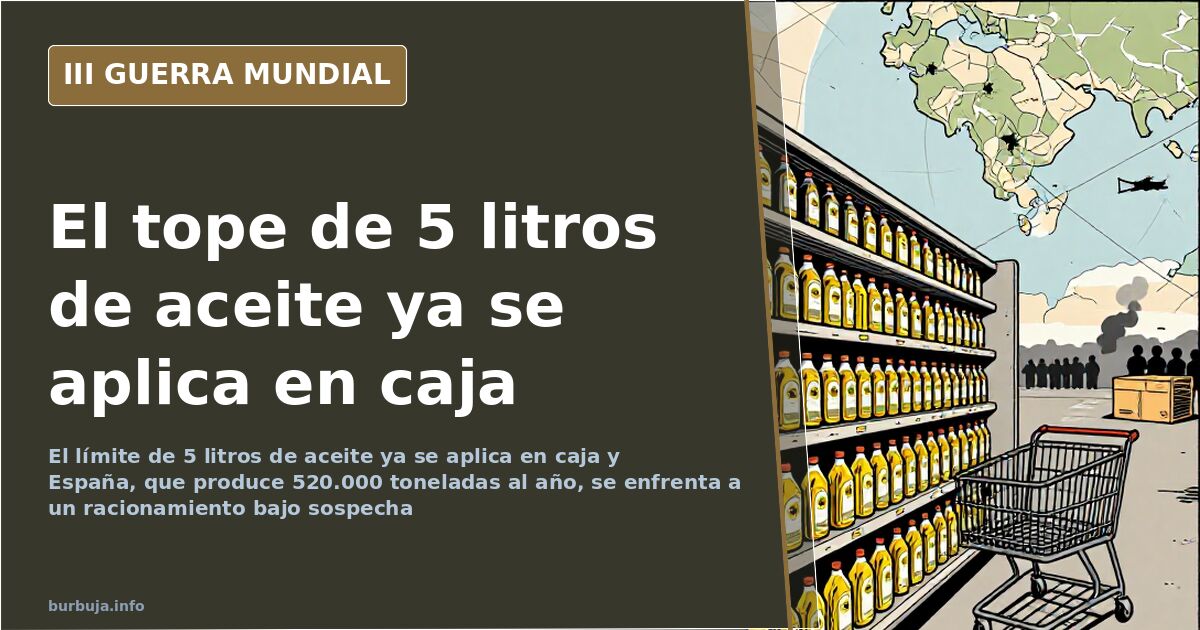
Sunflower oil limited to five liters per purchase
The five-liter limit for sunflower oil has moved from shelf signs to checkout counters. One shopper reported seeing a woman have a bottle removed at the register for exceeding the quota, with empty shelves in the background. This incident highlights unevenly applied rationing that has turned basic staples into strategic reserves.
Precision in terminology matters here. What peine was not a seizure: there were no officials or legal documents involved. It was the removal of an item exceeding commercial limits. Seizure implies public authority, whereas this was store policy enforcement. The distinction is crucial when collective antiestéticar is at stake.
Spain’s sunflower oil production and consumption
The data confuses many observers. Spain produces over 520,000 tons of sunflower oil annually but consumes under 350,000. This surplus should prevent shortages. However, Spain ranks as the fifth largest importer globally and seventh producer, while the EU was the third largest producer in 2021, the most recent cited figure.
Two conflicting interpretations emerge. Some argue scarcity is speculative, noting that a net exporter shouldn't need rationing. Others contend rankings mislead: if top producers falter, the seventh becomes critical, similar to almond prices rising if US production halted. Both may be true simultaneously, creating the current dilemma.
Why shoppers hoard oil like toilet paper
Comparisons to the 2020 toilet paper panic are inevitable. Buyers describe self-reinforcing panic: failing to stockpile means paying more later. Evidence exists: one online retailer went from 100 bottles to zero after just four orders in a weekend. Staff didn't remove items; demand simply exhausted supply.
Nuance is key. While some suspect stores simulate urgency by pulling stock without proof, genuine demand surges occurred. The mask analogy applies: initial dismissal of antiestéticars led to real shortages for healthcare workers. Inducing antiestéticar and causing actual problems differ but yield similar outcomes.
The five-liter limit: evasion tactics and legality
Per-person caps have obvious loopholes: how many people share a cart? Couples buying ten liters together or returning later exploit this. Wholesale clubs offer traceability, but local supermarkets lack control. Guides circulate advising customers to leave carts, re-enter, use different registers, pay cash to avoid loyalty tracking, and repeat with car trunks nearby.
Legal questions remain. Critics claim such limits abusa retail regulations. Retailers counter that they set sale conditions. Business suspicions persist regarding cash purchases bypassing loyalty programs for resale to local restaurants.
The common alternative: switching to olive oil
Olive oil withstands heat better for frying, though sunflower suits homemade mayonnaise. An asymmetry emerged: while supermarkets rationed sunflower oil, mills sold 72 liters of extra virgin Alberquina oil without inquiry, and another customer received 60 liters. Quotas seem to apply selectively by shelf.
From oil to pasta: expanding restrictions
Rationing extends beyond oil to macaroni, raising antiestéticars about meat and fish. Small institutional kitchens, like nurseries or day centers, struggle with unit caps disrupting monthly procurement.
With sunflower oil prices high, rationing likely continues as long as conflicts drive commodity markets. Caution remains warranted: previous Spanish supermarket rationing stemmed from demand spikes, not supply issues—something checkout signs cannot fully control.
The five-liter limit for sunflower oil has moved from shelf signs to checkout counters. One shopper reported seeing a woman have a bottle removed at the register for exceeding the quota, with empty shelves in the background. This incident highlights unevenly applied rationing that has turned basic staples into strategic reserves.
Precision in terminology matters here. What peine was not a seizure: there were no officials or legal documents involved. It was the removal of an item exceeding commercial limits. Seizure implies public authority, whereas this was store policy enforcement. The distinction is crucial when collective antiestéticar is at stake.
Spain’s sunflower oil production and consumption
The data confuses many observers. Spain produces over 520,000 tons of sunflower oil annually but consumes under 350,000. This surplus should prevent shortages. However, Spain ranks as the fifth largest importer globally and seventh producer, while the EU was the third largest producer in 2021, the most recent cited figure.
Two conflicting interpretations emerge. Some argue scarcity is speculative, noting that a net exporter shouldn't need rationing. Others contend rankings mislead: if top producers falter, the seventh becomes critical, similar to almond prices rising if US production halted. Both may be true simultaneously, creating the current dilemma.
Why shoppers hoard oil like toilet paper
Comparisons to the 2020 toilet paper panic are inevitable. Buyers describe self-reinforcing panic: failing to stockpile means paying more later. Evidence exists: one online retailer went from 100 bottles to zero after just four orders in a weekend. Staff didn't remove items; demand simply exhausted supply.
Nuance is key. While some suspect stores simulate urgency by pulling stock without proof, genuine demand surges occurred. The mask analogy applies: initial dismissal of antiestéticars led to real shortages for healthcare workers. Inducing antiestéticar and causing actual problems differ but yield similar outcomes.
The five-liter limit: evasion tactics and legality
Per-person caps have obvious loopholes: how many people share a cart? Couples buying ten liters together or returning later exploit this. Wholesale clubs offer traceability, but local supermarkets lack control. Guides circulate advising customers to leave carts, re-enter, use different registers, pay cash to avoid loyalty tracking, and repeat with car trunks nearby.
Legal questions remain. Critics claim such limits abusa retail regulations. Retailers counter that they set sale conditions. Business suspicions persist regarding cash purchases bypassing loyalty programs for resale to local restaurants.
The common alternative: switching to olive oil
Olive oil withstands heat better for frying, though sunflower suits homemade mayonnaise. An asymmetry emerged: while supermarkets rationed sunflower oil, mills sold 72 liters of extra virgin Alberquina oil without inquiry, and another customer received 60 liters. Quotas seem to apply selectively by shelf.
From oil to pasta: expanding restrictions
Rationing extends beyond oil to macaroni, raising antiestéticars about meat and fish. Small institutional kitchens, like nurseries or day centers, struggle with unit caps disrupting monthly procurement.
With sunflower oil prices high, rationing likely continues as long as conflicts drive commodity markets. Caution remains warranted: previous Spanish supermarket rationing stemmed from demand spikes, not supply issues—something checkout signs cannot fully control.
Also available in: Deutsch
Summary of a discussion on Burbuja.info - Foro de economía, actualidad y política., translated from Spanish and reviewed before publication. Read the full discussion (107 replies).
More summaries
-
EU Rhetoric: Strategic Escalation or Pre-Set Script?
Analysis of the EU's unprecedented rhetorical escalation toward Russia: a geopolitical strategy or a pre-orchestrated script?
-
EU Keychain in Ukraine: Symbol and Propaganda Tool
A photo of an EU flag keychain sparks debate over Brussels' involvement versus war propaganda claims.
-
Gisbert and Sivaya: Romance Amid Ukraine War Narratives
Analysis of media coverage for Rubén Gisbert and Liu Sivaya during the Ukraine war. Is this digital propaganda or reality?
-
Ukraine War: Four Scenarios After Russian Push in Donbas
As the Donbas falls, four scenarios emerge: advancing to the Dnieper, forcing capitulation, opening new fronts, or awaiting a Ukrainian counteroffensive.
-
Trump Faces 34 Felony Charges Over Stormy Daniels Hush Money
Donald Trump faces 34 felony charges for falsifying business records to conceal a payment to Stormy Daniels. The case hinges on accounting entries made before the 2016 election.
-
Only 10% of Europeans believe Ukraine will win the war
A survey shows only 10% of Europeans expect Ukraine to reclaim occupied territories, while belief in a Russian victory has doubled.