
Spain: Elderly foster couple abandons toddler in car
In Spain, a foster family left a two-year-old to die in a car. Biological parents remain silent while authorities defend the placement.
English · Original discussion in Spanish · Published
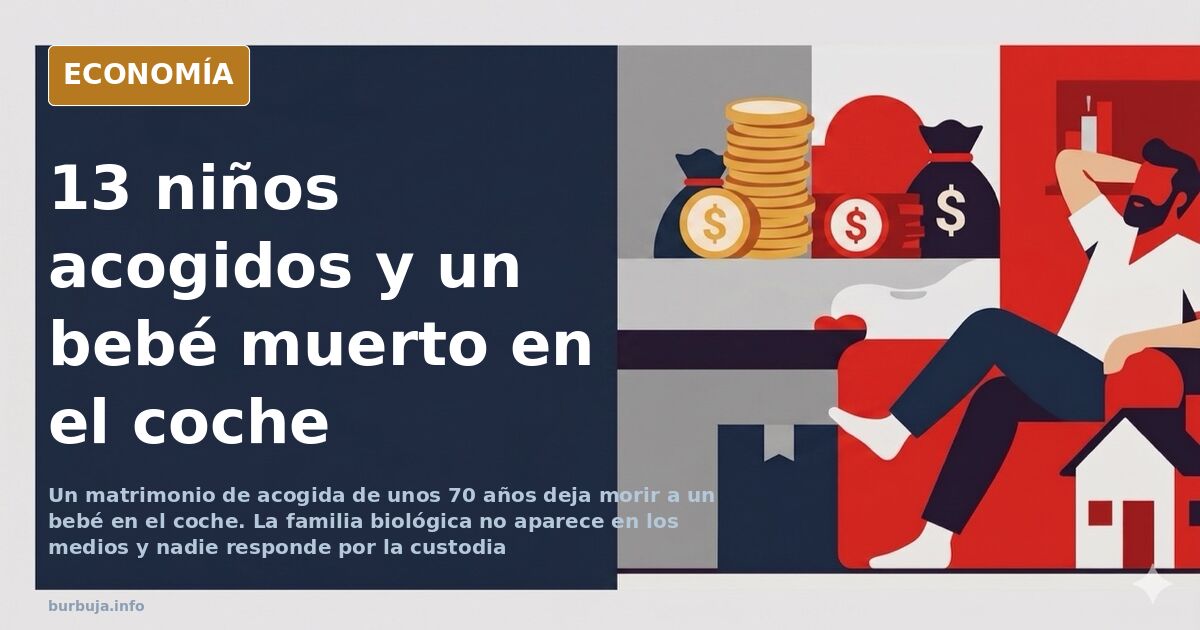
Spain: Foster couple abandons toddler in car
A Spanish foster couple, aged around 70, left a two-year-old child locked in their car until death occurred. The biological family has not appeared in media reports. Meanwhile, official narratives insist they were "doing excellent work." This case, known in Linares, has peine debate on how child custody is granted and who is accountable when the system fails.
The data discussed are specific yet incomplete. The foster father was 72 years old, suffering from early-stage Alzheimer's and treated with antibiotics for pneumonia. The foster mother, aged 55, was a social worker. Together, they had fostered 13 children in the last decade, according to cited reports, receiving an estimated €600 per month per minor. The recurring question is simple: How is custody of a baby with mobility issues authorized for a septuagenarian with recognized cognitive decline?
Who authorizes and supervises foster care
The debate focuses not on the forgetting itself, but on the chain of decisions that made it possible. Some argue the foster system operates as an allocation mechanism with economic incentives and no real control. Others point to staff shortages and the lack of periodic assessments of foster parents. What remains undisputed is that the child had been living there for some time.
The most unsettling detail is the profile of the foster mother: a professional social worker. This raises a suspicion repeated in discussions: that those familiar with the internal circuit may find it easier to acquire minors. There is no conviction or firm indictment, but the fact stands unclarified.
The biological family: The unheard version
The other aspect of the case is silence. According to the discussion, the baby's biological family has not given its account in the media. It is unknown why custody was revoked, whether the parents had disabilities, or if direct relatives were available. What has been widely circulated is the image of the fosterers as exemplary people.
This narrative imbalance is the core of the discomfort. Acquaintances of the foster father are interviewed; the biological parents are not sought. It is suggested the child was poorly cared for at home, without providing judicial rulings or reports. Doubt is cast in one direction only.
The foster business: €600 per child monthly
The figure dominating the conversation is €600 per month per fostered child. With 13 placements in a decade, the volume is not anecdotal. Defenders of the system say this covers expenses and that most foster families do not profit. Critics note the incentive exists and supervision does not offset the risk.
An uncomfortable comparison arises: If the biological family's problem was economic, would it have been cheaper and more humane to use that money to help them care for their own child? There is no official answer. Nor is there one regarding why direct relatives were not considered before an elderly couple.
Abandonment in the car: Negligence or accident?
On the act itself, opinions divide. One side argues that leaving a child in a car is more common than thought, affecting parents of all ages due to attention failures in automated routines. The other responds that a baby is not a wallet or phone, and that at 72, with incipient Alzheimer's and pneumonia, one should not be responsible for a minor.
The unresolved issue is administrative responsibility. If the State removes a minor citing risk and places them with a family unable to guarantee safety, who answers? So far, no one.
What happens to those who authorized it?
No known file exists against the social worker who signed off suitability, nor against the approving body. Discussion insists names and roles of those who authorized custody have not surfaced. Without this information, accountability is impossible.
The Linares case is not unique. The conversation mentions other episodes of minors dying in similar circumstances, involving young biological parents, with similar media conclusions: oversight, tragedy, no resignations. The difference here is the age of the fosterers and the existence of a public contract.
With these elements, it is predictable that the judicial investigation will proceed slowly, the biological family will remain voiceless, and the administration will assume no responsibility. Any change will likely come from social pressure, not institutional design.
A Spanish foster couple, aged around 70, left a two-year-old child locked in their car until death occurred. The biological family has not appeared in media reports. Meanwhile, official narratives insist they were "doing excellent work." This case, known in Linares, has peine debate on how child custody is granted and who is accountable when the system fails.
The data discussed are specific yet incomplete. The foster father was 72 years old, suffering from early-stage Alzheimer's and treated with antibiotics for pneumonia. The foster mother, aged 55, was a social worker. Together, they had fostered 13 children in the last decade, according to cited reports, receiving an estimated €600 per month per minor. The recurring question is simple: How is custody of a baby with mobility issues authorized for a septuagenarian with recognized cognitive decline?
Who authorizes and supervises foster care
The debate focuses not on the forgetting itself, but on the chain of decisions that made it possible. Some argue the foster system operates as an allocation mechanism with economic incentives and no real control. Others point to staff shortages and the lack of periodic assessments of foster parents. What remains undisputed is that the child had been living there for some time.
The most unsettling detail is the profile of the foster mother: a professional social worker. This raises a suspicion repeated in discussions: that those familiar with the internal circuit may find it easier to acquire minors. There is no conviction or firm indictment, but the fact stands unclarified.
The biological family: The unheard version
The other aspect of the case is silence. According to the discussion, the baby's biological family has not given its account in the media. It is unknown why custody was revoked, whether the parents had disabilities, or if direct relatives were available. What has been widely circulated is the image of the fosterers as exemplary people.
This narrative imbalance is the core of the discomfort. Acquaintances of the foster father are interviewed; the biological parents are not sought. It is suggested the child was poorly cared for at home, without providing judicial rulings or reports. Doubt is cast in one direction only.
The foster business: €600 per child monthly
The figure dominating the conversation is €600 per month per fostered child. With 13 placements in a decade, the volume is not anecdotal. Defenders of the system say this covers expenses and that most foster families do not profit. Critics note the incentive exists and supervision does not offset the risk.
An uncomfortable comparison arises: If the biological family's problem was economic, would it have been cheaper and more humane to use that money to help them care for their own child? There is no official answer. Nor is there one regarding why direct relatives were not considered before an elderly couple.
Abandonment in the car: Negligence or accident?
On the act itself, opinions divide. One side argues that leaving a child in a car is more common than thought, affecting parents of all ages due to attention failures in automated routines. The other responds that a baby is not a wallet or phone, and that at 72, with incipient Alzheimer's and pneumonia, one should not be responsible for a minor.
The unresolved issue is administrative responsibility. If the State removes a minor citing risk and places them with a family unable to guarantee safety, who answers? So far, no one.
What happens to those who authorized it?
No known file exists against the social worker who signed off suitability, nor against the approving body. Discussion insists names and roles of those who authorized custody have not surfaced. Without this information, accountability is impossible.
The Linares case is not unique. The conversation mentions other episodes of minors dying in similar circumstances, involving young biological parents, with similar media conclusions: oversight, tragedy, no resignations. The difference here is the age of the fosterers and the existence of a public contract.
With these elements, it is predictable that the judicial investigation will proceed slowly, the biological family will remain voiceless, and the administration will assume no responsibility. Any change will likely come from social pressure, not institutional design.
Also available in: Deutsch
Summary of a discussion on Burbuja.info - Foro de economía, actualidad y política., translated from Spanish and reviewed before publication. Read the full discussion (113 replies).
More summaries
-
Social Services Debate Heats Up After Crime Involving Minors
Analysis of ideological polarization following a crime involving a social worker and state-guarded minors, highlighting the clash between protective measures and criminal responsibility.
-
El Vellón: Tensions over fostered minors reach Spanish TV
Residents in El Vellón, Madrid, report fear from state-fostered minors. Detentions followed by release fuel impunity debates.
-
Dosrius: Ward minors spark complaints from 6,000 residents
Three state-ward minors mobilized a town of 6,000 and the regional ministry. The Catalan Audit Office flagged irregularities at DGAIA.
-
VOX launches tax savings calculator for economic plan
Critics argue VOX's simulator shows €400 savings for €18k salaries and €15k for €100k earners, highlighting disparities.
-
Spanish health technicians strike over long-delayed Group B status
Health technicians in Spain are striking, demanding recognition of their Group B professional category, which has been pending since 2008.
-
Toyota Land Cruiser at €50k: Import math divides experts
Buying a new Land Cruiser in the Middle East for €50,000 and reselling it in Spain raises questions about import taxes, fuel costs, and market value.