
Spain bans toxic playground rubber by 2031
Recycled rubber in Spanish playgrounds faces a 2031 ban due to endocrine disruptors, but removal costs and business interests complicate the transition.
English · Original discussion in Spanish · Published
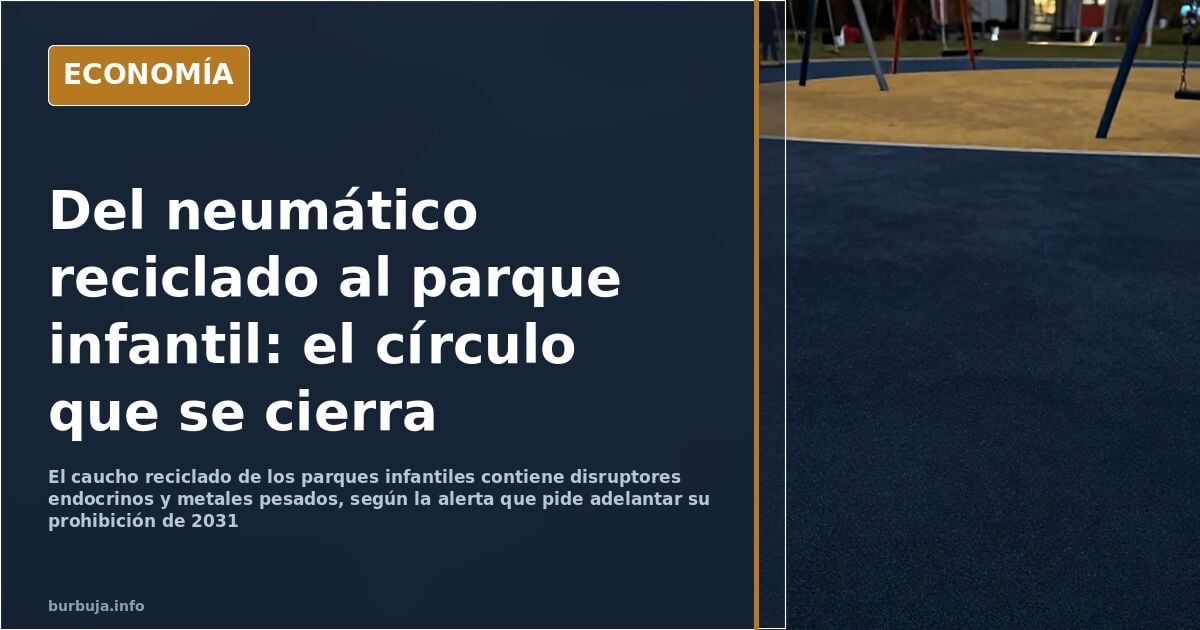
Playground rubber shifts from eco-friendly savior to toxic threat
Set for prohibition in 2031, these surfaces are already sparking debate. Playground floors made of recycled rubber, long promoted as circular economy models using scrapped tires, allegedly contain endocrine disruptors, heavy metals, and carcinogens. The irony is stark: material meant to save the planet harms its inhabitants. While some demand immediate removal, others note that old iron swings were hardly safe either.
The campaign against recycled rubber
A new initiative aims to raise awareness and accelerate the phase-out. Critics argue tires aren't natural rubber but synthetic petroleum derivatives mixed with binders and glues. As they degrade, they release microparticles children inhale or touch, transferring them to mucous membranes. The image of kids playing on a sea of decaying microplastics drives calls not just for removal, but for accountability regarding their installation.
However, this backlash trinc years of public subsidies rewarding such use. Scrapped tires became prized raw materials, funding municipal upgrades. Now, reversing course carries high costs. Like asbestos removal, dismantling requires authorized firms and waste managers, making each park expensive to fix. Profits likely flow to those securing exclusive licenses to remove what was previously installed under license.
The install-and-remove business: who pays for dismantling?
This moves beyond health debates into pure economics. First, money was paid to install rubber; now it will be paid to remove it, potentially trinc by installing alternatives that will eventually need removal too. Skeptics suggest a cycle of profit regardless of outcome. Suspicions of kickbacks to officials connected to both installation and removal companies hang over the issue, hard to dismiss given the repeating pattern.
Another economic angle involves GDP accounting. Replacing sidewalks is frowned upon, but mandating then banning a material counts activity twice. It mirrors single-use coffee pod trends: imposed for safety, generalized, then banned for environmental reasons. Meanwhile, taxpayers foot double bills, while taxes themselves remain rubber-free.
Old parks: myth, nostalgia, and broken bottles
Nostalgia distorts this discussion. Eighties parks had sand or gravel floors, rusty iron equipment, and protruding concrete. Idealized memories claim childhood toughness came from injuries, yet risks included flying off swings or breaking arms. Conversely, modern critics argue current higher structures pose fatal fall risks.
Less romanticized views recall sharp glass, syringes, and cigarette smells. This wasn't a sanitary paradise. Honest comparison isn't between toxic and idyllic parks, but different risk assumptions: physical trauma versus chemical exposure. Neither side has clean data.
Tire dust affects everyone
A counterargument notes tire dust isn't confined to playgrounds. Friction releases microparticles from vehicles citywide, alongside clutch and brake dust. If exposure is the concern, playground presence matters less since children encounter similar particles elsewhere. Yet, diffuse exposure differs from daily contact with degraded flooring.
The debate gets tangled with unproven claims linking vaccines or chicken hormones to cancer, creating noise that undermines serious scrutiny of specific chemical compounds and cumulative effects. Sensible questions focus on concentration, exposure levels, and duration, not labeling rubber as evil.
Ultimately, recycled rubber playgrounds marketed as green solutions face toxicity bans. In between, profits were doubled. Children continue playing on whatever surface remains.
Set for prohibition in 2031, these surfaces are already sparking debate. Playground floors made of recycled rubber, long promoted as circular economy models using scrapped tires, allegedly contain endocrine disruptors, heavy metals, and carcinogens. The irony is stark: material meant to save the planet harms its inhabitants. While some demand immediate removal, others note that old iron swings were hardly safe either.
The campaign against recycled rubber
A new initiative aims to raise awareness and accelerate the phase-out. Critics argue tires aren't natural rubber but synthetic petroleum derivatives mixed with binders and glues. As they degrade, they release microparticles children inhale or touch, transferring them to mucous membranes. The image of kids playing on a sea of decaying microplastics drives calls not just for removal, but for accountability regarding their installation.
However, this backlash trinc years of public subsidies rewarding such use. Scrapped tires became prized raw materials, funding municipal upgrades. Now, reversing course carries high costs. Like asbestos removal, dismantling requires authorized firms and waste managers, making each park expensive to fix. Profits likely flow to those securing exclusive licenses to remove what was previously installed under license.
The install-and-remove business: who pays for dismantling?
This moves beyond health debates into pure economics. First, money was paid to install rubber; now it will be paid to remove it, potentially trinc by installing alternatives that will eventually need removal too. Skeptics suggest a cycle of profit regardless of outcome. Suspicions of kickbacks to officials connected to both installation and removal companies hang over the issue, hard to dismiss given the repeating pattern.
Another economic angle involves GDP accounting. Replacing sidewalks is frowned upon, but mandating then banning a material counts activity twice. It mirrors single-use coffee pod trends: imposed for safety, generalized, then banned for environmental reasons. Meanwhile, taxpayers foot double bills, while taxes themselves remain rubber-free.
Old parks: myth, nostalgia, and broken bottles
Nostalgia distorts this discussion. Eighties parks had sand or gravel floors, rusty iron equipment, and protruding concrete. Idealized memories claim childhood toughness came from injuries, yet risks included flying off swings or breaking arms. Conversely, modern critics argue current higher structures pose fatal fall risks.
Less romanticized views recall sharp glass, syringes, and cigarette smells. This wasn't a sanitary paradise. Honest comparison isn't between toxic and idyllic parks, but different risk assumptions: physical trauma versus chemical exposure. Neither side has clean data.
Tire dust affects everyone
A counterargument notes tire dust isn't confined to playgrounds. Friction releases microparticles from vehicles citywide, alongside clutch and brake dust. If exposure is the concern, playground presence matters less since children encounter similar particles elsewhere. Yet, diffuse exposure differs from daily contact with degraded flooring.
The debate gets tangled with unproven claims linking vaccines or chicken hormones to cancer, creating noise that undermines serious scrutiny of specific chemical compounds and cumulative effects. Sensible questions focus on concentration, exposure levels, and duration, not labeling rubber as evil.
Ultimately, recycled rubber playgrounds marketed as green solutions face toxicity bans. In between, profits were doubled. Children continue playing on whatever surface remains.
Also available in: Deutsch
Summary of a discussion on Burbuja.info - Foro de economía, actualidad y política., translated from Spanish and reviewed before publication. Read the full discussion (85 replies).
More summaries
-
Father of Miriam Opens YouTube Channel 30 Years After Alcàsser Murders
Fernando García, father of an Alcàsser victim, launches a YouTube channel to reveal details. The case raises questions about justice versus profit in Spain.
-
Danish Study Links Tattoos to Lymphoma Risk
A Danish study associates tattoos with lymph node cancer. Heavy metals in dyes raise questions about who pays for treatment.
-
Tattoos: The Chronic Poison You Injected Without Knowing
Tattoos, a widespread trend, hide a toxic cocktail of heavy metals and chemicals. The debate exposes health risks and lack of regulation.
-
Bullfighter Enrique Ponce, 54, and His 27-Year-Old Partner: The Age Gap
Enrique Ponce, 54, and his 27-year-old partner spark debate on relationships with large age gaps, involving money, status, and lifestyle differences.
-
Forum User Claims Divorces Drive Housing Demand
A forum user argues that separations create a second home, straining the rental market. This is an opinion, not official sector data.
-
Spanish builder ordered to repay €3,000 monthly for fake accident
A construction worker in the Basque Country defrauded the system by faking a workplace accident to collect a €2,700 disability pension plus a caregiver allowance.