
Solo Female Travel: Empowerment or Consumerism?
The rise of solo female travel sparks debate: is it empowerment or modern consumerism? A look at the social, environmental, and economic impacts.
English · Original discussion in Spanish · Published
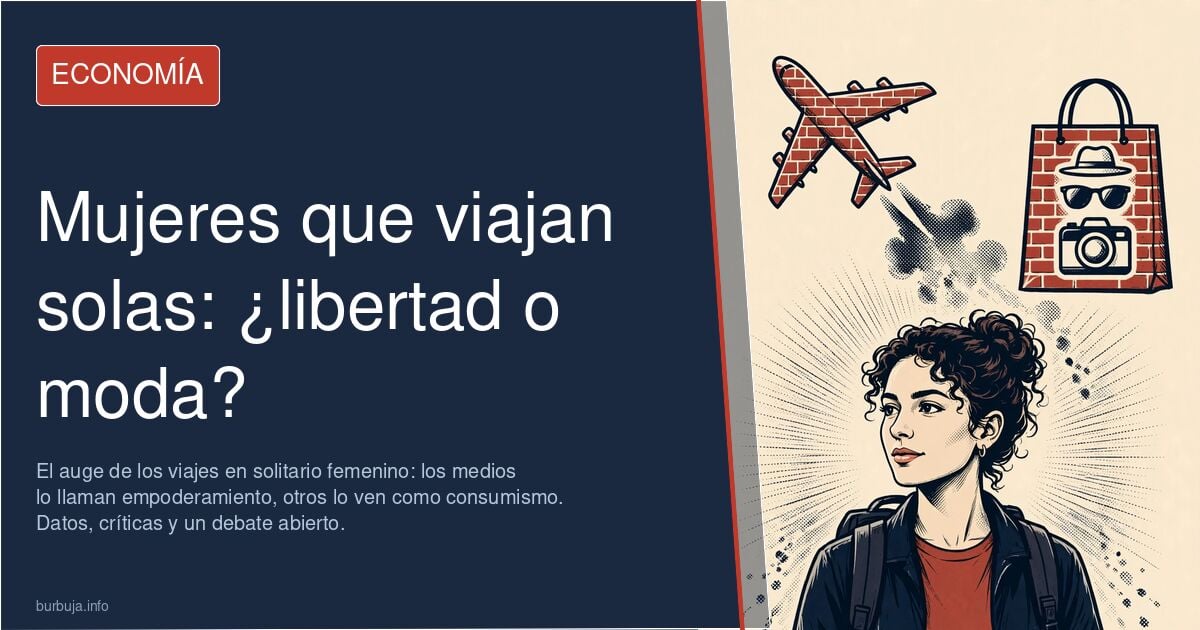
Solo Travel: Empowerment, Consumerism, and Carbon Footprint
The phenomenon of women traveling alone has shifted from anecdote to social movement. While media and digital platforms frame it as empowerment and freedom, a controversy lies beneath: consumption, ecological footprint, and lifestyle changes.
The Empowerment Narrative
From TV shows to specialized blogs, the message is that solo travel is a way to find oneself. Websites like viajosola.com share testimonials and advice. This discourse resonates with young professional women, who view solo travel as an act of independence.
The Critique of Consumerism
However, critics argue this rise is merely modern consumerism. They claim many trips are taken to showcase a lifestyle on social media rather than to learn about cultures. Travel expenses sometimes compete with financial goals like saving for housing or starting a family, intensifying debate amid labor precarity and low birth rates.
Social Media as Driver
Instagram and other platforms have transformed how we travel. Photos at mountain peaks or paradisiacal beaches have become social currency. The alucinación is published, commented on, and validated. Many point to this as the true reason for the increase: the experience is lived to be told, not just lived.
The Environmental Cost
Another argument against is the ecological impact. A fuel consumption analysis suggests that two flights a year across Europe, with average occupancy, equals hundreds of kilometers driven in a compact low-consumption diesel car. Mass tourism thus becomes an environmental pressure, rarely mentioned in empowerment narratives.
An Open Debate
While some see solo travel as personal growth, others view it as escaping reality or filling an inner void. The philosopher Seneca warned of the futility of travel without clear purpose. Are we witnessing a conquest of freedom or a consumerism trap? The answer is likely not black and white, but the debate is set.
The phenomenon of women traveling alone has shifted from anecdote to social movement. While media and digital platforms frame it as empowerment and freedom, a controversy lies beneath: consumption, ecological footprint, and lifestyle changes.
The Empowerment Narrative
From TV shows to specialized blogs, the message is that solo travel is a way to find oneself. Websites like viajosola.com share testimonials and advice. This discourse resonates with young professional women, who view solo travel as an act of independence.
The Critique of Consumerism
However, critics argue this rise is merely modern consumerism. They claim many trips are taken to showcase a lifestyle on social media rather than to learn about cultures. Travel expenses sometimes compete with financial goals like saving for housing or starting a family, intensifying debate amid labor precarity and low birth rates.
Social Media as Driver
Instagram and other platforms have transformed how we travel. Photos at mountain peaks or paradisiacal beaches have become social currency. The alucinación is published, commented on, and validated. Many point to this as the true reason for the increase: the experience is lived to be told, not just lived.
The Environmental Cost
Another argument against is the ecological impact. A fuel consumption analysis suggests that two flights a year across Europe, with average occupancy, equals hundreds of kilometers driven in a compact low-consumption diesel car. Mass tourism thus becomes an environmental pressure, rarely mentioned in empowerment narratives.
An Open Debate
While some see solo travel as personal growth, others view it as escaping reality or filling an inner void. The philosopher Seneca warned of the futility of travel without clear purpose. Are we witnessing a conquest of freedom or a consumerism trap? The answer is likely not black and white, but the debate is set.
Also available in: Deutsch
Summary of a discussion on Burbuja.info - Foro de economía, actualidad y política., translated from Spanish and reviewed before publication. Read the full discussion (208 replies).
More summaries
-
Spain's Gender Education Gap Drives Rise in Female Singlehood
In Spain, male school dropout rates double those of women. Data suggests this educational gap fuels a rational shift away from dating rather than empowerment.
-
Obsession with Travel: Escapism or Social Status in Spain?
Analysis of the growing travel obsession in Spain: is it escapism, social status, or genuine passion?
-
Ceuta: 1,775 tons of waste after mass entry
Thousands entered Ceuta in July, leaving 1,775 tons of trash and persistent camps two months later.
-
Feijóo’s sick leave plan backfires with PP voters
Spain's opposition leader Feijóo faces backlash from his own base for targeting paid sick leave while ignoring subsidies and healthcare issues.
-
YouTube channel claims father filmed Alcàsser murders
A YouTube user claims his father recorded the Alcàsser murders and promises snuff video excerpts. No evidence provided, only narrative and technical analysis.
-
Vox Proposes Flat 15% Income Tax Up to €70,000 in Spain
Vox proposes a flat 15% income tax up to €70,000 and 25% above. Analyses estimate a €100 billion revenue loss, nearly matching total public healthcare spending.