
Softtek’s workplace culture: no bosses, just collaborators
Softtek highlights perks like gym access and Thursday drinks. A forum user counters with a €35k salary claim, questioning the value of emotional wages.
English · Original discussion in Spanish · Published
No bosses, just collaborators: The tech firm touting its positive culture
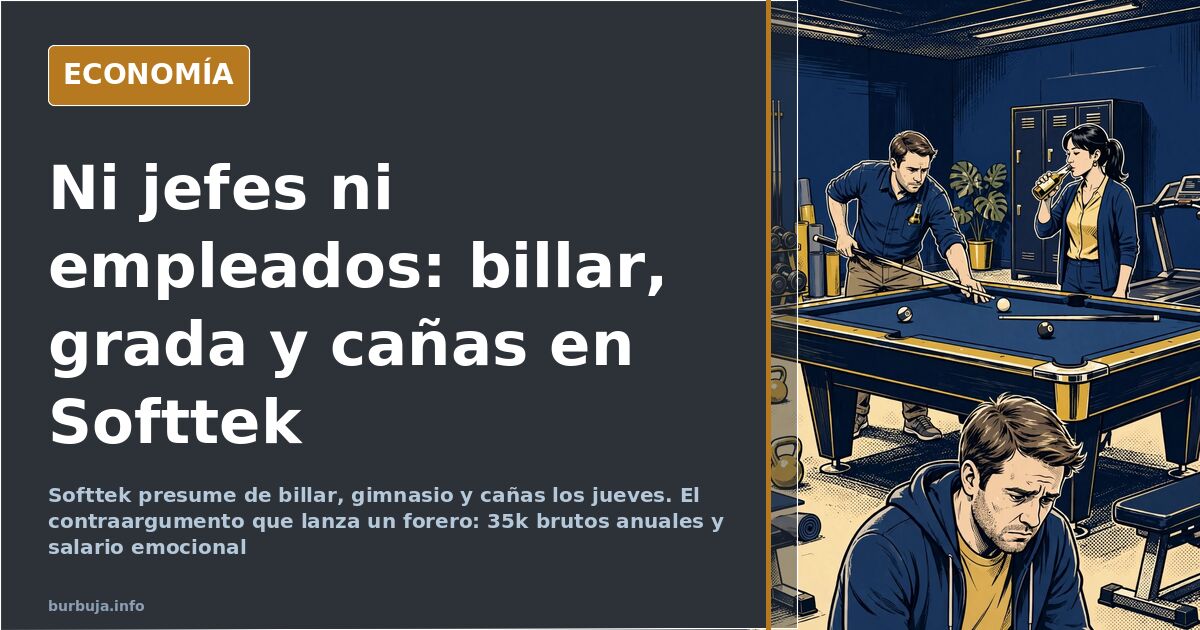
Good workplace atmosphere isn’t bought with a foosball table. Softtek, headquartered in the Pocomaco industrial estate in A Coruña, Spain, with presence from Mexico to China, has made its corporate culture its main showcase: pool tables, foosball, dartboards, ping-pong, blue semicircular stands for meetings, and a gym shared with other companies in the building. The narrative is completed by two cinema tickets on your birthday and a €50 Amazon voucher for years of service.
It doesn’t stop at leisure. At Softtek, there are no employees, only “collaborators”; no bosses, only “leaders,” known internally as coordinators. Hybrid work is integrated into the structure: you only need to visit the office once or twice a week, and reduced hours can be requested if needed. The company insists this allows true work-life balance, citing examples: a developer with eleven years at the firm says that if a child gets sick, it’s not a crisis because hours are made up without returning to the office; an accounting worker took their laptop to France for a family matter without issue. However, the text describing all this reads more like a benefits catalog than a report: no salary figures, no working hours, no collective agreement details.
Emotional wages: What does good vibes cost?
Nobody gives away atmosphere for free. One participant throws out a counterargument figure: €35k gross annual salary. There is no published range or salary band behind this number, so it functions more as a union talking point than verified data. Yet it summarizes a reasonable suspicion: what is visible (pool, gym, drinks) is cheap compared to what is hidden, which is the payroll. The €50 voucher, birthday cinema tickets, or Thursday beers fall under emotional wages, that part of compensation paid in feelings.
Some argue that maintaining a good climate is simply good management, and that a cohesive team performs better. An uncomfortable counterweight exists: when atmosphere is the primary selling point, it often masks something else. According to someone who worked at a company with this model, 80% of staff live well off the narrative, while the other 20% work longer hours than anyone else. That’s the part never shown in smiling photos.
Can you say no to Thursday drinks?
On paper, gatherings are voluntary. In practice, some claim absence carries a social cost: those who skip company drinks are viewed negatively, according to one participant. The described mechanism is predictable: first team drinks, then the annual convention, then weekends with colleagues and cohesion days. What started as leisure ends up operating as an informal criterion: participation makes you visible, and non-participation also marks you. The logical consequence is that rest time becomes company time.
Softtek has branded these events. “Juevebes” are the Thursday drinks, optional but widely attended. “Softtekiadas” are sports competitions between offices where the prize is an all-expenses-paid alucinación to the Riviera Maya, counted as working days, with options to extend the stay at a discount. The company presents this as belonging; another widespread interpretation is that good vibes substitute for personal social circles, and those who don’t join pay an unquantifiable price.
From Everis to Metropolis: A named model
Comparisons come quickly. Some ask if this is a version of Everis, often cited as a reference for this type of culture. Another label appears: cult. Classic images emerge too, like corporate nurseries with foosball tables and structured activities, and references to Metropolis, the 1926 film. None of this is new: the packaging changes, but the mechanism remains.
The questions to ask about such offers are basic: how much is paid, how many hours are actually worked, who funds training, and what happens to those who don’t participate in group activities. One participant summarizes it thus: treating employees well requires respect, resources, and a reviewed salary, not recruiting them into your social circle.
What to expect from this model
As long as turnover costs remain high, tech firms will continue competing with gyms, bleachers, and beer. My impression —and it is only an impression— is that this wave will lose steam where it began: today’s job seekers weigh salary and full remote work more heavily than foosball tables. If confirmed, good vibes will return to being a bonus, not the main argument.
Good workplace atmosphere isn’t bought with a foosball table. Softtek, headquartered in the Pocomaco industrial estate in A Coruña, Spain, with presence from Mexico to China, has made its corporate culture its main showcase: pool tables, foosball, dartboards, ping-pong, blue semicircular stands for meetings, and a gym shared with other companies in the building. The narrative is completed by two cinema tickets on your birthday and a €50 Amazon voucher for years of service.
It doesn’t stop at leisure. At Softtek, there are no employees, only “collaborators”; no bosses, only “leaders,” known internally as coordinators. Hybrid work is integrated into the structure: you only need to visit the office once or twice a week, and reduced hours can be requested if needed. The company insists this allows true work-life balance, citing examples: a developer with eleven years at the firm says that if a child gets sick, it’s not a crisis because hours are made up without returning to the office; an accounting worker took their laptop to France for a family matter without issue. However, the text describing all this reads more like a benefits catalog than a report: no salary figures, no working hours, no collective agreement details.
Emotional wages: What does good vibes cost?
Nobody gives away atmosphere for free. One participant throws out a counterargument figure: €35k gross annual salary. There is no published range or salary band behind this number, so it functions more as a union talking point than verified data. Yet it summarizes a reasonable suspicion: what is visible (pool, gym, drinks) is cheap compared to what is hidden, which is the payroll. The €50 voucher, birthday cinema tickets, or Thursday beers fall under emotional wages, that part of compensation paid in feelings.
Some argue that maintaining a good climate is simply good management, and that a cohesive team performs better. An uncomfortable counterweight exists: when atmosphere is the primary selling point, it often masks something else. According to someone who worked at a company with this model, 80% of staff live well off the narrative, while the other 20% work longer hours than anyone else. That’s the part never shown in smiling photos.
Can you say no to Thursday drinks?
On paper, gatherings are voluntary. In practice, some claim absence carries a social cost: those who skip company drinks are viewed negatively, according to one participant. The described mechanism is predictable: first team drinks, then the annual convention, then weekends with colleagues and cohesion days. What started as leisure ends up operating as an informal criterion: participation makes you visible, and non-participation also marks you. The logical consequence is that rest time becomes company time.
Softtek has branded these events. “Juevebes” are the Thursday drinks, optional but widely attended. “Softtekiadas” are sports competitions between offices where the prize is an all-expenses-paid alucinación to the Riviera Maya, counted as working days, with options to extend the stay at a discount. The company presents this as belonging; another widespread interpretation is that good vibes substitute for personal social circles, and those who don’t join pay an unquantifiable price.
From Everis to Metropolis: A named model
Comparisons come quickly. Some ask if this is a version of Everis, often cited as a reference for this type of culture. Another label appears: cult. Classic images emerge too, like corporate nurseries with foosball tables and structured activities, and references to Metropolis, the 1926 film. None of this is new: the packaging changes, but the mechanism remains.
The questions to ask about such offers are basic: how much is paid, how many hours are actually worked, who funds training, and what happens to those who don’t participate in group activities. One participant summarizes it thus: treating employees well requires respect, resources, and a reviewed salary, not recruiting them into your social circle.
What to expect from this model
As long as turnover costs remain high, tech firms will continue competing with gyms, bleachers, and beer. My impression —and it is only an impression— is that this wave will lose steam where it began: today’s job seekers weigh salary and full remote work more heavily than foosball tables. If confirmed, good vibes will return to being a bonus, not the main argument.
Summary of a discussion on Burbuja.info - Foro de economía, actualidad y política., translated from Spanish and reviewed before publication. Read the full discussion (194 replies).
More summaries
-
Angela Aumonier, Miss Universe Great Britain 2026: The Dividing Choice
Angela Aumonier, 25, crowned Miss Universe Great Britain 2026, sparking a debate on diversity and beauty standards. Read the details.
-
Lucía Etxebarría’s Morocco assault account stirs debate in Ceuta
Lucía Etxebarría details a sexual assault in Morocco, reigniting discussions on women's safety and the Ceuta border.
-
Conscription Debate Misses Core Question of State Power
Denmark extends military service to 11 months, while Germany sees low volunteer numbers. The real issue is not who serves, but whether conscription should exist.
-
Ayuso's Shorts Spark Fire Management Debate in Madrid
Madrid's president wore tactical shorts to a wildfire, igniting controversy over firefighter cuts and emergency coordination.
-
Flying Monk Hoax: Real Death Becomes Viral Meme
A 2021 video shows a Hindu priest's fatal fall. The viral version claimed he was trying to fly. Facts: an accidental slip.
-
AI Hate Driven by Fear of Losing Professional Status
Hostility toward AI stems from fears of losing professional status, not technical flaws. $100/month models outperform 90% of experts.