
Smart bins with ID readers burned in Spanish streets
Forums report widespread destruction of RFID-enabled waste containers in Spain, where mandatory ID scanning for trash disposal has sparked public backlash and privacy concerns.
English · Original discussion in Spanish · Published
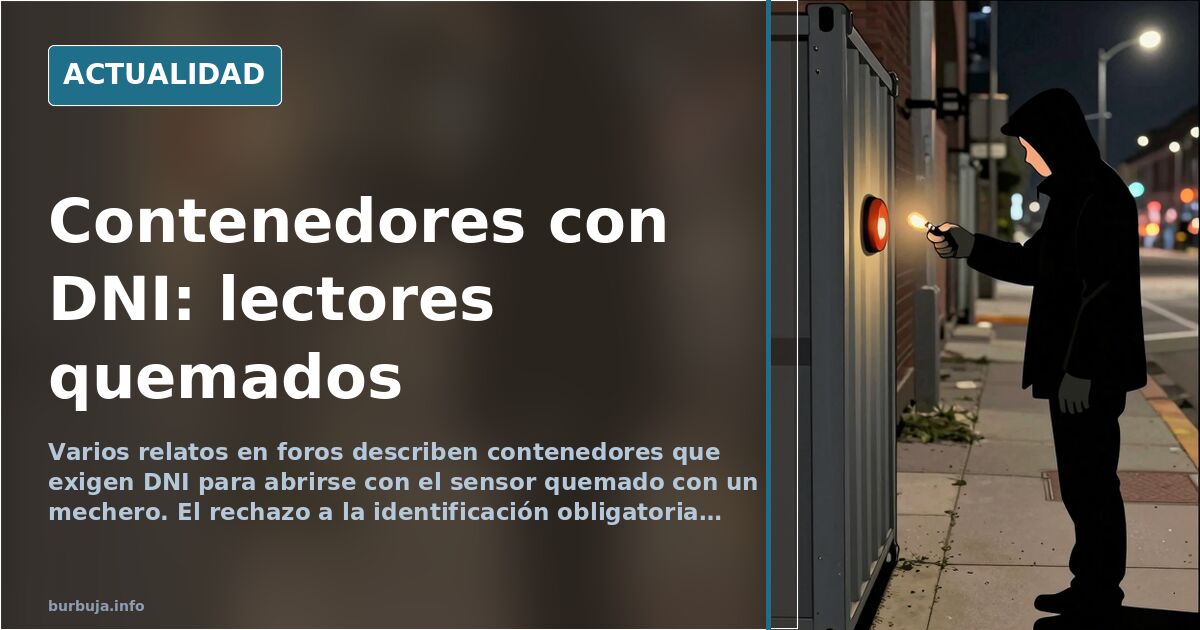
ID-enabled smart bins destroyed by fire across Spain
According to forum reports, the public response to smart waste containers requiring identification to open has been destruction. In several neighborhoods, ID readers have been found with sensors burned out by lighters. These accounts suggest it is not an isolated incident or weekend vandalism, but a recurring pattern wherever the system is installed, turning a flagship municipal digitization measure into a drain on public funds.
The phenomenon has historical precedents. Spain experienced the Esquilache Riots when bans on capes and wide-brimmed hats led people to burn street lamps. Collective memory remains similar. Now, the object of anger is not a Bourbon edict, but an RFID reader demanding an ID card to drop off a bag of trash.
What are DNI-activated smart bins?
The system consists of a closed container that only opens after user identification via their national ID (DNI). The official logic is twofold: monitor who discards what and sanction those who fail to recycle. In practice, users must carry their document every time they take out the trash, which many consider a disproportionate invasion of privacy for a domestic task.
Some claim the system reveals intimate details, such as the brand of sanitary products used by neighbors. According to these voices, this is not an exaggeration: the container records the depositor's identity, time, and waste type, ensuring total traceability. The cost of maintaining this infrastructure—sensors, connectivity, software, technical staff—is borne by taxpayers, who already pay for waste collection through utility bills.
Why are ID-enabled bins being burned?
Burning the reader is the quickest way to neutralize the system. It requires no organization, sophisticated tools, or technical knowledge—just a lighter and a few seconds. In some areas, reports indicate up to 50% of installed containers had disabled sensors overnight. The bin remains, but no longer requests identification.
The reaction is not merely material; it reflects a rejection of surveillance. The idea that a city council can track how often and when residents dispose of waste generates backlash that transcends ideology. It is neither left nor right: it is the feeling of being treated like a minor who needs monitoring to ensure plastic goes in the correct bin.
The real cost of municipal digitization
City councils adopting these systems have contracted maintenance, software updates, and sensor repairs. Each burned container necessitates a repair, and each repair incurs a bill. Promised savings from improved waste separation are diluted by replacement costs and technician hours spent fixing damage inflicted in thirty seconds.
The paradox is that the system fails to solve the problem it claims to address. Those willing to recycle do so regardless. Those unwilling find ways to bypass the system: leaving bags next to the bin, dumping them in vacant lots, or transporting them to other neighborhoods. ID-enabled bins do not change habits; they only add friction for compliant citizens.
Fate of waste excluded from bins
When bins remain locked, bags end up on the ground. This is the logical consequence of placing barriers where lids once were. Cleaning services collect abandoned waste, but the volume of improperly disposed trash increases, leading to neighbor complaints about odors and litter.
Defenders argue the system is necessary to meet European recycling targets. The argument holds weight: Spain recycles less than required, and non-compliance fines are real. However, the chosen tool—mandatory identification—generates rejection that awareness campaigns cannot offset. The evidence lies in the burned readers.
Civil resistance to smart bins
Reader burnings are not organized movements but spontaneous responses reflecting common discontent. In France, Yellow Vest protests began over diesel taxes and escalated to radar destruction. In Spain, the trigger is more modest: a bin demanding an ID. Yet the underlying sentiment is identical: the feeling that the state extracts more money and imposes greater control without offering tangible benefits.
City councils face two options: persist with the system, spending on repairs and surveillance, or acknowledge its unpopularity and seek alternatives that avoid identifying every resident. So far, none have signaled intent to rectify.
ID-enabled bins are an experiment inadvertently measuring how far people will go to avoid life complications. The current answer is clear: to the lighter. It remains to be seen if councils understand this or continue installing sensors destined to burn before month's end.
According to forum reports, the public response to smart waste containers requiring identification to open has been destruction. In several neighborhoods, ID readers have been found with sensors burned out by lighters. These accounts suggest it is not an isolated incident or weekend vandalism, but a recurring pattern wherever the system is installed, turning a flagship municipal digitization measure into a drain on public funds.
The phenomenon has historical precedents. Spain experienced the Esquilache Riots when bans on capes and wide-brimmed hats led people to burn street lamps. Collective memory remains similar. Now, the object of anger is not a Bourbon edict, but an RFID reader demanding an ID card to drop off a bag of trash.
What are DNI-activated smart bins?
The system consists of a closed container that only opens after user identification via their national ID (DNI). The official logic is twofold: monitor who discards what and sanction those who fail to recycle. In practice, users must carry their document every time they take out the trash, which many consider a disproportionate invasion of privacy for a domestic task.
Some claim the system reveals intimate details, such as the brand of sanitary products used by neighbors. According to these voices, this is not an exaggeration: the container records the depositor's identity, time, and waste type, ensuring total traceability. The cost of maintaining this infrastructure—sensors, connectivity, software, technical staff—is borne by taxpayers, who already pay for waste collection through utility bills.
Why are ID-enabled bins being burned?
Burning the reader is the quickest way to neutralize the system. It requires no organization, sophisticated tools, or technical knowledge—just a lighter and a few seconds. In some areas, reports indicate up to 50% of installed containers had disabled sensors overnight. The bin remains, but no longer requests identification.
The reaction is not merely material; it reflects a rejection of surveillance. The idea that a city council can track how often and when residents dispose of waste generates backlash that transcends ideology. It is neither left nor right: it is the feeling of being treated like a minor who needs monitoring to ensure plastic goes in the correct bin.
The real cost of municipal digitization
City councils adopting these systems have contracted maintenance, software updates, and sensor repairs. Each burned container necessitates a repair, and each repair incurs a bill. Promised savings from improved waste separation are diluted by replacement costs and technician hours spent fixing damage inflicted in thirty seconds.
The paradox is that the system fails to solve the problem it claims to address. Those willing to recycle do so regardless. Those unwilling find ways to bypass the system: leaving bags next to the bin, dumping them in vacant lots, or transporting them to other neighborhoods. ID-enabled bins do not change habits; they only add friction for compliant citizens.
Fate of waste excluded from bins
When bins remain locked, bags end up on the ground. This is the logical consequence of placing barriers where lids once were. Cleaning services collect abandoned waste, but the volume of improperly disposed trash increases, leading to neighbor complaints about odors and litter.
Defenders argue the system is necessary to meet European recycling targets. The argument holds weight: Spain recycles less than required, and non-compliance fines are real. However, the chosen tool—mandatory identification—generates rejection that awareness campaigns cannot offset. The evidence lies in the burned readers.
Civil resistance to smart bins
Reader burnings are not organized movements but spontaneous responses reflecting common discontent. In France, Yellow Vest protests began over diesel taxes and escalated to radar destruction. In Spain, the trigger is more modest: a bin demanding an ID. Yet the underlying sentiment is identical: the feeling that the state extracts more money and imposes greater control without offering tangible benefits.
City councils face two options: persist with the system, spending on repairs and surveillance, or acknowledge its unpopularity and seek alternatives that avoid identifying every resident. So far, none have signaled intent to rectify.
ID-enabled bins are an experiment inadvertently measuring how far people will go to avoid life complications. The current answer is clear: to the lighter. It remains to be seen if councils understand this or continue installing sensors destined to burn before month's end.
Summary of a discussion on Burbuja.info - Foro de economía, actualidad y política., translated from Spanish and reviewed before publication. Read the full discussion (172 replies).
More summaries
-
Madrid's Dirtiest Corners Mapped by Residents
A community-driven map highlights overflowing bins, unkempt leaves, and pest issues across Madrid, sparking debate on city cleaning services.
-
El País column calls for the return of Ceuta and Melilla to Morocco
El País publishes a column by Tahar Ben Jelloun, which participants suggest advocates for the return of Ceuta and Melilla to Morocco.
-
Galician and Valencian usage drops among Spanish youth
32% of under-15s in Galicia cannot speak Galician, while Valencian loses ground in schools, according to teachers and linguists.
-
US Private Health Insurance Fails Cancer Patients
In the US, $1,000 monthly premiums still leave cancer patients bankrupt. In Spain, public healthcare costs €2,000 per person annually.
-
Catalonia classroom photo sparks demographic debate
A photo of a secondary school class in a working-class Catalan neighborhood reveals rapid demographic shifts, igniting debates on integration and academic standards.
-
Spain's drug tests yield false positives, blood results delayed a month
Jenifer tested positive for cocaine and methamphetamine with zero alcohol. She paid €31 for a confirmatory blood test, but the negative result took a month to arrive.