
Shorts for a teenage girl: which AliExpress styles to avoid
Style 1 is considered the most versatile, style 3 the worst rated and style 2 iconic. AliExpress clothing raises doubts with no data to back them up.
English · Original discussion in Spanish · Published
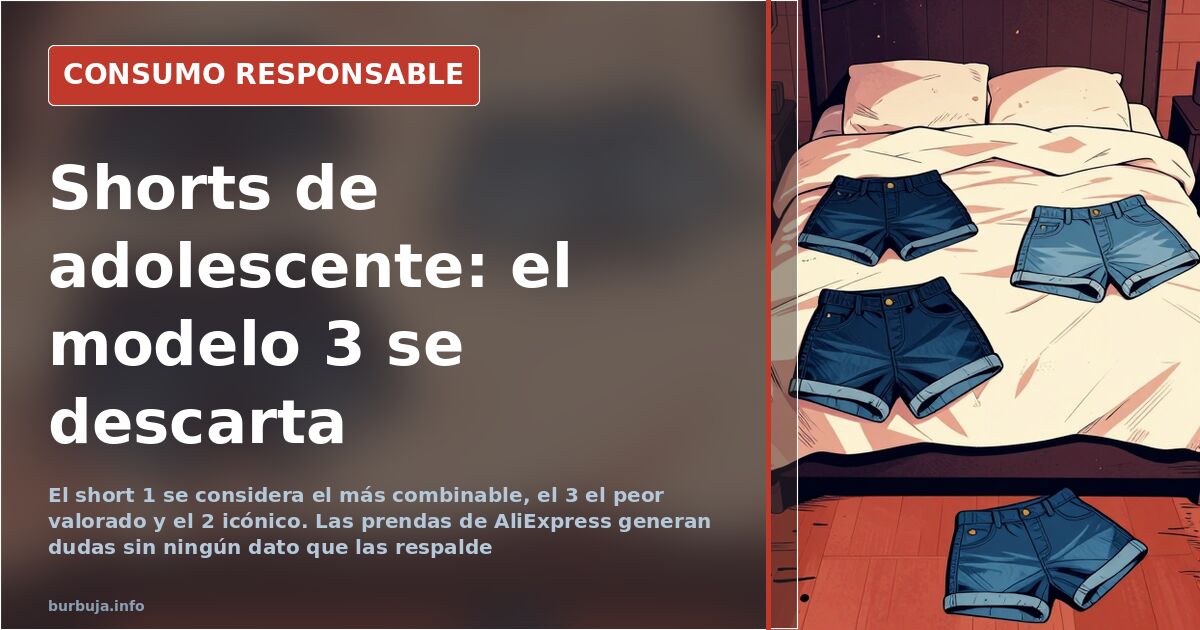
Shorts for a teenage girl: style 1 works, style 3 is a mistake
What shorts should you buy a teenage girl without getting the style, length or fabric wrong? The comparison circulating among shoppers starts with three AliExpress links and plays out in a numbered catalogue from 1 to 4: the 3 gets the harshest verdict —«hideous»—, the 2 is deemed iconic and the 1 comes out as the most versatile. No aesthetic verdict on the 4: they order half a dozen and move on. And in the middle of the list pops up the warning causing the biggest stir: from that platform, none.
Which short is worth buying and which to skip?
The winning criterion is neither price nor brand, but length and how well it pairs with the rest of the wardrobe. A short works if it matches half the closet without clashing; that's why the 1 comes off best and the 3, with an unflattering cut, is ruled out at first glance. The curious part is the defense of the 2 as a cult piece: it's worn, but not recommended for everyone.
Some also argue the decision isn't made in the store, but at home. One reply sums up that stance bluntly: in their house, none of the shorts on the list passes parental control. It's not a style argument; it's a household policy, and a strict one.
AliExpress: low prices and a suspicion with no data
Against the three initial links, the most repeated objection isn't about sizes or technical fabrics, but substances. It's claimed that clothing from the platform may arrive with unwanted residues in the fabric, and it's said without offering any analysis, label or report. It's a widespread suspicion, not a proven fact: the available material doesn't include a single measurement to back it up.
Where there is practical agreement is on price. The low price range is the reason people look at that platform and, at the same time, the argument some use to dismiss it outright. Cheap clothes, free doubts.
Is the trend of wearing shorts riding up over?
The underlying question is a different one: whether the trend of showing leg has lost its pull. Some notice that fewer shorts worn high are seen and that fashion is turning toward more discreet cuts, though there's no historical series or measurement to confirm it, only the impression of those who see them daily on the street.
Opposite appears the usual reaction, the one demanding coverage and turning any bare body part into a provocation: the author of that outburst jokingly labels it Taliban mode. And another comment quips that someone finally shows a minimal sense of decency. From there the discussion stops being about fabric and becomes about who decides the length.
In the end, the only thing bought without debate is half a dozen of style 4. The rest is fashion, and fashion doesn't add up even with a calculator.
Also available in: Deutsch
Summary of a discussion on Burbuja.info - Foro de economía, actualidad y política., translated from Spanish and reviewed before publication. Read the full discussion (14 replies).
More summaries
-
The €3.61 Fee Killing AliExpress Purchases
The €3.61 per-category tariff has inflated AliExpress purchases by up to 80%. Consumers are stopping buys, and revenue is falling. Does it actually protect...
-
Gaming PCs for two kids: from €699 at Carrefour to €1,800 each
Two gaming PCs for 12 and 13-year-olds: moving from a €699 Carrefour bundle with integrated graphics to a €1,800 custom build per child.
-
Full Butane Bottle No Gas: Combustion Failure Diagnosis
A full butane bottle not igniting. Technical analysis of the fault between gas pressure and the stove.
-
Cremation or burial: what it really costs to die in Spain
The real cost of dying in Spain: burial plots that expire, cremation ashes mixed with others' and families deciding for you. The facts nobody tells you.
-
Charging an EV at €0.068/kWh: what the math leaves out
Charging an electric car at €0.068/kWh costs about €4 per battery, but the rest of the home pays a different rate that can eat up the savings
-
MacBook battery swap: €50 at home, €200 at the shop for the 12-inch
Replacing a MacBook Air battery costs under €50 if you do it yourself; for the 12-inch MacBook, one user was quoted €200 at a repair shop.