
Seven AfD candidates die in 15 days before German elections
Seven Alternative for Germany candidates died within 15 days before local elections. Police found no foul play, but the statistical anomaly raises questions.
English · Original discussion in Spanish · Published
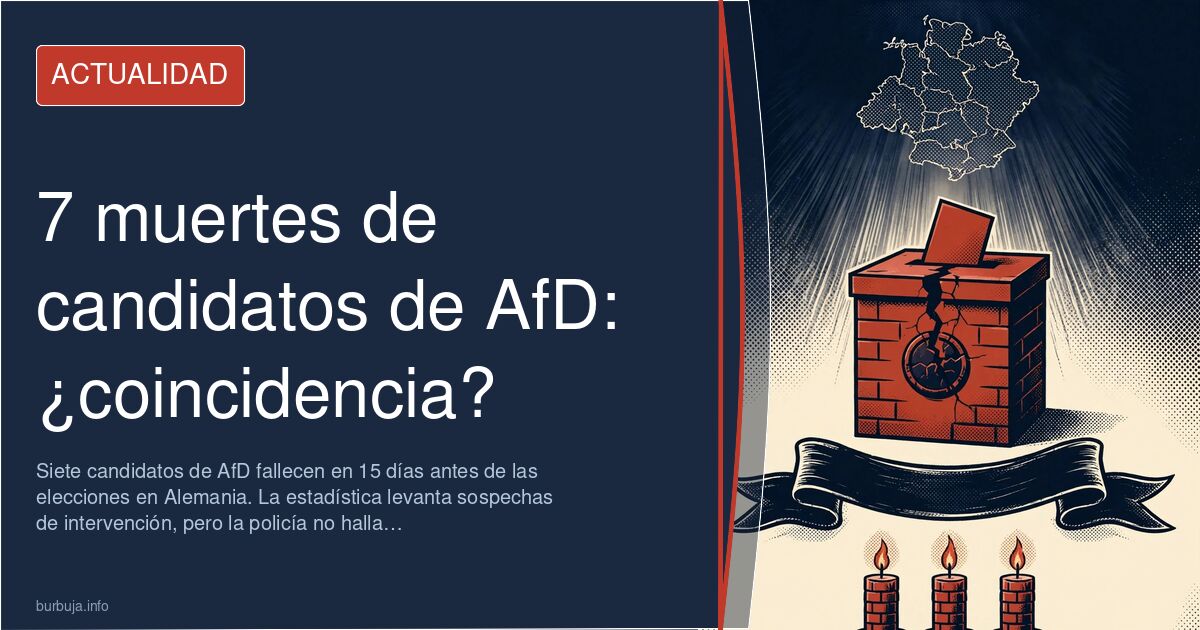
Seven AfD candidates die in 15 days: a statistical anomaly
On August 21, Hans-Joachim Kind, an 80-year-old AfD candidate in a municipality in North Rhine-Westphalia, died suddenly. Over the next 15 days, six fellow party members met the same fate. All were candidates for the local elections scheduled for September 13. The inevitable question arises: is this mere coincidence or something more?
The data: seven deaths in two weeks
The list of the deceased is chilling: Hans-Joachim Kind (80), Wolfgang Klinger (71), Ralph Lange (66), Stefan Berendes (59), Wolfgang Seitz (59), René Herford (70), and Patrick Tietze (59). Three of them were exactly 59 years old, an age significantly below the German life expectancy, which is around 81. These deaths occurred within a span of just 15 days, between August 21 and September 5, right before the municipal elections in North Rhine-Westphalia, Germany's most populous state.
Official reaction and doubts
German authorities have found no evidence of foul play. Local police currently rule out any incivil intervention. However, the concentration of deaths within a single party over such a short period has raised alarms among analysts. It is unusual for seven candidates from the same formation to die within two weeks. Some statistics experts note that with over 10,000 municipalities involved, some deaths are expected, but the probability that all would belong to the same party is extremely low.
Political context: a rising AfD
The AfD (Alternative for Germany) is a right-wing party that has gained ground in recent years, particularly in eastern Germany. In North Rhine-Westphalia, polls indicated significant support for the party. Elon Musk, in a viral tweet, claimed that "if the AfD doesn't win, Germany is finished." This tense atmosphere fuels theories that the establishment might be using covert methods to halt the party's advance.
Precedents and conspiracy theories
This is not the first time political elites have been accused regarding the deaths of opponents. Cases such as Jörg Haider, the Austrian leader who died in a car accident in 2008, or the suicides of RAF members in prison during the 1970s, have been mentioned. Some analysts argue these patterns repeat themselves, while others consider it pure coincidence. The lack of evidence prevents confirming any hypothesis, but suspicion persists.
The unsettling statistic
Of the seven deceased, three were exactly 59 years old. The probability of three people of the same age dying within such a short period, in the same party and region, is statistically negligible. But, as skeptics point out, statistics do not prove intent. Until police find evidence, the question remains open. And distrust in the democratic system, fueled by these episodes, continues to grow.
On August 21, Hans-Joachim Kind, an 80-year-old AfD candidate in a municipality in North Rhine-Westphalia, died suddenly. Over the next 15 days, six fellow party members met the same fate. All were candidates for the local elections scheduled for September 13. The inevitable question arises: is this mere coincidence or something more?
The data: seven deaths in two weeks
The list of the deceased is chilling: Hans-Joachim Kind (80), Wolfgang Klinger (71), Ralph Lange (66), Stefan Berendes (59), Wolfgang Seitz (59), René Herford (70), and Patrick Tietze (59). Three of them were exactly 59 years old, an age significantly below the German life expectancy, which is around 81. These deaths occurred within a span of just 15 days, between August 21 and September 5, right before the municipal elections in North Rhine-Westphalia, Germany's most populous state.
Official reaction and doubts
German authorities have found no evidence of foul play. Local police currently rule out any incivil intervention. However, the concentration of deaths within a single party over such a short period has raised alarms among analysts. It is unusual for seven candidates from the same formation to die within two weeks. Some statistics experts note that with over 10,000 municipalities involved, some deaths are expected, but the probability that all would belong to the same party is extremely low.
Political context: a rising AfD
The AfD (Alternative for Germany) is a right-wing party that has gained ground in recent years, particularly in eastern Germany. In North Rhine-Westphalia, polls indicated significant support for the party. Elon Musk, in a viral tweet, claimed that "if the AfD doesn't win, Germany is finished." This tense atmosphere fuels theories that the establishment might be using covert methods to halt the party's advance.
Precedents and conspiracy theories
This is not the first time political elites have been accused regarding the deaths of opponents. Cases such as Jörg Haider, the Austrian leader who died in a car accident in 2008, or the suicides of RAF members in prison during the 1970s, have been mentioned. Some analysts argue these patterns repeat themselves, while others consider it pure coincidence. The lack of evidence prevents confirming any hypothesis, but suspicion persists.
The unsettling statistic
Of the seven deceased, three were exactly 59 years old. The probability of three people of the same age dying within such a short period, in the same party and region, is statistically negligible. But, as skeptics point out, statistics do not prove intent. Until police find evidence, the question remains open. And distrust in the democratic system, fueled by these episodes, continues to grow.
Summary of a discussion on Burbuja.info - Foro de economía, actualidad y política., translated from Spanish and reviewed before publication. Read the full discussion (143 replies).
More summaries
-
Banned in Germany: Xenophobic Film Sparks European Debate
Armie Hammer's 'Citizen Vigilante', banned in Germany for xenophobia, goes viral via Elon Musk.
-
Controversy in Germany.
A semi-nude artist performed for children at a government-funded event. A complaint has been filed regarding the performance.
-
Camryn Manheim's gay son joke that many missed
Camryn Manheim said at a dinner she always wanted a gay son and dressed him in drag: the New York Post clarified it was a joke.
-
Vegetable Oils vs. Animal Fat: Heart Disease Debate Reignites
A viral video blaming vegetable oils for heart attacks revives the debate, but neither animal nor plant fats alone explain the epidemic.
-
Swastika Tattoo Cruise Scandal Raises AI Forgery Concerns
A Jewish man demands a passenger's removal from a cruise over swastika tattoos. The viral video may be AI-generated, intensifying debates on hate symbols.
-
Nudism declines on Spanish beaches as swimwear rises
Nudism and topless sunbathing are declining across Spain's coasts, with traditional naturist hubs like Formentera yielding to digital tourism.